Shree Jagannath Temple, Puri – History, Darshan Timings, Rath Yatra and Complete Travel Guide
Shree Jagannath Temple in Puri, Odisha, is one of the most sacred Hindu pilgrimage destinations in India. Dedicated to Lord Jagannath, a revered form of Lord Vishnu, this magnificent temple is famous for its ancient traditions, grand architecture, sacred Mahaprasad and the world-renowned Rath Yatra festival.
Located in the coastal city of Puri near the Bay of Bengal, the temple is traditionally counted among the four sacred Char Dham pilgrimage destinations of Hinduism. Millions of devotees visit the shrine every year to seek the blessings of Lord Jagannath, Lord Balabhadra and Devi Subhadra.
Known locally as Shree Mandira or Bada Deula, the temple is not only a major religious centre but also an important symbol of Odisha’s history, culture, art and spiritual heritage. Its rituals, festivals and traditional temple kitchen continue to attract pilgrims and visitors from across India and abroad.
If you are planning a spiritual journey to Odisha, Shree Jagannath Temple should be at the top of your Puri travel itinerary.
About Shree Jagannath Temple, Puri
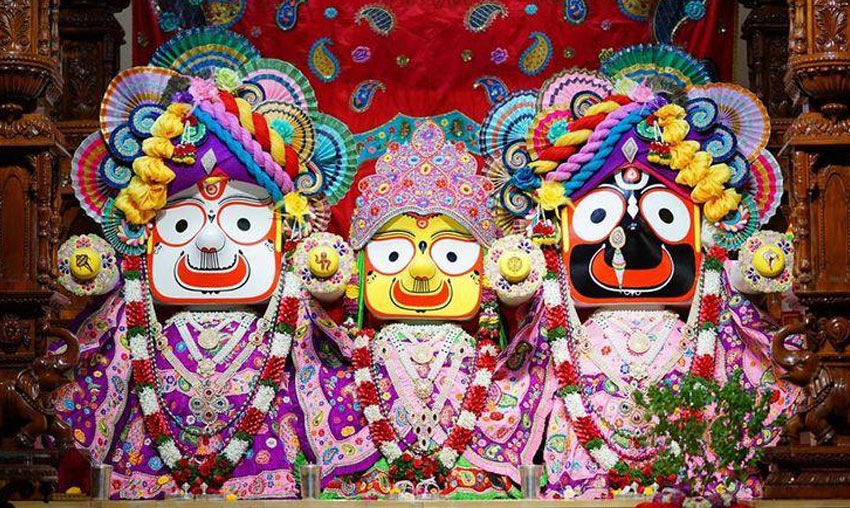
Shree Jagannath Temple is a historic Hindu temple dedicated to Lord Jagannath, Lord Balabhadra and Devi Subhadra. The three principal deities are worshipped together on the Ratna Singhasana, the sacred bejewelled throne inside the temple sanctum.
The temple is a major centre of the Jagannath tradition and has played an important role in the religious and cultural life of Odisha for centuries. Its daily worship follows an elaborate system of rituals known as Niti, performed by the temple’s traditional servitors.
The temple complex is characterised by its towering main shrine, monumental gateways, surrounding walls, subsidiary shrines and traditional halls. The sacred kitchen prepares Mahaprasad, which is offered to the deities and distributed to devotees.
History of Jagannath Temple Puri
The present Shree Jagannath Temple is generally dated to the 12th century CE and is associated with King Anantavarman Chodaganga Deva of the Eastern Ganga dynasty.
According to the Archaeological Survey of India’s Puri Circle, the main temple was initiated under Chodagangadeva during the second half of the 11th century and is believed to have been completed by his grandson, King Anangabhimadeva I. Construction and additions to the temple complex continued under later rulers.
The temple’s inner enclosure wall and Bhoga Mandapa are associated with later periods of the Ganga dynasty. Over the centuries, successive rulers, devotees and religious institutions contributed to the development and preservation of the shrine.
Traditional accounts describe the ancient origin of Lord Jagannath worship through the legend of King Indradyumna and the sacred wooden deity. These stories form an important part of the temple’s religious tradition, while the present monumental temple structure belongs primarily to the medieval period.
Religious Significance of Jagannath Temple
Shree Jagannath Temple is one of the most important centres of Vaishnavism and Jagannath worship. Lord Jagannath is revered as the Lord of the Universe and worshipped by devotees from different parts of India.
Puri is traditionally recognised as one of the four Char Dham pilgrimage destinations, along with Badrinath, Dwarka and Rameswaram. A pilgrimage to Puri is considered especially sacred by many Hindu devotees.
The temple’s religious importance is closely connected with its deities, daily rituals, festivals, Mahaprasad and the annual Rath Yatra. It is also an important centre of Odia identity, literature, music, art and cultural traditions.
The Holy Trinity – Lord Jagannath, Balabhadra and Subhadra
The main sanctum of the temple houses the three principal deities, collectively known as the Holy Trinity of Puri.
1. Lord Jagannath
Lord Jagannath is the presiding deity of the temple and is worshipped as a form of Lord Vishnu. The name Jagannath means Lord of the Universe. His distinctive wooden form is central to the temple’s religious identity and traditions.
2. Lord Balabhadra
Lord Balabhadra, also known as Baladeva, is the elder brother of Lord Jagannath. He is worshipped alongside Lord Jagannath and Devi Subhadra and is an important part of the temple’s sacred traditions.
3. Devi Subhadra
Devi Subhadra is the sister of Lord Jagannath and Lord Balabhadra. Her presence completes the divine triad worshipped at the temple.
The three deities are traditionally made from sacred neem wood, known as Daru. Their unique forms and the rituals associated with them distinguish the Jagannath tradition from many other Hindu temples.
Nabakalebara – The Sacred Renewal of the Deities
Nabakalebara is one of the most significant and distinctive traditions associated with Shree Jagannath Temple. The word refers to the renewal or transformation of the physical forms of the deities.
During Nabakalebara, new wooden images of Lord Jagannath, Lord Balabhadra, Devi Subhadra and Sudarshana are prepared from specially selected sacred neem trees known as Daru. The process follows elaborate religious customs and rituals.
The sacred ritual is performed in accordance with the temple calendar and is generally associated with the occurrence of an additional Ashadha month in the Hindu lunar calendar. It does not take place every fixed number of years.
Nabakalebara represents renewal, continuity and the enduring nature of the Jagannath tradition.
Architecture of Jagannath Temple
Shree Jagannath Temple is one of the finest examples of Kalinga-style temple architecture. Its monumental main shrine rises above the surrounding city and forms a prominent feature of Puri’s skyline.
The main temple tower is approximately 65 metres high and stands on an elevated platform. The complex is enclosed by two massive boundary walls and contains several subsidiary shrines and ritual structures.
1. Vimana or Bada Deula
The Vimana, also called Bada Deula, is the main sanctum structure where the principal deities are worshipped. Its tall curving tower is a characteristic feature of Kalinga temple architecture.
2. Jagamohan
The Jagamohan is the assembly hall in front of the sanctum. It provides a space for devotees and forms an important part of the temple’s traditional architectural arrangement.
3. Natamandira
The Natamandira, also known as the Natyamandira, is the traditional hall associated with devotional and ceremonial activities.
4. Bhogamandapa
The Bhogamandapa is associated with the preparation and presentation of food offerings to the deities. It forms an important part of the temple’s ritual and architectural layout.
5. Meghanada Prachira
Meghanada Prachira is the outer boundary wall enclosing the temple complex. It separates the sacred temple premises from the surrounding area.
6. Kurma Prachira
Kurma Prachira is the inner enclosure wall surrounding the main temple area. Together, the two enclosure walls create the distinctive layout of the temple complex.
The Four Main Gates of Jagannath Temple
The temple has four major gateways facing the four cardinal directions. Each gate has a traditional name and religious association.
1. Singhadwara – Lion Gate
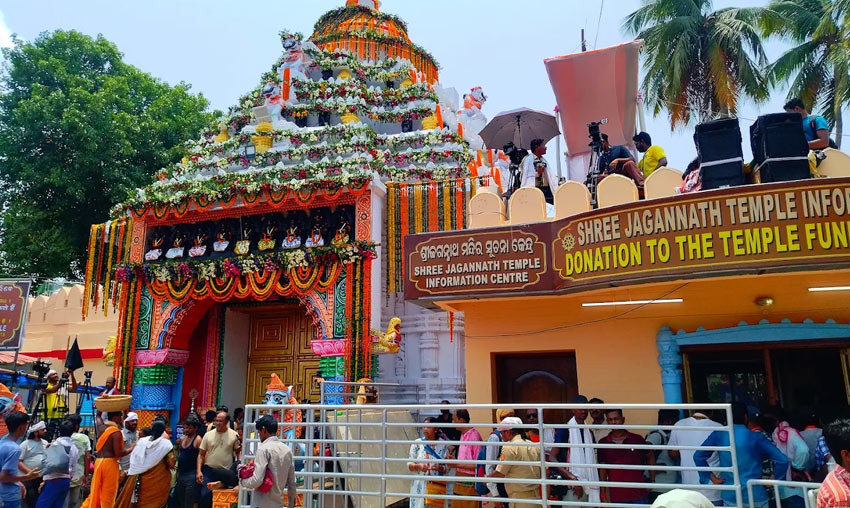
Singhadwara is the main eastern entrance of the temple. It is known as the Lion Gate because of the stone lion figures guarding the gateway. The famous Aruna Stambha stands in front of this entrance.
2. Ashwadwara – Horse Gate
Ashwadwara is the southern gateway, traditionally associated with horses. It is one of the four major entrances to the temple complex.
3. Vyaghradwara – Tiger Gate
Vyaghradwara is the western gateway, traditionally associated with a tiger. It is also known as the western entrance of the temple.
4. Hastidwara – Elephant Gate
Hastidwara is the northern gateway, traditionally associated with elephants. It completes the four-gate arrangement of the temple.
Visitors should follow the temple administration’s current entry arrangements, as access routes and gate usage may be regulated for security and crowd management.
Important Features Inside and Around the Temple
Nilachakra
Nilachakra, or the Blue Wheel, is a sacred metal disc placed at the top of the main temple tower. It is made from an eight-metal alloy traditionally known as Ashtadhatu. Devotees consider a sight of the Nilachakra highly auspicious.
Patitapabana Bana
The sacred flag placed above the temple tower is known as Patitapabana Bana. Its daily changing ceremony is an important temple tradition and is closely associated with the devotion of the servitors.
Aruna Stambha
Aruna Stambha is a monolithic pillar located in front of Singhadwara. It is approximately 33 feet high and is traditionally associated with Aruna, the charioteer of the Sun God. The pillar was originally associated with the Sun Temple at Konark before being brought to Puri.
Ratna Singhasana
Ratna Singhasana is the sacred throne on which Lord Jagannath, Lord Balabhadra and Devi Subhadra are worshipped inside the main sanctum.
Daily Rituals and Niti of Jagannath Temple
Daily worship at Shree Jagannath Temple follows a traditional sequence of rituals known as Niti. These rituals are performed throughout the day by the temple’s servitors and include awakening, bathing, dressing, food offerings and resting ceremonies for the deities.
The prescribed schedule may change because of festivals, special ceremonies and practical arrangements. Visitors should not assume that darshan remains continuously available during every ritual.
Important Daily Rituals
- Dwaraphita: The opening of the temple doors in the early morning.
- Mangala Alati: The early morning worship ceremony with lamps offered to the deities.
- Mailama: A ritual involving the removal or change of the deities’ garments.
- Abakasha: Ritual activities associated with the deities’ daily purification.
- Gopala Ballava Bhoga: A morning food offering.
- Sakala Dhupa: A major morning offering of food to the deities.
- Madhyahna Dhupa: The midday food offering.
- Sandhya Alati: The evening worship ceremony.
- Badasinghara Besha: The final elaborate decoration of the deities for the night.
- Pahuda: The ritual associated with the deities’ rest and the closing of the temple for the night.
These are some of the major rituals in the temple’s daily schedule. The exact sequence and timing may vary on special occasions.
Jagannath Temple Darshan Timings
Darshan at Shree Jagannath Temple is linked to the daily Niti schedule. The temple does not operate like a regular tourist attraction with uninterrupted visiting hours. Darshan may pause during rituals, food offerings and special ceremonies.
Odisha Tourism publishes general visitor information showing a broad opening period of approximately 5:00 AM to 11:00 PM, while noting that timings vary with rituals. The actual darshan windows can be different on individual days.
| Visitor Information | Details |
|---|---|
| General opening period | Approximately 5:00 AM onwards |
| General closing period | May extend to around 11:00 PM |
| Darshan availability | Depends on daily Niti and ritual schedule |
| Entry fee | No general entry fee for darshan |
| Best time to visit | Early morning, subject to current darshan arrangements |
| Festival timings | May differ considerably |
Important: These are broad visitor timings, not guaranteed darshan slots. Before travelling, check the latest daily ritual and darshan information on the official temple website: Shree Jagannatha Temple Administration.
Mahaprasad – The Sacred Food of Lord Jagannath
Mahaprasad is one of the most important traditions associated with Shree Jagannath Temple. Food prepared for the deities is offered according to prescribed rituals and later distributed as sacred Mahaprasad.
The temple kitchen is traditionally known as one of the largest functioning temple kitchens in the world. Food is prepared using traditional methods, with earthen pots and wood-fired cooking arrangements forming an important part of the practice.
What Is Included in Mahaprasad?
Mahaprasad may include rice, dal, vegetable preparations, cakes and other traditional food items. The menu and offerings vary according to the ritual calendar and temple customs.
Ananda Bazar
Ananda Bazar is the traditional area within the temple premises where Mahaprasad is available to devotees. It is an important place for experiencing the food traditions associated with Lord Jagannath.
Visitors should follow the temple’s current arrangements and customary practices while purchasing, receiving and consuming Mahaprasad.
Rath Yatra – The World-Famous Chariot Festival
Rath Yatra is the most famous annual festival of Shree Jagannath Temple and one of the largest religious celebrations in India. It is held in Puri according to the Hindu lunar calendar, generally during June or July.
During the festival, Lord Jagannath, Lord Balabhadra and Devi Subhadra leave the main temple in three magnificent wooden chariots and travel along the Grand Road to Gundicha Temple.
The Three Sacred Chariots
- Nandighosha: The chariot of Lord Jagannath.
- Taladhwaja: The chariot of Lord Balabhadra.
- Darpadalana: The chariot of Devi Subhadra.
Important Events Associated with Rath Yatra
- Snana Yatra: The ceremonial bathing festival of the deities.
- Netrotsava: The traditional ritual associated with the deities’ renewed appearance after the Anasara period.
- Rath Yatra: The ceremonial journey of the deities to Gundicha Temple.
- Hera Panchami: A special ritual observed during the deities’ stay at Gundicha Temple.
- Bahuda Yatra: The return journey of the deities towards the main temple.
- Suna Besha: The golden decoration of the deities on their chariots after the return journey.
- Niladri Bije: The concluding ritual marking the return of the deities to the main temple.
Rath Yatra attracts very large crowds. Visitors planning to attend should arrange accommodation and transport well in advance and follow official crowd-management instructions.
Read more about the festival in our upcoming Rath Yatra in Puri travel guide.
Other Important Festivals at Jagannath Temple
Snana Purnima
Snana Purnima is observed on the full moon day of the Hindu month of Jyestha. The three main deities are ceremonially bathed during this important festival.
Chandan Yatra
Chandan Yatra is a major festival involving sandalwood paste rituals and traditional boat ceremonies. Narendra Sarovar is an important location associated with this celebration.
Janmashtami
Janmashtami celebrates the birth of Lord Krishna and is observed with special religious activities and devotional ceremonies.
Makara Sankranti
Makara Sankranti is observed with special worship and seasonal offerings as part of the temple’s annual religious calendar.
Jagannath Temple Entry Rules and Visitor Guidelines
Shree Jagannath Temple follows specific religious, security and visitor regulations. Travellers should understand these rules before planning their visit.
- Entry for non-Hindus: Non-Hindus are not permitted inside the temple premises under the temple’s established entry rules.
- Mobile phones and electronic items: Follow the current restrictions on mobile phones, cameras and other electronic devices. Do not assume that these items can be carried inside.
- Footwear: Footwear must be left at the designated places before entering the temple premises.
- Clothing: Wear modest and respectful clothing suitable for a religious place.
- Photography: Photography inside the temple premises is restricted. Follow official instructions.
- Security checks: Visitors may be required to undergo security checks at designated entry points.
- Temple customs: Follow the instructions of temple servitors and security personnel.
- Festival visits: Special entry, queue and crowd-control arrangements may apply during major festivals.
Rules and arrangements can be updated by the temple administration. Always check the latest official instructions before visiting.
How to Reach Jagannath Temple, Puri
By Air
The nearest major airport is Biju Patnaik International Airport in Bhubaneswar, approximately 60 km from Puri by road. From the airport, visitors can hire a taxi or use road transport to reach Puri.
By Train
Puri Railway Station is the nearest railway station and is connected to several major Indian cities. The temple is approximately 3 km from the railway station according to the Puri District Administration. Visitors can use taxis, auto-rickshaws and local transport to reach the temple area.
By Road
Puri is well connected by road to Bhubaneswar, Cuttack, Konark and other cities in Odisha. Regular buses, taxis and private vehicles are available.
Local Transport
Auto-rickshaws, cycle-rickshaws and local taxis are commonly used for travelling within Puri. Some areas near the temple may have traffic restrictions or pedestrian arrangements, particularly during busy periods.
Places to Visit Near Jagannath Temple
After visiting Shree Jagannath Temple, travellers can explore several important religious, cultural and coastal attractions in Puri.
- Puri Travel Guide – Explore the complete destination guide for Puri and nearby attractions.
- Gundicha Temple – The sacred destination of the annual Rath Yatra procession.
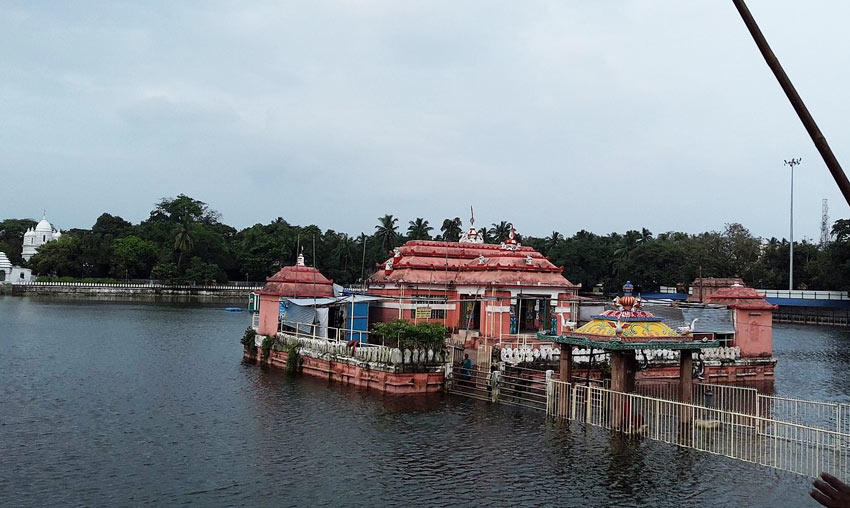
- Narendra Sarovar – A historic sacred tank associated with Chandan Yatra.
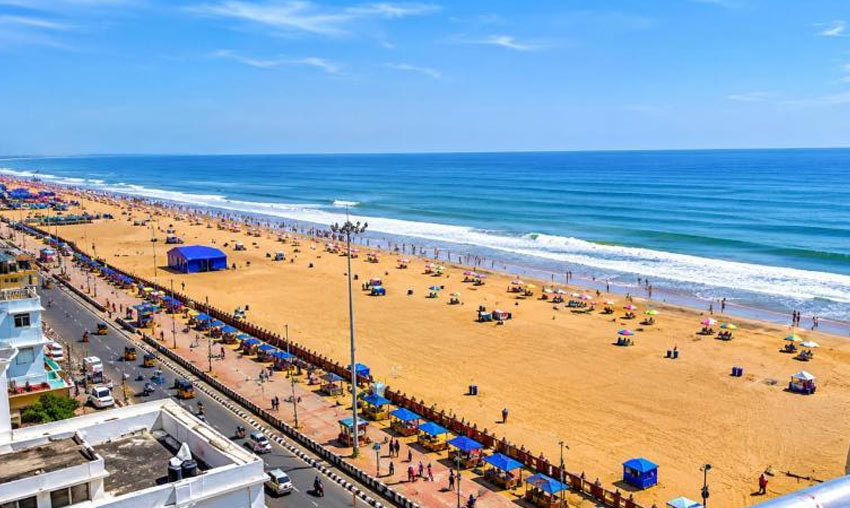
- Puri Beach and Golden Beach – Enjoy the coastal scenery and seaside atmosphere.
- Swargadwar Beach – A well-known religious and coastal area of Puri.
- Loknath Temple – An important Shiva temple in Puri.
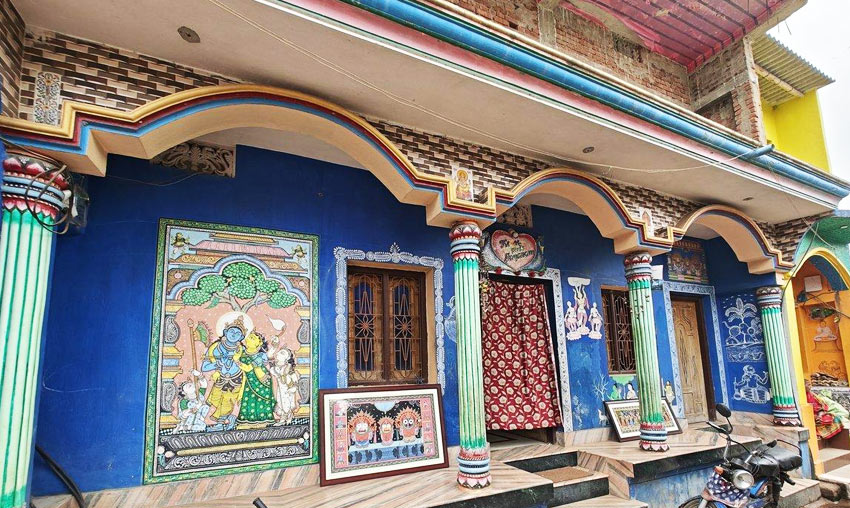
- Raghurajpur Heritage Craft Village – Discover Odisha’s traditional Pattachitra art.
- Konark Sun Temple – A UNESCO World Heritage Site located near Puri.
Suggested One-Day Puri Temple and Sightseeing Itinerary
If you are visiting Puri for a short trip, the following itinerary can help you explore its main religious and cultural attractions. Actual timings will depend on darshan availability, temple rituals, traffic and local arrangements.
Early Morning
- Reach Shree Jagannath Temple and check the available darshan arrangements.
- Participate in darshan according to the temple’s current schedule and entry rules.
- Explore the temple surroundings and traditional markets.
Late Morning
- Visit Gundicha Temple.
- Explore Narendra Sarovar if time permits.
Afternoon
- Enjoy local Odia food and traditional sweets.
- Explore local handicraft shops and religious markets.
Evening
- Visit Puri Beach or Golden Beach.
- Enjoy the coastal atmosphere and local food stalls.
Where to Stay Near Jagannath Temple
Puri offers a wide range of accommodation options for pilgrims and tourists. Visitors can choose hotels, guesthouses, lodges, beachside properties and temple administration accommodation, depending on their budget and travel preferences.
- Near the Jagannath Temple: Suitable for pilgrims who want convenient access to the temple.
- Grand Road area: Useful for visitors who want to stay close to the main temple route and local markets.
- Sea Beach Road: Suitable for travellers interested in beach access, restaurants and shopping.
- Chakra Tirtha Road: Offers access to hotels and coastal areas.
The Shree Jagannath Temple Administration also operates accommodation facilities for devotees. Check the official website for availability, booking rules and current tariffs.
Travel Tips for Visiting Jagannath Temple
- Check the latest darshan schedule before leaving your hotel.
- Arrive with sufficient time, especially on weekends and festival days.
- Understand the temple’s entry restrictions before planning your visit.
- Avoid carrying restricted electronic items and unnecessary valuables.
- Wear comfortable and modest clothing.
- Follow security instructions and use designated footwear storage facilities.
- Ask about current Mahaprasad arrangements at Ananda Bazar.
- Keep extra time for darshan because rituals may affect visitor access.
- Book your hotel early during Rath Yatra and other major festivals.
- Use official temple information channels for updated visitor guidance.
Frequently Asked Questions About Jagannath Temple Puri
1. Where is Shree Jagannath Temple located?
Shree Jagannath Temple is located in Puri, Odisha, India, near the Bay of Bengal. It is the city’s most important religious and cultural landmark.
2. Who built Jagannath Temple in Puri?
The present temple is associated with King Anantavarman Chodaganga Deva of the Eastern Ganga dynasty. Its construction is generally dated to the 12th century CE, with completion and later additions associated with subsequent rulers.
3. Which deities are worshipped at Jagannath Temple?
The principal deities are Lord Jagannath, Lord Balabhadra and Devi Subhadra. Sudarshana and other sacred images are also part of the temple tradition.
4. Is Jagannath Temple one of the Char Dham?
Yes. Puri is traditionally counted among the four sacred Char Dham pilgrimage destinations, along with Badrinath, Dwarka and Rameswaram.
5. What are the darshan timings of Jagannath Temple?
The temple has a broad opening period beginning in the early morning and continuing into the night, but darshan is linked to the daily Niti schedule. The exact availability changes during rituals and festivals. Check the official temple website before visiting.
6. Is there an entry fee at Jagannath Temple?
General darshan does not have a standard entry ticket charge. Special arrangements, facilities or services, if available, may have separate conditions.
7. Can non-Hindus enter Jagannath Temple?
No. Under the temple’s established entry rules, non-Hindus are not permitted inside the temple premises.
8. What is Mahaprasad at Jagannath Temple?
Mahaprasad is the sacred food offered to Lord Jagannath and subsequently distributed to devotees. It is an important part of Puri’s religious and culinary traditions.
9. What is the famous Rath Yatra of Puri?
Rath Yatra is the annual chariot festival during which Lord Jagannath, Lord Balabhadra and Devi Subhadra travel in three decorated chariots from the main temple to Gundicha Temple.
10. How far is Jagannath Temple from Puri Railway Station?
The temple is approximately 3 km from Puri Railway Station, according to the Puri District Administration. Local transport is available.
11. How far is Jagannath Temple from Bhubaneswar Airport?
Biju Patnaik International Airport in Bhubaneswar is approximately 60 km from Puri by road. Travel time depends on traffic and route conditions.
12. What is Nabakalebara?
Nabakalebara is the sacred renewal of the wooden forms of the principal deities. New images are prepared from specially selected sacred neem trees according to traditional rituals.
Shree Jagannath Temple is the spiritual heart of Puri and one of the most important living temple traditions in India. Its ancient history, magnificent Kalinga architecture, sacred wooden deities, daily rituals, Mahaprasad and grand Rath Yatra make it a unique pilgrimage destination.
For devotees, a visit to the temple is an opportunity to experience the traditions and blessings of Lord Jagannath. For travellers, it offers a deeper understanding of Odisha’s cultural heritage, architecture and religious history.
While exploring the temple, visitors can also discover Gundicha Temple, Narendra Sarovar, Puri Beach, Golden Beach and other attractions across the city.
Plan your spiritual journey with our complete Puri Travel Guide and explore more destinations across Odisha on VisitPlacesIndia.com.
Nearby Places to Visit



Nearby Places to Visit