Champaner Best Places to Visit, History, Best Time to visit, Weather
Champaner, the capital of the Sultanate of Gujarat, is a historic city in Gujarat's Panchmahal district. Located in the center of Champaner and surrounded by the Pavagadh hills, this amazing archeological park is one of the most sought-after locations in Gujarat and is listed among the world's most prestigious UNESCO World Heritage Sites.
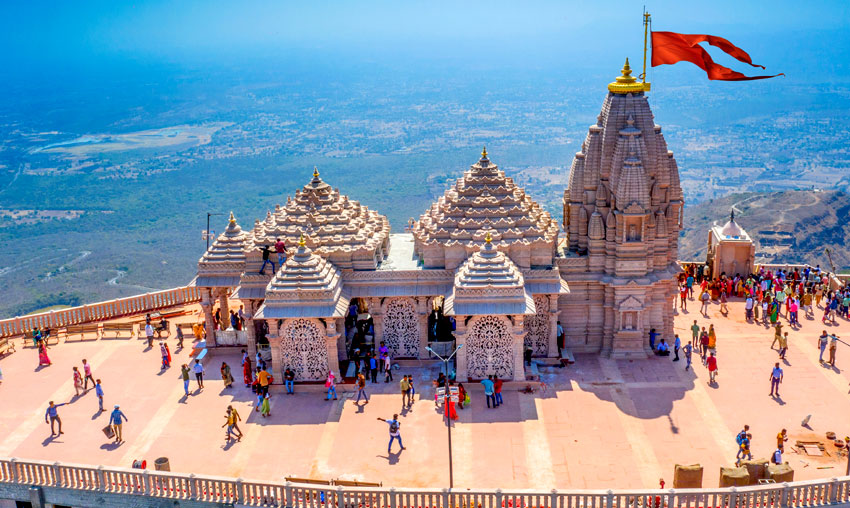
The Champaner-Pavagadh Archaeological Park is rich in mythical and historical value. There are countless magnificent architectural marvels in the park that combine Islamic and Hindu design elements. The hill of Pavagadh is thought to be a portion of the Himalayas that Hanuman initially transported to Lanka in the Ramayana epic, which is another fascinating fact about this location. This makes for a truly fascinating destination to explore, especially with its rich history.
History of Champaner Pavagadh
Champaner is thought to have been called after Champa, a general in the king's court and a friend of the famous Chavda King of the eighth century, Vanraj Chavda. Some theories, however, also claim that the name comes from the yellow-tinted rocks of Pavagadh, the town's neighbor.
A crucial trading route that connected Gujarat to both North and South India was Pavagadh. As a result, several monarchs and rulers came to this prosperous region of the realm. Even though Mahmud Begda established Champaner as the capital of Pavagadh during the early Mughal era, Humayun, a later Mughal monarch, further destroyed and subjugated it.
After 1535, Champaner-Pavagadh had very little Maratha rule and no modernization until the 1800s, when it became a British colony. There were reportedly only 500 people living in the area at the time. The town, which is now an amazing historical monument, stood at a halt while many of its neighbors industrialized under several dynasties.
Champaner-Pavagadh Archaeological Park
The Gujarati heritage town of Champaner is home to the Champaner-Pavagadh Archaeological Park. This UNESCO-designated World Heritage Site honors the human way of life from the Chalcolithic or prehistoric era to the sixteenth century.
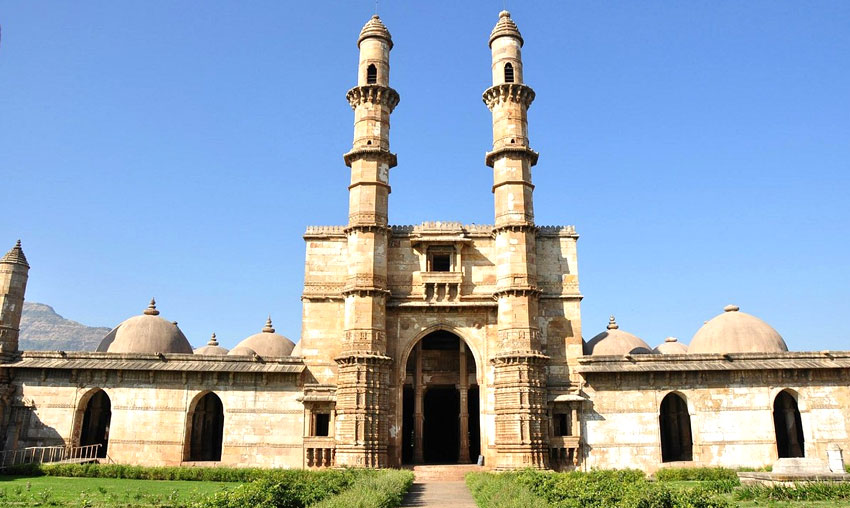
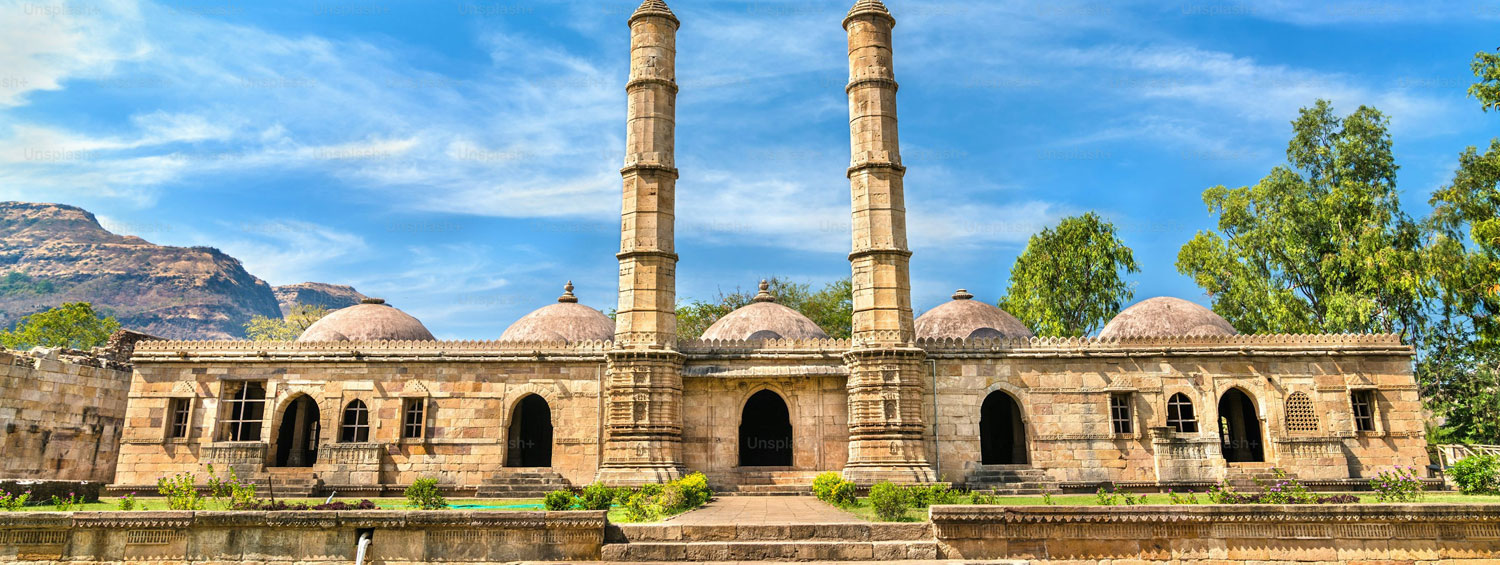
A vast array of historic buildings, including palaces, temples, gateways, and mosques, may be found inside the archeological park. Additionally, the Champaner-Pavagadh Archaeological Park lists ancient artifacts in areas including agriculture, water conservation, and historical residential areas. Additionally, there is an impressive fusion of Islamic and Hindu architecture.
Suggested Itinerary for Champaner
Lila Gumbaj Ki Masjid, Kevada Mosque, Nagina Masjid & Cenotaph, and primarily the Jami Masjid are the mosques that can be visited first. It may only take you a day or so to experience this. You can go to the Lakulisa temple and the Pavagadh fort the following day. Set aside the third day to visit the abandoned Hindu and Jain temples, the Kalika Mata Temple, and the Fort of Pavagadh.
Best time to visit Champaner?
The best months to visit Champaner Pavagadh, a UNESCO World Heritage Site, are October through February. The weather is good, with clear blue skies and temperatures ranging from 12 to 29 degrees Celsius. But the summers are really hot here. With temperatures as high as 44 degrees, they are unbearable. With average daytime temperatures of 26 degrees and nighttime lows of 9 degrees, winters are comparatively colder.
How to Reach Champaner?
Champaner is accessible by air, train, and road transportation and is well-connected by roads. The nearest airport to Champaner is Vadodara. It takes 48 to 80 minutes to get to Champaner, which is located 43 to 52 km from the city.
The closest is the Champaner Railway station on Champaner Road in Khakariya. It is around 20 to 30 kilometers away from Champaner and can be reached by self-drive or cab in 28 to 35 minutes. The Champaner ST Depot, which is only a five-minute walk from the Champaner city center, is the sole bus stop closest to it.