Sandipani Ashram Ujjain – History, Gomti Kund, Timings and Travel Guide
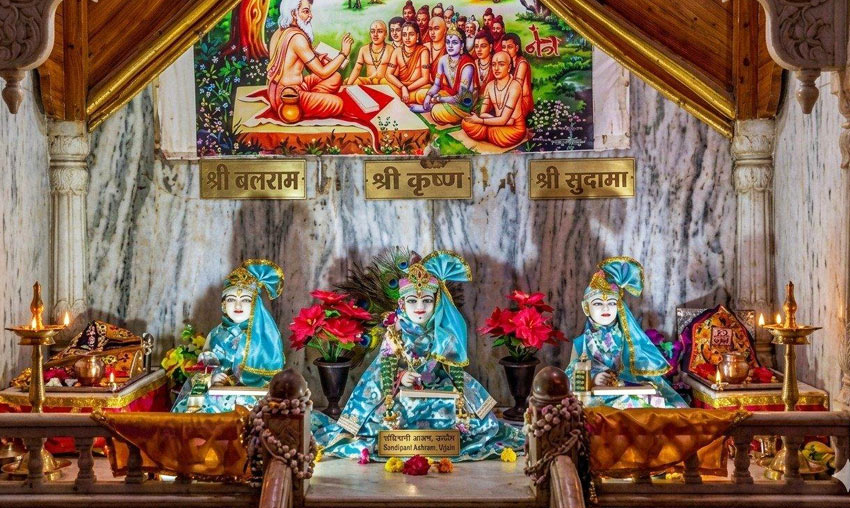
Sandipani Ashram Ujjain is one of the most important historical and religious attractions in Madhya Pradesh. Traditionally believed to be the place where Lord Krishna, his elder brother Balarama and their friend Sudama received education from Maharishi Sandipani, this sacred ashram represents the ancient Indian Guru-Shishya tradition.
Located in the Ankpat area near Mangalnath Road, Sandipani Ashram is a peaceful religious complex associated with the stories of Krishna’s childhood and education. According to Hindu tradition, Lord Krishna learned the Vedas, scriptures, philosophy, warfare and several other subjects under the guidance of Guru Sandipani.
The ashram is famous for its shrine dedicated to Guru Sandipani, the images of Krishna, Balarama and Sudama, the sacred Gomti Kund, the Ankpat area and a stone bearing numbers from 1 to 100. Each of these places is associated with traditional stories about the education of Lord Krishna.
Sandipani Ashram is an important destination for devotees, families, students and travellers interested in India’s ancient educational traditions. Its peaceful atmosphere and religious significance make it a worthwhile stop during a visit to Ujjain.
Explore our Ujjain Travel Guide for information about more temples, historical places and attractions in the city.
Sandipani Ashram – Quick Information
| Travel Information | Details |
|---|---|
| Attraction Name | Maharishi Sandipani Ashram |
| Location | Ankpat, Mangalnath Road, Ujjain, Madhya Pradesh, India |
| Associated Sage | Maharishi Sandipani |
| Associated Personalities | Lord Krishna, Lord Balarama and Sudama |
| Religious Significance | Traditional Gurukul of Lord Krishna |
| Famous For | Gomti Kund, Ankpat and the 1–100 numbers stone |
| Important Shrine | Guru Sandipani and Sarveshwar Mahadev |
| Published Visiting Hours | 9:00 AM – 7:00 PM, according to Madhya Pradesh Tourism |
| Entry Fee | Check current entry arrangements locally |
| Best Time to Visit | October to March |
| Nearest Railway Station | Ujjain Junction |
| Nearest Airport | Devi Ahilya Bai Holkar Airport, Indore |
| Ideal Visit Duration | 45 minutes to 1 hour |
Note: Visiting hours are based on Madhya Pradesh Tourism’s published information. Timings and access arrangements can change during festivals and special occasions. Confirm locally before travelling.
History of Sandipani Ashram Ujjain
Ancient Ujjain, historically known as Avantika, was an important centre of religion, culture, education and learning. Its association with Maharishi Sandipani gives the city a special place in Hindu traditions related to the ancient Gurukul system.
According to Hindu tradition, Maharishi Sandipani established his ashram in this region, where Lord Krishna, Balarama and Sudama studied under his guidance. The ashram is remembered as a place where young students received education in scriptures, philosophy, traditional knowledge and practical skills.
The present Sandipani Ashram is revered as the sacred location associated with this traditional Gurukul. The shrine of Guru Sandipani and the images of his three famous pupils preserve the memory of the teacher-student relationship.
The Ujjain District Administration identifies Sandipani Ashram as a historic and religious attraction. It also describes ancient Ujjain as a prestigious centre of learning during the period associated with the Mahabharata traditions.
Today, the ashram continues to attract devotees who wish to connect with the stories of Lord Krishna’s education and the importance of the Guru-Shishya relationship in Indian culture.
Lord Krishna, Balarama and Sudama at Guru Sandipani’s Ashram
One of the most loved stories associated with Sandipani Ashram is the education of Lord Krishna, Lord Balarama and Sudama under Maharishi Sandipani.
According to traditional accounts, Krishna and Balarama came to Ujjain to receive education from Guru Sandipani. Sudama, who later became famous for his friendship with Krishna, also studied with them.
The relationship between the three students and their guru represents the values of discipline, knowledge, humility and respect for teachers. The story of Krishna and Sudama is particularly remembered as an example of friendship that remained strong despite differences in their later circumstances.
The Story of 64 Arts in 64 Days
According to a popular religious tradition, Lord Krishna mastered 64 different arts in 64 days while studying under Guru Sandipani. These arts are traditionally associated with a wide range of knowledge and skills, including music, dance, literature, painting, craftsmanship, martial arts and other disciplines.
The story reflects the traditional belief in Krishna’s extraordinary intelligence and ability to learn. It also highlights the importance of comprehensive education in the ancient Indian Gurukul system.
What Did Krishna Learn at the Ashram?
Traditional accounts describe Krishna’s education as including several areas of knowledge and practical skills. These include:
- Vedas and traditional scriptures
- Philosophy and spiritual knowledge
- Music and performing arts
- Martial arts and warfare skills
- Mathematics and traditional sciences
- Ethics, discipline and principles of Dharma
- Practical knowledge and different traditional arts
The story of Krishna’s education is an important part of the spiritual identity of Sandipani Ashram.
Gurudakshina – The Story of Krishna and Guru Sandipani
One of the most meaningful stories connected with Sandipani Ashram is the traditional account of Lord Krishna’s Gurudakshina to his teacher.
In the ancient Indian Gurukul system, students traditionally expressed gratitude to their guru after completing their education through Gurudakshina. Rather than asking for wealth or valuable gifts, Guru Sandipani and his wife made a special request.
According to the popular story narrated by Madhya Pradesh Tourism, Guru Sandipani’s son had been lost after drowning in the sea. Gurumata asked Krishna to bring their son back as Gurudakshina.
Krishna accepted the request and set out to fulfil it. The traditional account describes his encounter with the sea monster Shankhasura, from whom he obtained the conch known as Panchajanya. Krishna then approached Yama, the god of death, and brought Guru Sandipani’s son back to his parents.
Guru Sandipani and Gurumata were overwhelmed by Krishna’s devotion and the fulfilment of their wish.
This story is remembered as an example of gratitude, respect for teachers and the sacred relationship between a guru and his student.
Gomti Kund – The Sacred Water Tank of Sandipani Ashram
Gomti Kund is one of the most important attractions within the Sandipani Ashram complex. It is a sacred stepped water tank associated with the religious stories of Lord Krishna and Guru Sandipani.
According to popular legend, Krishna brought the waters of the sacred rivers of India to this kund so that his guru could perform religious rituals without having to travel to distant pilgrimage destinations.
The story gives Gomti Kund special religious significance. Devotees traditionally regard its water as sacred and visit the kund as part of their pilgrimage to Sandipani Ashram.
According to the Ujjain District Administration, Gomti Kund is mentioned in Puranic tradition and served as a source of water for the ashram in earlier times.
Why Is Gomti Kund Important?
- It is associated with the traditional stories of Lord Krishna and Guru Sandipani.
- It is regarded as a sacred water tank within the ashram.
- It is connected with the legend of Krishna bringing the waters of holy rivers to his guru.
- It forms an important part of the religious and historical identity of the ashram.
- Visitors can observe its traditional stepped structure and peaceful surroundings.
Visitors should avoid throwing waste into the kund and follow any restrictions regarding touching or collecting its water.
Ankpat – The Place Associated with Krishna’s Writing Practice
Ankpat is an area near Sandipani Ashram that holds a special place in local religious tradition. According to popular belief, this is the place where Lord Krishna washed his writing tablets after practising his lessons.
The name Ankpat is traditionally associated with the learning and writing activities of Krishna during his time at Guru Sandipani’s Gurukul.
The area is an interesting stop for visitors because it connects the spiritual story of Krishna with the everyday activities of a student learning under a teacher.
The Stone with Numbers from 1 to 100
One of the interesting features associated with Sandipani Ashram is a stone on which the numbers from 1 to 100 are displayed.
According to local tradition, the numbers were engraved by Guru Sandipani himself. The stone is regarded as a reminder of the educational activities that took place at the ancient Gurukul.
For visitors, particularly students and families, this feature adds an educational dimension to the religious visit. It symbolises the importance of basic learning, mathematics and the transmission of knowledge from teacher to student.
Sarveshwar Mahadev Temple at Sandipani Ashram
The Sandipani Ashram complex also contains a shrine dedicated to Lord Shiva, known as Sarveshwar Mahadev Temple.
According to traditional belief, Guru Sandipani and his students worshipped Lord Shiva at this shrine. The Shiva Lingam is an important part of the ashram’s religious heritage.
Madhya Pradesh Tourism describes the Shivling at Sarveshwar Mahadev as approximately 6,000 years old and associates it with the worship of Guru Sandipani and his disciples. This age is a traditional claim rather than an independently established archaeological date.
Devotees visiting the ashram often include Sarveshwar Mahadev in their prayers along with darshan of Guru Sandipani, Krishna, Balarama and Sudama.
Sandipani Ashram and the Vallabh Sampradaya
Sandipani Ashram also has an association with the Vallabh Sampradaya, a Vaishnava tradition founded by Shri Vallabhacharya.
According to the Ujjain District Administration, followers of the Vallabh Sampradaya regard this location as the 73rd of the 84 baithaks, or sacred seats, associated with Shri Vallabhacharya’s religious discourses across India.
This association adds another dimension to the ashram’s religious importance and attracts followers interested in the teachings and traditions of Vallabhacharya.
Guru Purnima at Sandipani Ashram
Guru Purnima is one of the most meaningful occasions to visit Sandipani Ashram. The festival is dedicated to honouring gurus and teachers and is especially relevant to a place traditionally associated with Guru Sandipani.
Devotees visit the ashram to offer prayers and express gratitude to their teachers. Families also bring children for Vidyarambh Sanskar, a traditional ceremony that marks the beginning of a child’s educational journey.
The ceremony symbolises the importance of knowledge, discipline and respect for teachers in Indian culture.
Janmashtami Celebrations
Janmashtami, the festival celebrating the birth of Lord Krishna, is another important occasion associated with Sandipani Ashram.
Devotees visit the ashram to remember Krishna’s childhood and his time as a student under Guru Sandipani. Special devotional activities and religious observances may take place according to the local schedule.
Sandipani Ashram Timings and Visiting Information
According to Madhya Pradesh Tourism’s published visitor information, Sandipani Ashram is open daily from 9:00 AM to 7:00 PM.
Visitors should keep in mind that opening hours can change during festivals, special ceremonies and local religious events.
| Visitor Information | Details |
|---|---|
| Opening Time | 9:00 AM |
| Closing Time | 7:00 PM |
| Days | Daily, according to published tourism information |
| Best Time to Visit | Morning or late afternoon |
| Recommended Duration | 45 minutes to 1 hour |
| Entry Fee | Check locally before visiting |
| Photography | Follow the rules displayed at the ashram and individual shrines |
Best Time of Day to Visit
Morning is a comfortable time to explore the ashram and its different attractions. Late afternoon is another suitable option, particularly during summer.
Visitors who want to participate in Vidyarambh Sanskar or visit during Guru Purnima should enquire about the ceremony schedule in advance.
Best Time to Visit Sandipani Ashram Ujjain
The best time to visit Sandipani Ashram is generally between October and March, when Ujjain experiences relatively pleasant weather. This period is suitable for exploring the ashram and other religious attractions in the city.
Winter Season (October to March)
Winter is a comfortable season for sightseeing and visiting religious places. Visitors can explore the ashram, Gomti Kund and nearby attractions without the intense summer heat.
Summer Season (April to June)
Ujjain can experience high temperatures during summer. Visit early in the morning or later in the afternoon and carry drinking water.
Monsoon Season (July to September)
The monsoon brings rainfall to Ujjain and makes the surrounding greenery more pleasant. However, visitors should take care on wet surfaces and check local weather conditions before travelling.
During Guru Purnima
Guru Purnima is a particularly meaningful occasion because the ashram is traditionally associated with Guru Sandipani. Devotees and families may visit for prayers and Vidyarambh Sanskar. Expect a larger number of visitors than on ordinary days.
How to Reach Sandipani Ashram Ujjain
Sandipani Ashram is situated in the Ankpat area near Mangalnath Road in Ujjain. It is located on the northern side of the city and can be reached by local transport, taxi or private vehicle.
By Train
Ujjain Junction is the nearest major railway station. It is connected with several important cities across India. From the railway station, visitors can hire an auto-rickshaw, e-rickshaw or taxi to reach Sandipani Ashram.
By Air
The nearest major airport is Devi Ahilya Bai Holkar Airport in Indore, approximately 53 kilometres from Ujjain according to the Ujjain District Administration. Visitors can travel from the airport to Ujjain by taxi or road transport.
By Road
Ujjain is connected by road with Indore, Bhopal, Dewas, Ratlam and several other cities in Madhya Pradesh. Visitors can reach Ujjain by bus, taxi or private vehicle and use local transport to reach the ashram.
By Local Transport
Auto-rickshaws, e-rickshaws and taxis are convenient options for reaching Sandipani Ashram. The temple is on the Mangalnath Road route, so visitors can combine it with a visit to Mangalnath Temple.
Places to Visit Near Sandipani Ashram
Sandipani Ashram is located near several important religious and historical attractions in Ujjain. Visitors can explore multiple destinations in the same trip.
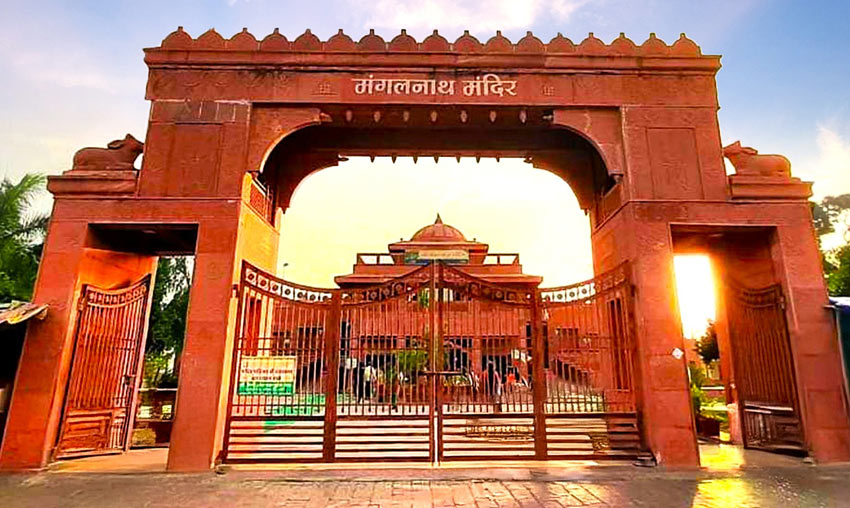
1. Mangalnath Temple
Mangalnath Temple is an important shrine associated with Lord Shiva and Planet Mars. It is traditionally regarded as the birthplace of Mangal Graha and is famous for Mangal Dosh Nivaran Puja and Bhat Puja.
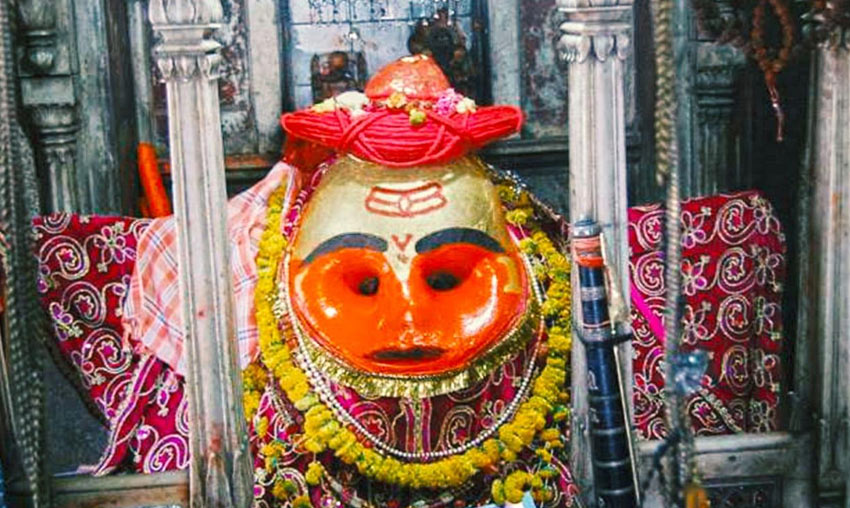
2. Kal Bhairav Temple
Kal Bhairav Temple is one of Ujjain’s most distinctive religious attractions. Dedicated to Lord Kal Bhairav, it is traditionally regarded as the shrine of the city’s guardian deity and is famous for its liquor offering ritual.
3. Gadkalika Mata Temple
Gadkalika Mata Temple is an ancient shrine dedicated to Goddess Kalika. According to local tradition, the temple is associated with the poet Kalidasa and his devotion to the goddess.
4. Bhartrihari Caves
Bhartrihari Caves are traditionally associated with the sage and poet-king Bhartrihari, who is believed to have meditated here after renouncing worldly life.
5. Mahakaleshwar Jyotirlinga Temple
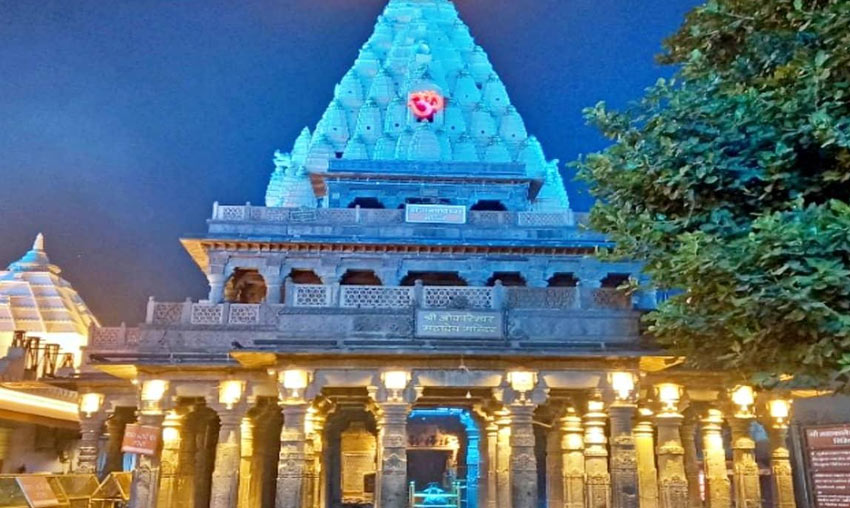
Mahakaleshwar Temple is one of the twelve Jyotirlingas of Lord Shiva and the most famous pilgrimage destination in Ujjain. It is known for its Bhasma Aarti and unique religious traditions.
6. Mahakal Lok
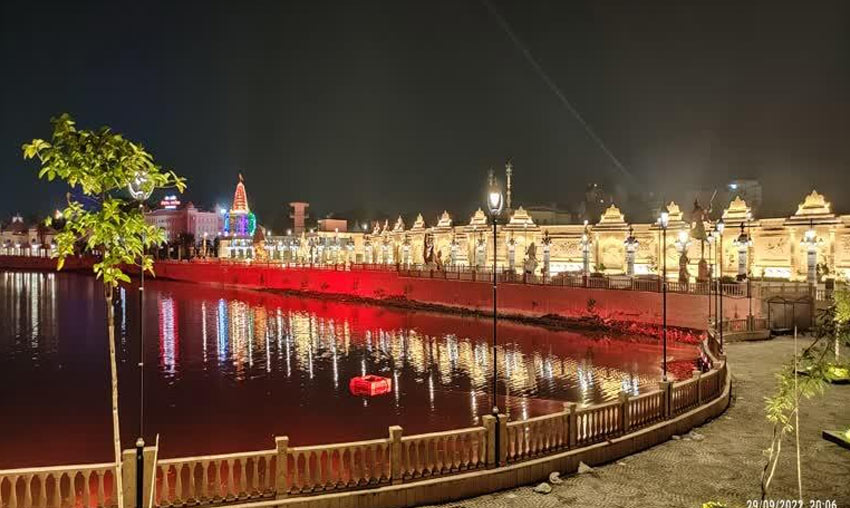
Mahakal Lok is a beautifully developed temple corridor featuring sculptures, pillars, murals and landscaped spaces inspired by stories associated with Lord Shiva.
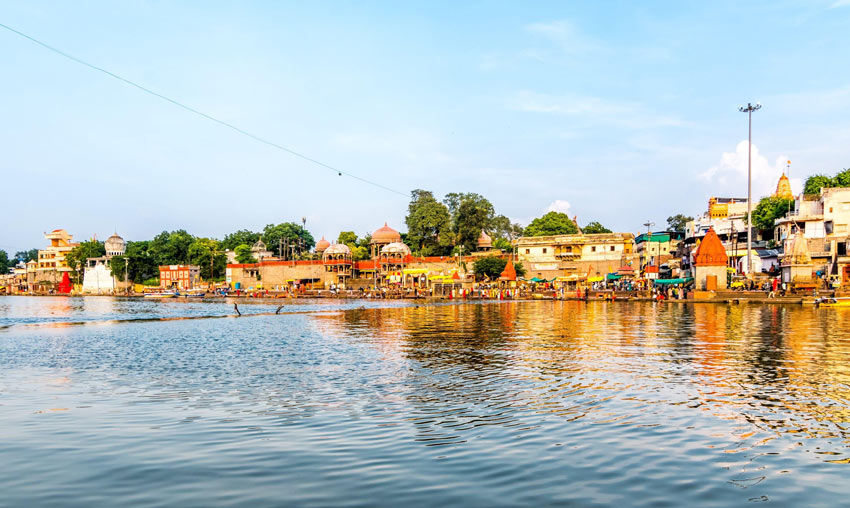
7. Ram Ghat
Ram Ghat is a historic bathing ghat on the Shipra River. It is famous for religious bathing traditions, evening river aarti and its importance during Simhastha Kumbh Mela.
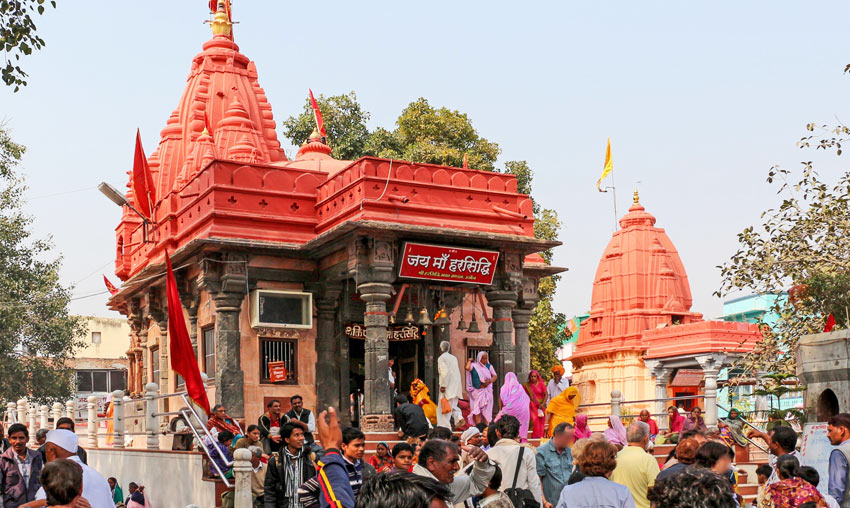
8. Harsiddhi Mata Temple
Harsiddhi Mata Temple is an important Shakti shrine in Ujjain. It is famous for its two tall deep-stambhs, which are illuminated with oil lamps during special evening ceremonies.
For more sightseeing ideas and detailed information about Ujjain, visit our Ujjain Travel Guide.
Suggested One-Day Ujjain Sightseeing Itinerary
If you are planning a one-day visit to Ujjain, you can combine Sandipani Ashram with Mangalnath Temple and other important religious attractions.
| Time | Activity |
|---|---|
| Early Morning | Visit Mahakaleshwar Jyotirlinga Temple |
| Morning | Explore Mahakal Lok |
| Late Morning | Visit Harsiddhi Mata Temple |
| Afternoon | Lunch and travel towards Mangalnath Road |
| Afternoon | Explore Sandipani Ashram and Gomti Kund |
| Late Afternoon | Visit Mangalnath Temple |
| Evening | Explore Ram Ghat and experience the Shipra River Aarti |
This is a suggested itinerary. Actual travel times depend on traffic, temple queues, opening hours and the time required for special rituals.
Travel Tips for Visiting Sandipani Ashram
- Check the current visiting hours before travelling.
- Visit in the morning or late afternoon for a comfortable experience.
- Wear modest clothing suitable for a religious place.
- Remove footwear before entering shrines wherever instructed.
- Respect the sanctity of Gomti Kund and avoid throwing waste into the water.
- Follow photography restrictions displayed within the ashram.
- Do not touch or damage the historic stone and other heritage features.
- If you plan to perform Vidyarambh Sanskar for a child, enquire about the procedure in advance.
- Guru Purnima and Janmashtami may attract more visitors, so allow extra time.
- Combine your visit with Mangalnath Temple, which is located on the same general route.
- Carry drinking water during summer and follow local instructions.
Frequently Asked Questions About Sandipani Ashram Ujjain
1. Where is Sandipani Ashram located?
Sandipani Ashram is located in the Ankpat area near Mangalnath Road in Ujjain, Madhya Pradesh, India.
2. Why is Sandipani Ashram famous?
It is traditionally believed to be the place where Lord Krishna, Balarama and Sudama received education from Maharishi Sandipani.
3. Who was Guru Sandipani?
Maharishi Sandipani is a revered sage in Hindu tradition who is remembered as the teacher of Lord Krishna, Lord Balarama and Sudama.
4. Did Lord Krishna study at Sandipani Ashram?
According to Hindu religious tradition, Lord Krishna and Balarama studied under Guru Sandipani at this ashram. Sudama is also associated with their time as students.
5. What is Gomti Kund famous for?
Gomti Kund is a sacred stepped tank within the ashram. According to legend, Lord Krishna brought the waters of sacred rivers here for Guru Sandipani’s religious rituals.
6. What is Ankpat in Ujjain?
Ankpat is an area near Sandipani Ashram traditionally believed to be the place where Lord Krishna washed his writing tablets after practising his lessons.
7. What is the stone with numbers at Sandipani Ashram?
A stone bearing numbers from 1 to 100 is found at the ashram. According to local tradition, it was engraved by Guru Sandipani.
8. What is the story of Krishna learning 64 arts in 64 days?
According to popular tradition, Lord Krishna mastered 64 different arts in 64 days while studying under Guru Sandipani.
9. What are the visiting hours of Sandipani Ashram?
Madhya Pradesh Tourism lists the visiting hours as 9:00 AM to 7:00 PM daily. Visitors should confirm the current schedule locally.
10. Is there an entry fee for Sandipani Ashram?
The official district tourism information does not specify an entry fee. Visitors should confirm current entry arrangements at the ashram.
11. Which festivals are important at Sandipani Ashram?
Guru Purnima and Janmashtami are particularly relevant occasions. Guru Purnima is associated with honouring teachers and the Guru-Shishya tradition.
12. What is Vidyarambh Sanskar at Sandipani Ashram?
Vidyarambh Sanskar is a traditional ceremony marking the beginning of a child’s education. Families visit the ashram to perform this ritual and seek blessings for their children’s learning journey.
13. Is Sandipani Ashram near Mangalnath Temple?
Yes. Both attractions are located along the Mangalnath Road area and can conveniently be included in the same sightseeing trip.
14. How much time is needed to visit Sandipani Ashram?
Approximately 45 minutes to one hour is generally sufficient to explore the main shrine, Gomti Kund and other important features of the complex.
Explore More Places in Ujjain
Ujjain is one of India’s most important spiritual destinations, known for its ancient temples, sacred riverfronts, historical landmarks and religious traditions. Explore more attractions and plan your journey with our Ujjain travel guide.
- Ujjain – Complete Travel Guide
- Mahakaleshwar Jyotirlinga Temple
- Mahakal Lok Ujjain
- Ram Ghat Ujjain
- Harsiddhi Mata Temple Ujjain
- Kal Bhairav Temple Ujjain
- Mangalnath Temple Ujjain
- Sandipani Ashram Ujjain
Visit Sandipani Ashram to discover the traditional story of Lord Krishna’s education, the teachings of Guru Sandipani and the importance of the Guru-Shishya relationship. From the sacred Gomti Kund and Ankpat to the shrine of Sarveshwar Mahadev, this peaceful place offers a meaningful glimpse into Ujjain’s spiritual and educational heritage.
Nearby Places to Visit