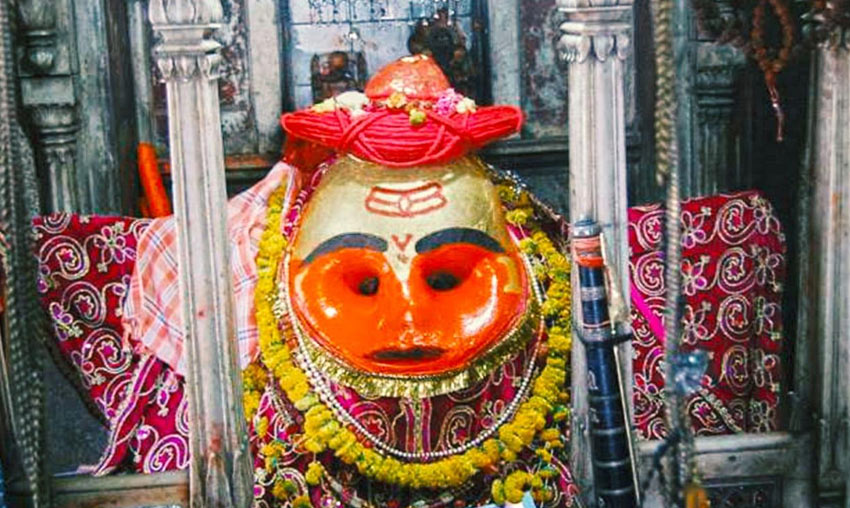
Kal Bhairav Temple Ujjain – History, Timings, Liquor Offering and Travel Guide
Kal Bhairav Temple Ujjain is one of the most fascinating and spiritually significant temples in Madhya Pradesh. Located in the Bhairavgarh area on the banks of the sacred Shipra River, this ancient shrine is dedicated to Lord Kal Bhairav, a fierce manifestation of Lord Shiva. He is traditionally worshipped as the guardian or Kotwal of Ujjain and is regarded as one of the most important deities in the city’s Shaivite religious traditions.
The temple is especially famous for its unusual ritual in which liquor is offered to the deity as part of traditional worship. This distinctive practice attracts devotees and curious visitors from different parts of India. Flowers, coconuts, incense and sweets are also offered at the temple, and liquor is not compulsory for devotees.
Kal Bhairav Temple is an important stop for pilgrims visiting Ujjain, particularly those who also seek darshan at the famous Mahakaleshwar Jyotirlinga Temple. According to local religious belief, a pilgrimage to Mahakal is often considered incomplete without seeking the blessings of Kal Bhairav.
With its ancient traditions, distinctive deity, Maratha-influenced architecture and spiritual atmosphere, Kal Bhairav Temple offers a unique experience for anyone exploring the religious heritage of Ujjain.
For more attractions, temples and travel information, explore our Ujjain Travel Guide.
Kal Bhairav Temple – Quick Information
| Travel Information | Details |
|---|---|
| Temple Name | Shri Kal Bhairav Temple |
| Location | Bhairavgarh, Ujjain, Madhya Pradesh, India |
| Presiding Deity | Lord Kal Bhairav |
| Religious Tradition | Shaivism and Tantric traditions |
| Religious Importance | One of the important Ashta Bhairava shrines |
| Popular Name | Kotwal of Ujjain |
| Famous For | Traditional liquor offering ritual |
| River | Shipra River |
| Reported Darshan Timings | 6:30 AM – 9:30 PM; confirm locally before visiting |
| Entry Fee | General darshan is free |
| Special Darshan | A paid quicker-darshan option has been reported; check current availability and charges at authorised temple counters |
| Best Time to Visit | October to March |
| Nearest Railway Station | Ujjain Junction |
| Nearest Airport | Devi Ahilya Bai Holkar Airport, Indore |
| Ideal Visit Duration | 30 minutes to 1 hour |
Note: Timings and special darshan arrangements may change during festivals, aarti and other religious occasions. Confirm the latest information with the temple before travelling.
History of Kal Bhairav Temple Ujjain
Kal Bhairav Temple is considered one of the ancient religious sites of Ujjain. The shrine is associated with the worship of the Ashta Bhairavas, the eight manifestations of Bhairava connected with the Shaivite tradition.
According to traditional accounts, the original temple is associated with King Bhadrasen. The sacred importance of this location is also mentioned in the Avanti Khanda of the Skanda Purana, an important source associated with the religious history of the ancient city of Avantika, the historical name of Ujjain.
Archaeological remains found at the site, including sculptures of Hindu deities associated with the Paramara period, indicate that religious activity in this area goes back many centuries. The present temple structure reflects a strong Maratha architectural influence and is associated with restoration during the eighteenth century.
One popular historical account connects the temple’s restoration with Maratha general Mahadji Shinde. According to temple tradition, he offered his turban to Kal Bhairav following the setback at the Third Battle of Panipat in 1761, and the temple was subsequently restored.
Today, the temple remains an important centre of worship and attracts devotees who seek the blessings of Kal Bhairav, the traditional guardian deity of Ujjain.
Why Is Kal Bhairav Called the Kotwal of Ujjain?
Kal Bhairav is popularly known as the Kotwal of Ujjain. The word Kotwal traditionally refers to the guardian or protector responsible for watching over a town or city.
According to Hindu religious traditions, Kal Bhairav protects the sacred city of Ujjain and its religious heritage. He is also revered as the Senapati, or commander, of Lord Mahakal.
Devotees believe that Kal Bhairav protects the city from negative forces and safeguards those who seek his blessings. This belief explains why many pilgrims include his temple in their Ujjain pilgrimage after visiting Mahakaleshwar Temple.
Religious Significance of Kal Bhairav
- Kal Bhairav is worshipped as a fierce manifestation of Lord Shiva.
- He is regarded as the guardian or Kotwal of Ujjain.
- He is considered the foremost among the Ashta Bhairavas in the city’s religious tradition.
- The temple is associated with ancient Shaivite and Tantric practices.
- Devotees seek his blessings for protection, courage and the removal of obstacles.
- The shrine is an important part of the traditional Ujjain pilgrimage circuit.
The Famous Liquor Offering Ritual at Kal Bhairav Temple
One of the most distinctive features of Kal Bhairav Temple is the traditional offering of liquor, known as Madira Bhog. This ritual has made the temple famous among devotees and visitors from across India.
In this tradition, devotees offer liquor to Lord Kal Bhairav as part of worship. The offering is handed to the temple priest, who performs the ritual at the deity’s shrine. Visitors should follow the instructions of the priest and temple staff rather than attempting to perform the ritual themselves.
The practice is associated with older Tantric forms of worship. In certain Tantric traditions, offerings known as Panchamakara have symbolic and ritual significance. The liquor offering at Kal Bhairav Temple is one of the practices that has continued as part of its distinctive religious identity.
How Is the Liquor Offering Performed?
- Devotees obtain an offering according to the temple’s current rules and local regulations.
- The offering is handed to the authorised priest.
- The priest performs the traditional ritual in the sanctum.
- The offering is presented to the deity as part of the worship.
- The remaining ritual procedure is handled by the temple priest.
The ritual is commonly described as an offering in which the priest presents liquor to the deity. Visitors should understand that this is a religious tradition and not a public demonstration or activity to imitate.
Is Liquor Offering Compulsory?
No. Offering liquor is entirely optional. Devotees can visit the temple for darshan without making this offering.
Flowers, coconuts, incense, sweets and other traditional offerings are also accepted according to temple practice. Visitors who do not wish to offer liquor can simply pray to Lord Kal Bhairav and seek his blessings.
Important Rules for Visitors
- Follow the current instructions of the temple management regarding offerings.
- Hand ritual offerings to the priest rather than approaching the deity with them yourself.
- Do not assume that liquor must be offered to receive darshan.
- Ujjain has restrictions on liquor sales within its municipal limits. Do not purchase or transport alcohol in violation of local law.
- Ask temple staff about permitted offerings and arrangements before participating in the ritual.
- Do not believe claims from unauthorised vendors or touts promising special access.
Architecture of Kal Bhairav Temple
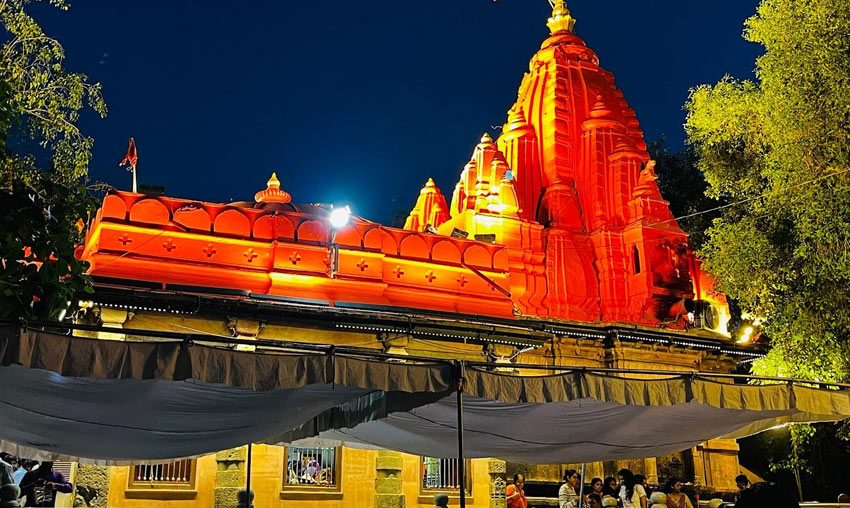
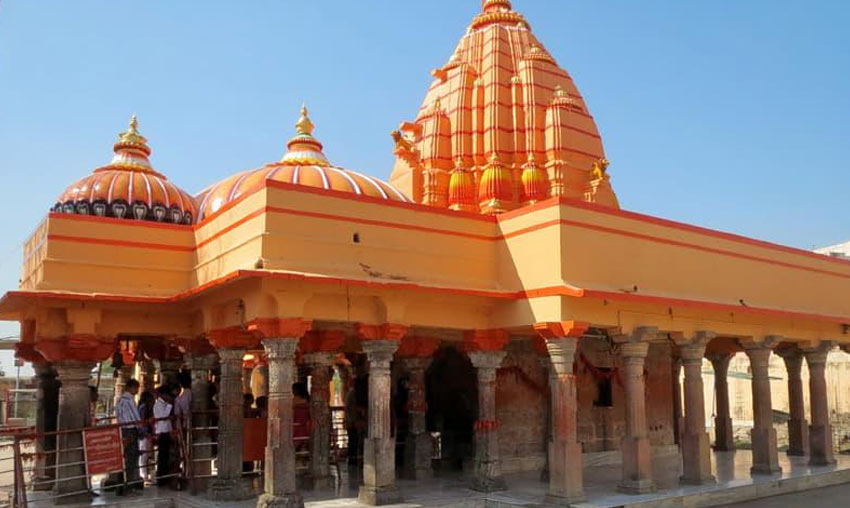
Kal Bhairav Temple has a distinctive architectural appearance that reflects its long history and Maratha-period restoration. Unlike some of the larger temple complexes in Ujjain, its structure is relatively compact, with a traditional entrance, courtyard, pillared hall and sanctum.
Important Features of the Temple
- Temple Gateway: The entrance features a tall stone gateway with an arched design and projecting balconies influenced by Maratha architecture.
- Temple Courtyard: The courtyard provides space for devotees to gather before entering the main shrine.
- Main Sanctum: The central shrine houses the distinctive form of Lord Kal Bhairav.
- Deity’s Appearance: The deity is represented by a rock form covered in vermilion, with a silver headpiece and a traditional turban.
- Deepmalika: A dark stone lamp tower stands in the courtyard.
- Traditional Shrines: The temple complex is also associated with smaller sacred spaces, including the Patal Bhairavi shrine.
The temple’s appearance, rituals and atmosphere make it different from many other Shiva temples in the region.
Festivals Celebrated at Kal Bhairav Temple
Kal Bhairav Temple attracts devotees throughout the year, but certain religious festivals are especially important. During these occasions, the temple receives large numbers of pilgrims and special worship is organised.
1. Bhairav Ashtami – Kal Bhairav Jayanti
Bhairav Ashtami, also known as Kal Bhairav Jayanti, is the most important festival associated with Lord Kal Bhairav. It is observed on the Ashtami tithi of Krishna Paksha in the Hindu month of Margashirsha.
Devotees visit the temple for special prayers, aarti and religious ceremonies. The deity is decorated, and special offerings are made. The following day, a traditional procession known as the Sawari may take place according to the temple’s schedule.
2. Mahashivratri
Mahashivratri is an important festival for devotees of Lord Shiva. Ujjain receives a large number of pilgrims during this occasion, many of whom visit Kal Bhairav Temple along with Mahakaleshwar Jyotirlinga Temple.
3. Dol Gyaras
Dol Gyaras, observed during the month of Bhadrapada, is associated with one of the traditional processions of Kal Bhairav. The deity’s Sawari is taken through designated routes as part of the religious celebrations.
4. Simhastha Kumbh Mela
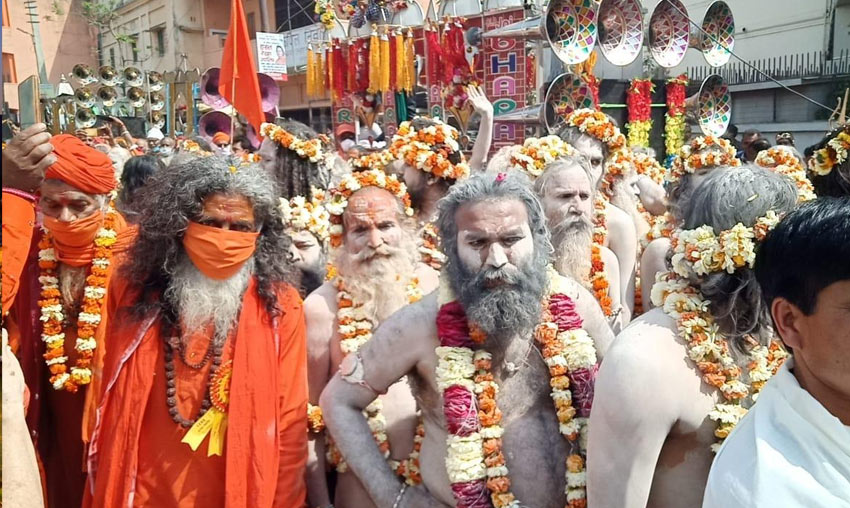
During Simhastha Kumbh Mela, Ujjain becomes a major gathering place for pilgrims and saints from across India. Kal Bhairav Temple is among the important shrines visited by devotees during the festival.
The next Simhastha gathering in Ujjain is expected in 2028. Visitors should follow official announcements for confirmed bathing dates, traffic plans and temple arrangements.
Kal Bhairav Temple Darshan Timings and Aarti
The temple is visited throughout the day by devotees. The temple’s visitor information currently reports general opening hours of approximately 6:30 AM to 9:30 PM. However, timings may vary on special occasions, festivals and procession days.
Morning and evening aarti are important parts of the temple’s daily worship. Published timings can differ, so visitors planning their journey around aarti should confirm the schedule directly at the temple.
| Temple Activity | Visitor Information |
|---|---|
| General Darshan | Reported 6:30 AM – 9:30 PM |
| Morning Aarti | Morning worship; confirm the exact time locally |
| Evening Aarti | Evening worship; confirm the exact time locally |
| Special Festival Worship | As announced by temple management |
| Kal Bhairav Sawari | On designated religious occasions, including Dol Gyaras and the day after Bhairav Ashtami |
Best Time for Darshan
Early morning on a weekday is generally a suitable time for visitors who prefer a quieter darshan. Sundays, public holidays, weekends and major festivals can be considerably more crowded.
During Bhairav Ashtami and Mahashivratri, allow extra time for queues and security arrangements.
Best Time to Visit Kal Bhairav Temple Ujjain
The best time to visit Kal Bhairav Temple is generally from October to March, when the weather in Ujjain is more comfortable for sightseeing and temple visits.
Winter Season (October to March)
Winter is a pleasant period for visiting the temple and exploring nearby attractions. The cooler weather makes it easier to combine several temples in one day.
Summer Season (April to June)
Ujjain can experience high temperatures during summer. Plan your visit early in the morning or later in the evening and carry drinking water.
Monsoon Season (July to September)
The monsoon brings rainfall to the region. Visitors should take care on wet surfaces and check local weather and river conditions before exploring the surrounding area.
During Bhairav Ashtami
Bhairav Ashtami is a special time to experience the temple’s religious traditions. However, it is also one of the busiest periods. Visitors should expect longer queues and possible changes to access arrangements.
How to Reach Kal Bhairav Temple Ujjain
Kal Bhairav Temple is situated in Bhairavgarh on the banks of the Shipra River, a few kilometres from the main temple area of Ujjain. It can be reached by auto-rickshaw, e-rickshaw, taxi or private vehicle.
By Train
Ujjain Junction is the nearest major railway station. The temple is approximately 7 kilometres from the station by road, depending on the route. Auto-rickshaws, e-rickshaws and taxis are available for the journey.
By Air
The nearest major airport is Devi Ahilya Bai Holkar Airport in Indore. Indore is approximately 53 to 55 kilometres from Ujjain. Visitors can travel to the temple by taxi after reaching the city.
By Road
Ujjain is connected by road with Indore, Bhopal, Dewas, Ratlam and other cities in Madhya Pradesh. Visitors can reach Ujjain by bus, taxi or private vehicle and continue to Bhairavgarh using local transport.
By Local Transport
Auto-rickshaws, e-rickshaws and taxis are convenient options for reaching Kal Bhairav Temple. Visitors can also hire a vehicle for a combined sightseeing trip covering other attractions on the northern side of Ujjain.
Places to Visit Near Kal Bhairav Temple
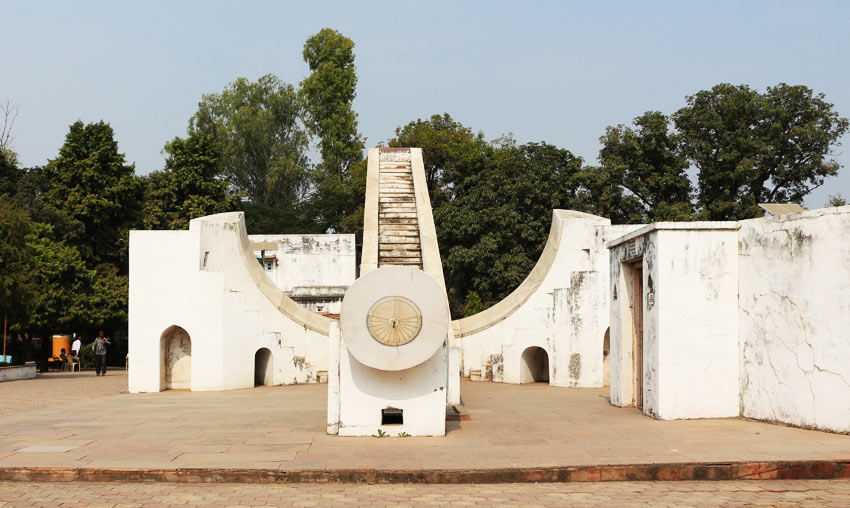
Kal Bhairav Temple is located near several important religious and historical attractions. You can combine these places in a single sightseeing trip around the northern side of Ujjain.
1. Siddhavat
Siddhavat is a sacred banyan tree on the banks of the Shipra River. It is an important place for traditional ancestral rituals such as Shradh, Pind Daan and Tarpan. The site is associated with religious traditions of Ujjain.
2. Gadkalika Mata Temple
Gadkalika Mata Temple is an ancient shrine dedicated to Goddess Kalika. According to local tradition, the temple is associated with the poet Kalidasa and his devotion to the goddess.
3. Bhartrihari Caves
Bhartrihari Caves are traditionally associated with the sage and poet-king Bhartrihari, who is believed to have meditated here after renouncing worldly life. The caves offer an interesting glimpse into Ujjain’s spiritual heritage.
4. Mangalnath Temple
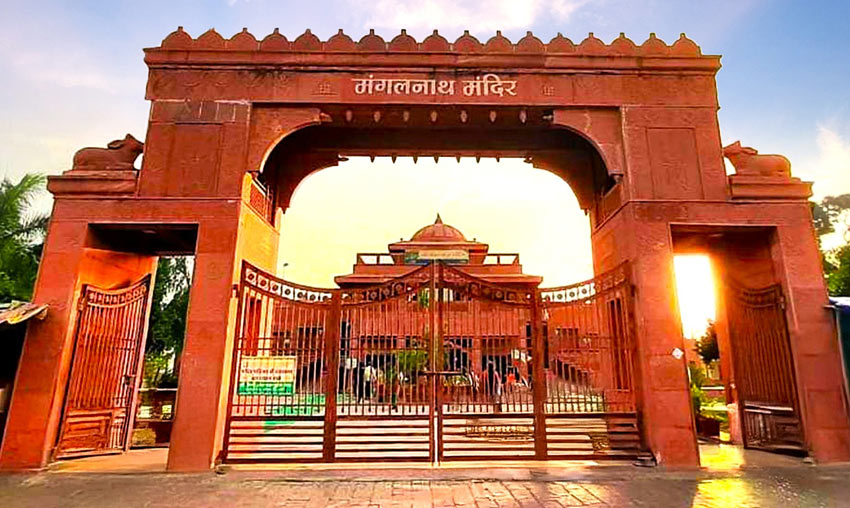
Mangalnath Temple is an important shrine dedicated to Lord Mangal. Situated near the Shipra River, it is associated with traditional beliefs about the birthplace of the planet Mars in Hindu mythology.
5. Sandipani Ashram
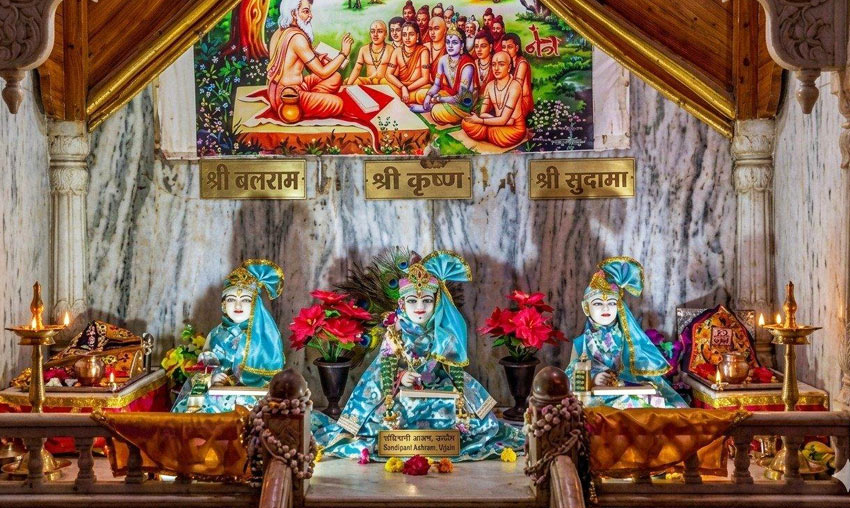
Sandipani Ashram is traditionally believed to be the place where Lord Krishna, Lord Balarama and Sudama studied under Guru Sandipani. It is an important destination for devotees interested in Krishna’s childhood stories.
6. Mahakaleshwar Jyotirlinga Temple
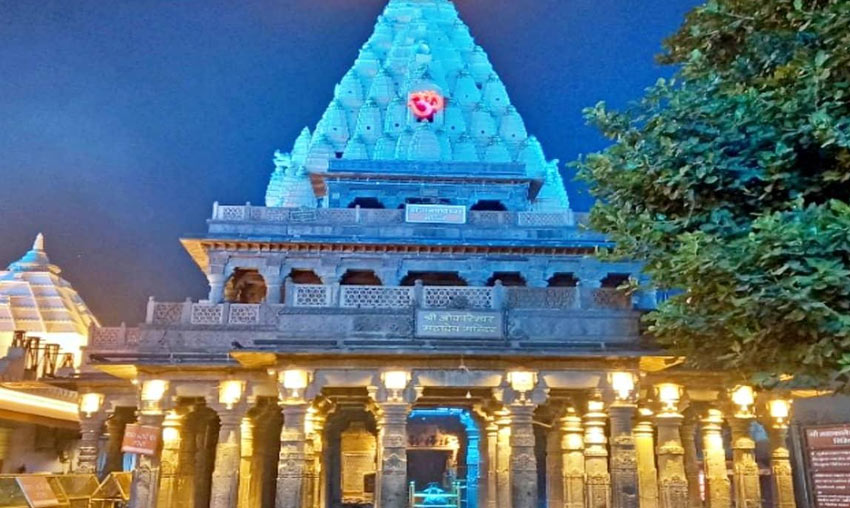
One of the twelve Jyotirlingas of Lord Shiva, Mahakaleshwar Temple is the most famous pilgrimage destination in Ujjain. It is known for its Bhasma Aarti and distinctive religious traditions.
7. Harsiddhi Mata Temple
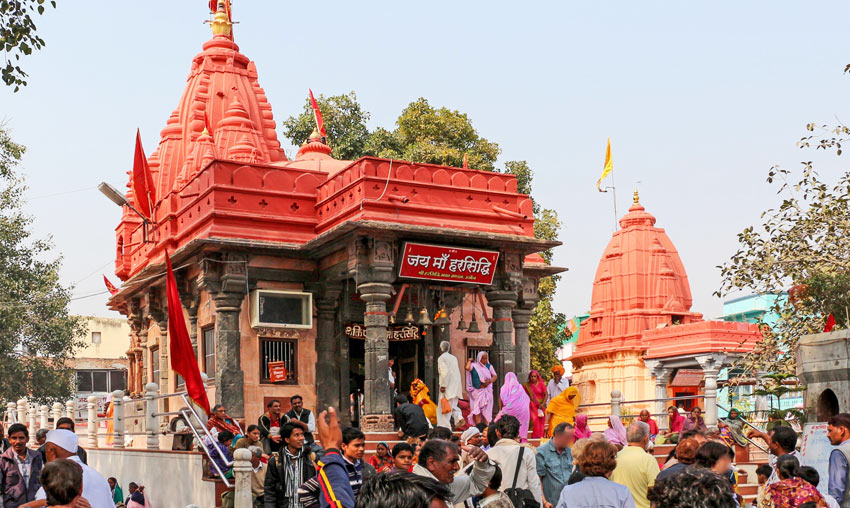
Harsiddhi Mata Temple is an important Shakti shrine in Ujjain. It is famous for its two tall deep-stambhs, which are illuminated with oil lamps during special evening ceremonies.
8. Ram Ghat
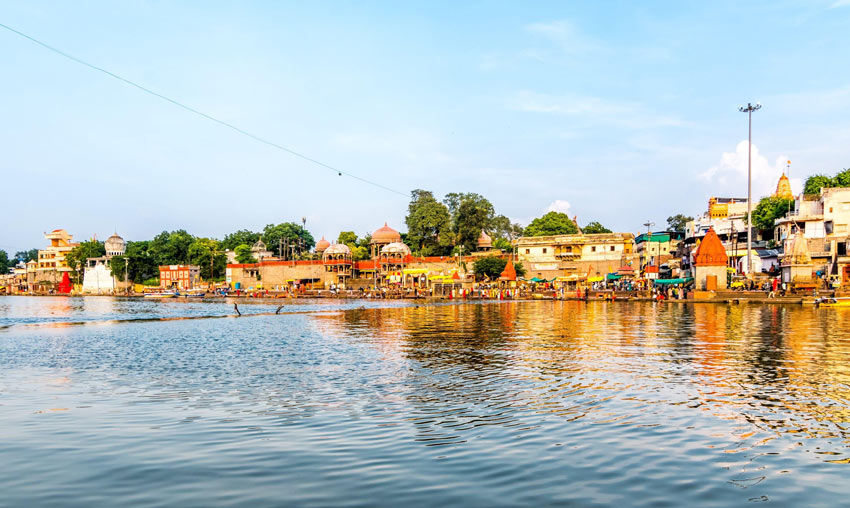
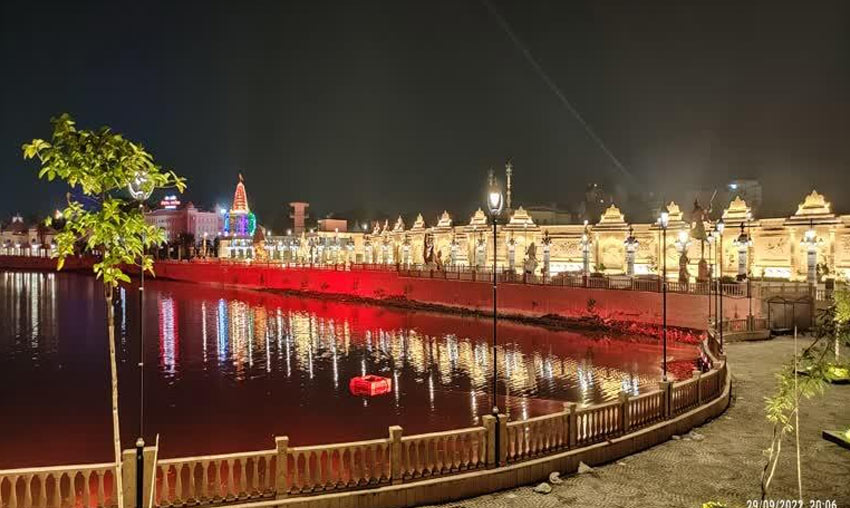
Ram Ghat is a historic bathing ghat on the Shipra River. It is known for its holy bathing traditions, evening river aarti and importance during Simhastha Kumbh Mela.
Explore our complete Ujjain Travel Guide for more attractions, sightseeing ideas and travel information.
Suggested One-Day Ujjain Temple Tour
If you are planning a one-day temple tour in Ujjain, you can include Kal Bhairav Temple along with other major shrines and spiritual attractions.
| Time | Activity |
|---|---|
| Early Morning | Darshan at Mahakaleshwar Jyotirlinga Temple |
| Morning | Explore Mahakal Lok |
| Late Morning | Visit Harsiddhi Mata Temple |
| Afternoon | Lunch and travel towards Bhairavgarh |
| Afternoon | Visit Kal Bhairav Temple |
| Late Afternoon | Explore Siddhavat or Bhartrihari Caves |
| Evening | Visit Ram Ghat and experience the Shipra River Aarti |
This itinerary is a suggested plan. Actual travel times depend on traffic, temple queues and festival arrangements.
Travel Tips for Visiting Kal Bhairav Temple
- Visit early on a weekday if you prefer a quieter darshan.
- Keep extra time during weekends, public holidays and festivals.
- General darshan is free; check authorised temple counters for any special darshan facility and current charges.
- Liquor offering is optional. Flowers, coconut, incense and sweets are also traditional offerings.
- Follow the current local laws and temple instructions regarding liquor offerings.
- Hand offerings to the priest as directed by temple staff.
- Leave footwear in the designated area before entering the shrine.
- Follow the temple’s photography restrictions, especially near the sanctum.
- Keep food and prasad covered because monkeys may be present around the compound.
- Maintain cleanliness and respect the religious atmosphere of the temple.
- During Bhairav Ashtami, Mahashivratri and Simhastha, check crowd and traffic arrangements before travelling.
Frequently Asked Questions About Kal Bhairav Temple Ujjain
1. Where is Kal Bhairav Temple located?
Kal Bhairav Temple is located in Bhairavgarh on the banks of the Shipra River in Ujjain, Madhya Pradesh, India.
2. Why is Kal Bhairav Temple famous?
The temple is famous for its traditional liquor offering ritual, its association with the Ashta Bhairava tradition and the belief that Lord Kal Bhairav is the guardian or Kotwal of Ujjain.
3. Who is Kal Bhairav?
Kal Bhairav is a fierce manifestation of Lord Shiva. He is worshipped as the protector of Ujjain and is an important deity in Shaivite traditions.
4. Why is Kal Bhairav called the Kotwal of Ujjain?
According to religious belief, Kal Bhairav protects the sacred city of Ujjain. The title Kotwal refers to his traditional role as the city’s guardian.
5. What are the timings of Kal Bhairav Temple?
The temple’s visitor information reports general darshan hours of approximately 6:30 AM to 9:30 PM. Timings may change during festivals and special occasions, so confirm locally before visiting.
6. Is liquor offered to Lord Kal Bhairav?
Yes. Offering liquor, known as Madira Bhog, is a traditional ritual at the temple. The offering is presented by the priest as part of worship.
7. Is it compulsory to offer liquor at Kal Bhairav Temple?
No. Liquor offering is entirely optional. Devotees can offer flowers, coconuts, incense, sweets or simply visit for darshan.
8. Can visitors perform the liquor offering themselves?
The ritual is performed through the temple priest. Visitors should hand the offering to the authorised priest and follow the instructions of the temple management.
9. Is there an entry fee at Kal Bhairav Temple?
General darshan is free. A paid quicker-darshan facility has been reported, but visitors should check its current availability and charges at authorised temple counters.
10. Which festival is most important at Kal Bhairav Temple?
Bhairav Ashtami, also known as Kal Bhairav Jayanti, is one of the most important festivals celebrated at the temple.
11. How far is Kal Bhairav Temple from Mahakaleshwar Temple?
Kal Bhairav Temple is approximately 6 kilometres from Mahakaleshwar Temple by road. Travel time depends on traffic and local road conditions.
12. How much time is required to visit Kal Bhairav Temple?
Approximately 30 to 60 minutes is generally sufficient for a regular visit. During festivals and busy days, visitors may need considerably more time.
13. Which places can be visited near Kal Bhairav Temple?
Nearby attractions include Siddhavat, Gadkalika Mata Temple, Bhartrihari Caves, Mangalnath Temple and Sandipani Ashram.
14. Is photography allowed inside Kal Bhairav Temple?
Photography may be possible in some outer areas, but it is generally restricted inside the sanctum. Visitors should follow the signs and instructions of temple staff.
Explore More Places in Ujjain
Ujjain is one of India’s most important spiritual destinations, known for its ancient temples, sacred riverfronts, historical landmarks and religious festivals. Explore more attractions and plan your journey with our Ujjain travel guide.
- Ujjain – Complete Travel Guide
- Mahakaleshwar Jyotirlinga Temple
- Mahakal Lok Ujjain
- Ram Ghat Ujjain
- Harsiddhi Mata Temple Ujjain
- Kal Bhairav Temple Ujjain
Visit Kal Bhairav Temple to experience one of the most distinctive religious traditions of Ujjain. From its ancient history and unique Madira Bhog ritual to the devotion surrounding the Kotwal of Ujjain, this sacred shrine offers a memorable glimpse into the spiritual heritage of the city.
Nearby Places to Visit