Gangotri Temple – Explore the Sacred Char Dham Shrine of Goddess Ganga in Uttarakhand
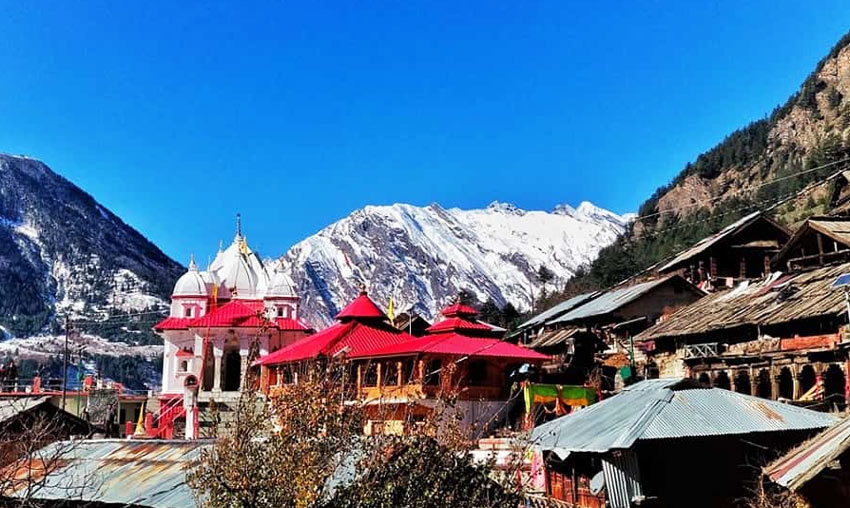
Gangotri Temple is one of the most sacred Hindu pilgrimage destinations in Uttarakhand and an important part of the Char Dham Yatra. Located in the beautiful Garhwal Himalayas of Uttarkashi district, this ancient temple is dedicated to Goddess Ganga and stands on the banks of the holy Bhagirathi River. Surrounded by snow-covered Himalayan peaks, dense deodar forests and breathtaking mountain landscapes, Gangotri Temple is a destination of immense spiritual and natural beauty.
According to Hindu mythology, Gangotri is the sacred place associated with the descent of Goddess Ganga from heaven to earth. King Bhagirath performed intense penance to bring the holy river down to earth to liberate the souls of his ancestors. Lord Shiva received the powerful flow of Ganga in his matted locks before allowing the river to descend gently to the earth.
The temple is situated at an elevation of approximately 3,100 metres above sea level and attracts thousands of devotees during the annual pilgrimage season. Its white granite structure, traditional religious rituals and peaceful riverside setting make it one of the most important spiritual landmarks in the Indian Himalayas.
Gangotri is also the gateway to several remarkable Himalayan attractions, including Gaumukh Glacier, Tapovan, Kedartal, Bhairon Ghati and the scenic Harsil Valley. Whether you are visiting for religious reasons, exploring Hindu mythology or discovering the natural beauty of the Himalayas, Gangotri Temple offers an unforgettable experience.
Where is Gangotri Temple Located?
Gangotri Temple is located in Gangotri town in the Uttarkashi district of Uttarakhand, India. It stands on the right bank of the Bhagirathi River in the upper Garhwal Himalayan region.
The temple is situated at an approximate elevation of 3,100 metres above sea level and is surrounded by towering mountain peaks, dense forests and beautiful river landscapes.
Gangotri is approximately 100 kilometres from Uttarkashi town by road and around 25 kilometres from Harsil. It is accessible through the Uttarkashi-Harsil-Gangotri road corridor during the permitted travel season.
Gangotri is one of the four sacred destinations of Uttarakhand’s Char Dham Yatra, along with Yamunotri, Kedarnath and Badrinath.
Explore the nearby destination: Harsil Valley, Uttarakhand.
History of Gangotri Temple
The history of Gangotri Temple is closely connected with the religious traditions and mythology associated with Goddess Ganga. For centuries, devotees have visited this sacred Himalayan region to worship the river goddess and offer prayers at the place associated with the descent of Ganga to earth.
The present Gangotri Temple is believed to have been constructed in the early eighteenth century by Gorkha General Amar Singh Thapa. The temple was subsequently renovated by the Maharaja of Jaipur.
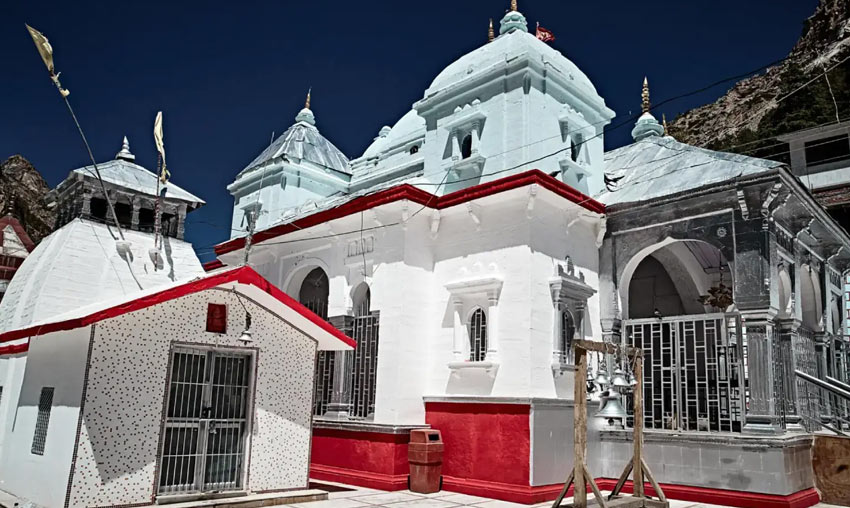
Built using white granite, the temple features a simple yet impressive Himalayan architectural style. Its peaceful surroundings and location beside the Bhagirathi River make it one of the most recognisable religious landmarks in Uttarakhand.
The historical development of Gangotri town is closely connected with the temple and the growing importance of pilgrimage tourism in the upper Bhagirathi Valley.
Over the years, the shrine has become an essential destination for devotees undertaking the Char Dham Yatra and pilgrims seeking blessings from Goddess Ganga.
Religious Significance of Gangotri Temple
Gangotri Temple holds immense importance in Hinduism because of its association with Goddess Ganga, who is worshipped as the sacred river that descended from heaven to earth.
According to Hindu beliefs, the waters of Ganga possess the power to purify the soul and wash away sins. The river is also considered a symbol of purity, spiritual liberation and divine grace.
Gangotri is one of the four important shrines of the Uttarakhand Char Dham pilgrimage circuit. The traditional Char Dham journey begins at Yamunotri, followed by Gangotri, Kedarnath and Badrinath.
Devotees visit Gangotri to offer prayers, perform religious rituals, collect Gangajal and seek blessings from Goddess Ganga.
The sacred Bhagirathi River flowing beside the temple adds to the spiritual atmosphere of the pilgrimage destination.
The Legend of King Bhagirath and Goddess Ganga
One of the most famous legends associated with Gangotri Temple is the story of King Bhagirath and the descent of Goddess Ganga to earth.
According to Hindu mythology, King Sagar performed a great Ashwamedha Yajna, but his sacrificial horse disappeared. His 60,000 sons went searching for the horse and eventually found it near Sage Kapila’s hermitage. Mistaking the sage for the person responsible for the disappearance, they disturbed his meditation and were reduced to ashes by his divine power.
Their souls could attain liberation only when the sacred waters of Ganga descended from heaven and purified their remains.
King Bhagirath performed intense penance for many years to please the gods and bring Goddess Ganga to earth. His devotion eventually pleased Lord Brahma, who granted his wish.
However, the force of Ganga’s descent was so powerful that it could have destroyed the earth. King Bhagirath therefore prayed to Lord Shiva for help.
Lord Shiva agreed to receive the mighty river in his matted locks, reducing the force of its descent before allowing it to flow gently onto the earth.
The sacred river then followed King Bhagirath and eventually reached the place where the ashes of his ancestors lay, granting them liberation.
This legend is central to the religious significance of Gangotri and explains why Goddess Ganga is worshipped as a mother goddess and a symbol of spiritual purification.
Architecture of Gangotri Temple
Gangotri Temple is an impressive white granite structure that reflects the traditional architectural character of Himalayan religious shrines.
The temple is approximately 20 feet high and features a simple design that blends beautifully with its natural mountain surroundings.
Its white exterior stands out against the dark green forests, rocky mountain slopes and flowing Bhagirathi River.
The main shrine houses the idol of Goddess Ganga, where devotees gather to offer prayers and participate in traditional religious ceremonies.
The temple complex also includes other smaller shrines and religious structures dedicated to different Hindu deities.
The peaceful temple courtyard and nearby riverbank create a spiritually significant environment for pilgrims visiting Gangotri.
Best Places to Visit Inside and Around Gangotri Temple
Gangotri offers several religious and natural attractions that can be explored during a pilgrimage. From sacred stones and waterfalls to ancient caves and mountain trekking routes, the region provides a combination of spirituality and Himalayan adventure.
1. Bhagirath Shila
Bhagirath Shila is a sacred stone located near Gangotri Temple. According to Hindu mythology, this is the place where King Bhagirath performed intense penance to bring Goddess Ganga from heaven to earth.
The stone holds great religious significance for devotees visiting Gangotri. Many pilgrims visit this sacred spot to offer prayers and remember the devotion of King Bhagirath.
2. Surya Kund
Surya Kund is a beautiful natural waterfall attraction located close to Gangotri Temple. The Bhagirathi River flows through rocky terrain and forms a spectacular waterfall surrounded by mountain landscapes.
The waterfall creates a picturesque setting and is one of the popular sightseeing spots near the temple.
Visitors can enjoy the natural scenery from safe viewing areas and capture beautiful photographs of the flowing water and surrounding rocks.
3. Gauri Kund
Gauri Kund is another scenic waterfall attraction near Gangotri Temple. It is situated across an iron bridge from the Surya Kund area and is associated with local religious traditions.
The combination of flowing water, rocky landscapes and beautiful mountain scenery makes this area an interesting stop for visitors exploring the temple surroundings.
4. Underwater Shivling
The Underwater Shivling is a naturally occurring rock formation submerged in the Bhagirathi River near Gangotri Temple.
According to Hindu mythology, this sacred rock represents the place where Lord Shiva received Goddess Ganga in his matted locks before allowing the river to descend to earth.
The formation is generally visible when the water level of the river decreases, particularly during winter. Its religious significance attracts the attention of devotees and visitors interested in local mythology.
5. Pandava Gufa
Pandava Gufa is a small cave located approximately 1.5 kilometres from Gangotri Temple. According to local legends, the Pandava brothers from the Mahabharata stayed in this cave during their journey towards the Himalayas.
The cave is surrounded by beautiful forest landscapes and offers a peaceful environment for visitors interested in mythology and nature exploration.
Reaching the cave involves walking along a forest trail, and visitors should confirm current access conditions before planning the excursion.
Best Places to Visit Near Gangotri Temple
Gangotri is surrounded by several important religious and natural destinations. Travellers can explore these attractions to discover the spiritual heritage and spectacular Himalayan scenery of Uttarakhand.
1. Gaumukh Glacier
Gaumukh Glacier is considered the traditional source of the Bhagirathi River and is one of the most important natural attractions near Gangotri.
Located approximately 18–19 kilometres from Gangotri, Gaumukh can be reached through a challenging Himalayan trekking route inside Gangotri National Park.
The glacier gets its name from the shape of its snout, which resembles the mouth of a cow. Visitors can witness the icy landscape and the stream emerging from the glacier.
The Gaumukh trek is popular among adventure enthusiasts, nature lovers and pilgrims interested in the geographical origin of the Ganga.
Read more about the region: Gangotri Destination Guide.
2. Harsil Village
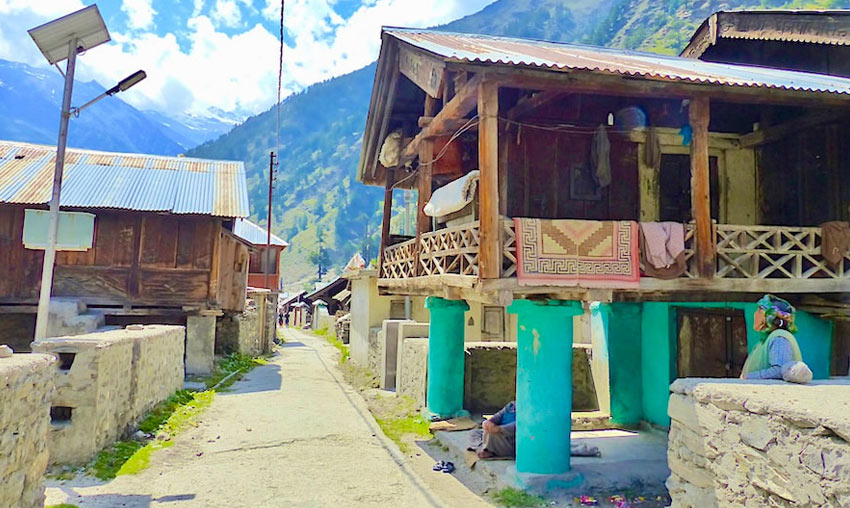
Harsil Village is a beautiful Himalayan settlement situated along the Bhagirathi River. It is known for its apple orchards, deodar forests, traditional houses and peaceful mountain surroundings.
Located approximately 25 kilometres from Gangotri, Harsil is a popular stop for travellers exploring the region.
Read more: Harsil Village.
3. Mukhba Village
Mukhba Village is a sacred Himalayan settlement near Harsil and is traditionally known as the winter abode of Goddess Ganga.
When Gangotri Temple closes during winter, the ceremonial idol of Goddess Ganga is brought to Mukhba, where devotees continue worshipping her during the colder months.
The village is known for its religious traditions, traditional architecture and peaceful mountain landscapes.
Read more: Mukhba Village.
4. Dharali Village
Dharali is a traditional Himalayan settlement located near Harsil. Historically, the village was famous for its apple orchards, Himalayan Rajma and agricultural traditions.
Dharali was severely affected by the flash flood and debris flow of 5 August 2025. Travellers should verify the latest road access, restoration status and local safety conditions before visiting the affected area.
Read more: Dharali Village.
5. Bagori Village
Bagori is a traditional village near Harsil, known for its Jadh Bhotiya community, distinctive wooden and stone houses and cultural heritage.
The village offers visitors an opportunity to explore the traditional lifestyle, historical trade connections and architectural heritage of the upper Bhagirathi Valley.
Read more: Bagori Village.
6. Sattal, Harsil
Sattal is a group of seven small high-altitude lakes located near Harsil and Dharali. Surrounded by forests and beautiful mountain landscapes, this natural attraction is popular among trekking and nature enthusiasts.
The lakes are traditionally accessed through a mountain trekking route, subject to local forest permissions and current trail conditions.
Read more: Sattal, Harsil.
Things to Do at Gangotri Temple
Gangotri offers a combination of spiritual experiences, religious activities and nature exploration. Visitors can enjoy several memorable experiences during their pilgrimage.
1. Offer Prayers to Goddess Ganga
Visit the main shrine and seek blessings from Goddess Ganga. Devotees offer flowers, prayers and traditional religious offerings at the temple.
2. Attend Ganga Aarti
Participate in the spiritual atmosphere of the morning and evening religious ceremonies. The sight of traditional lamps, devotional chants and prayers beside the sacred Bhagirathi River creates a memorable pilgrimage experience.
3. Visit Bhagirath Shila
Explore the sacred stone associated with King Bhagirath’s penance and learn about the mythological history of the descent of Goddess Ganga.
4. Enjoy the Himalayan Scenery
Gangotri is surrounded by magnificent Himalayan peaks, dense forests and beautiful river landscapes. Visitors can spend time enjoying the natural beauty and capturing memorable photographs.
5. Explore the Gaumukh Trek
Adventure enthusiasts can plan a trek to Gaumukh Glacier, the traditional source of the Bhagirathi River. The trek passes through spectacular mountain landscapes and requires proper preparation and the necessary forest permissions.
6. Collect Sacred Gangajal
Many devotees collect water from the Bhagirathi River to take home for religious ceremonies and worship. Visitors should follow local rules and use safe, permitted access points near the river.
Gangotri Temple Opening and Closing Dates
Gangotri Temple generally opens for devotees around Akshaya Tritiya in April or May and closes around Diwali in October or November.
The exact opening and closing dates are announced annually according to the Hindu religious calendar and traditional temple customs.
During the winter closure, the ceremonial idol of Goddess Ganga is brought to Mukhba Village, where worship continues until the temple reopens in spring.
For the 2026 pilgrimage season, the official Uttarakhand government registration portal announced 19 April 2026 as the opening date of Gangotri Dham.
For future visits, travellers should check the official Uttarakhand Char Dham registration portal for the latest annual dates and pilgrimage arrangements.
Gangotri Temple Darshan Timings
The temple generally follows a daily schedule of morning worship, daytime darshan and evening prayers during the pilgrimage season.
Indicative timings are:
- Morning Opening: Around 6:00 AM.
- Morning Darshan: Approximately 6:15 AM to 2:00 PM.
- Afternoon Break: Approximately 2:00 PM to 3:00 PM.
- Evening Darshan: Approximately 3:00 PM to 9:00 PM.
- Morning Aarti: Around 6:00 AM.
- Evening Aarti: Generally around sunset.
These are indicative timings and may change according to the season, temple committee arrangements and religious ceremonies. Visitors should confirm the actual darshan and aarti schedule locally before planning their visit.
Best Time to Visit Gangotri Temple
The best time to visit Gangotri Temple is generally from May to June and September to October. These periods usually offer more favourable conditions for pilgrimage and sightseeing in the Himalayan region.
Summer (May to June)
Summer is one of the most popular seasons to visit Gangotri. The temple remains open for the annual pilgrimage, and devotees from across India visit to offer prayers to Goddess Ganga.
The weather is generally pleasant during the daytime, although nights can remain cold because of the high altitude.
Monsoon (July to August)
During monsoon, the Gangotri region receives rainfall and mountain roads can become vulnerable to landslides, falling rocks and temporary blockages.
The nearby Dharali region experienced a devastating flash flood on 5 August 2025, highlighting the risks associated with heavy rainfall in the upper Bhagirathi Valley.
Travellers should check official weather forecasts, road conditions and local administration advisories before undertaking a pilgrimage during monsoon.
Autumn (September to October)
Autumn is another favourable period for visiting Gangotri. The weather is often clearer after the monsoon, and the surrounding Himalayan landscapes offer beautiful views.
Devotees should also remember that the temple closes for the winter season around Diwali, so pilgrimage dates should be confirmed before travelling.
Winter (November to April)
Gangotri experiences extremely cold weather during winter, and heavy snowfall makes access difficult. The temple remains closed during this period.
During winter, Goddess Ganga is worshipped at Mukhba Village. Visitors interested in the winter pilgrimage tradition can explore the village when local road and weather conditions permit.
How to Reach Gangotri Temple
Gangotri Temple is accessible by road from major towns in Uttarakhand. The journey follows beautiful Himalayan mountain roads through Uttarkashi, Harsil and the upper Bhagirathi Valley.
By Air
The nearest major airport is Jolly Grant Airport in Dehradun, located approximately 250 kilometres from Gangotri by road, depending on the selected route.
From the airport, visitors can hire a taxi or travel towards Uttarkashi and continue along the Harsil-Gangotri road.
By Train
Rishikesh is a convenient railway access point for travellers visiting Gangotri. Dehradun and Haridwar are also useful railway connections.
From the railway station, visitors can arrange taxis, buses or other available road transport towards Uttarkashi and Gangotri.
By Road
Gangotri is connected by road through the Uttarkashi-Harsil-Gangotri highway corridor. Visitors can travel from Rishikesh, Haridwar or Dehradun using private vehicles, taxis and available bus services.
The road journey passes through beautiful mountain landscapes, forested slopes, river valleys and traditional Himalayan villages.
Travellers should check the latest road conditions before starting their journey, particularly during the monsoon and winter seasons.
Distance from Major Cities to Gangotri Temple
- Uttarkashi to Gangotri: Approximately 100 kilometres.
- Harsil to Gangotri: Approximately 25 kilometres.
- Dharali to Gangotri: Approximately 20–25 kilometres by the traditional road route.
- Rishikesh to Gangotri: Approximately 230–250 kilometres.
- Haridwar to Gangotri: Approximately 250–270 kilometres.
- Dehradun to Gangotri: Approximately 240–260 kilometres.
- Delhi to Gangotri: Approximately 450–500 kilometres, depending on the route.
All distances are approximate and may vary depending on the selected route, diversions and current road conditions.
Where to Stay Near Gangotri Temple
Gangotri offers several accommodation options for pilgrims and travellers, including hotels, guesthouses, ashrams, dharamshalas and government tourist accommodation.
Visitors can choose their accommodation according to their budget and travel preferences. Many properties offer convenient access to the temple and nearby religious attractions.
During the Char Dham Yatra season, accommodation availability can become limited, particularly in May and June. Advance booking is recommended.
Travellers should also consider staying in Harsil or nearby settlements if they prefer a quieter environment and want to explore the surrounding valley.
Local Food Near Gangotri Temple
The food available around Gangotri mainly includes simple vegetarian meals suitable for pilgrims and visitors. Small restaurants, guesthouses and dharamshalas serve traditional North Indian and regional Garhwali food.
Some dishes and food items visitors may find include:
- Mandua Roti: A traditional Garhwali flatbread made from finger millet flour.
- Chainsoo: A regional dish prepared using roasted black gram.
- Kafuli: A traditional preparation made with green leafy vegetables.
- Dal and Rice: A simple and commonly available vegetarian meal.
- Khichdi: A light meal often preferred by pilgrims during mountain journeys.
- Jhangora Kheer: A traditional Himalayan dessert made from barnyard millet.
Food availability may vary according to the pilgrimage season and local weather conditions.
Travel Tips for Visiting Gangotri Temple
- Register for the Char Dham Yatra through the official Uttarakhand government portal when required.
- Check the temple opening and closing dates before planning your pilgrimage.
- Carry warm clothing because temperatures can drop significantly at high altitude.
- Carry essential medicines and personal medical supplies.
- Drink sufficient water and allow time to adjust to the altitude.
- Book accommodation in advance during the peak pilgrimage season.
- Follow temple rules and respect local religious customs.
- Avoid entering the Bhagirathi River because of its strong current and dangerous water conditions.
- Check weather forecasts and road advisories before travelling.
- For Gaumukh trekking, obtain the required permits and follow Gangotri National Park regulations.
- Avoid travelling during severe weather warnings and follow instructions issued by the local administration.
Frequently Asked Questions About Gangotri Temple
1. Where is Gangotri Temple located?
Gangotri Temple is located in Gangotri town in Uttarkashi district of Uttarakhand, on the banks of the Bhagirathi River in the Garhwal Himalayas.
2. Why is Gangotri Temple famous?
Gangotri Temple is famous as the sacred shrine of Goddess Ganga and one of the four important destinations of Uttarakhand’s Char Dham Yatra.
3. Who built Gangotri Temple?
The present Gangotri Temple is traditionally credited to Gorkha General Amar Singh Thapa, who constructed it in the early eighteenth century. It was later renovated by the Maharaja of Jaipur.
4. What is the altitude of Gangotri Temple?
Gangotri Temple is located at an approximate elevation of 3,100 metres above sea level. Different sources report slightly different elevations for the temple and Gangotri town.
5. When does Gangotri Temple open?
Gangotri Temple generally opens around Akshaya Tritiya in April or May. The exact opening date is announced every year according to the Hindu calendar.
6. When does Gangotri Temple close?
The temple generally closes around Diwali in October or November. The ceremonial idol of Goddess Ganga is then brought to Mukhba Village for winter worship.
7. Is Gangotri the actual source of the Ganga River?
The traditional source of the Bhagirathi River is Gaumukh, the snout of the Gangotri Glacier, approximately 18–19 kilometres from Gangotri Temple by trekking route. The river is called Ganga after the Bhagirathi meets the Alaknanda at Devprayag.
8. How far is Gaumukh from Gangotri?
Gaumukh is approximately 18–19 kilometres from Gangotri and can be reached through a Himalayan trekking route inside Gangotri National Park.
9. How far is Harsil from Gangotri?
Harsil is approximately 25 kilometres from Gangotri by road and is a popular stop for pilgrims and travellers exploring the region.
10. Is Gangotri Temple part of Char Dham Yatra?
Yes, Gangotri is one of the four sacred destinations of Uttarakhand’s Char Dham Yatra, along with Yamunotri, Kedarnath and Badrinath.
11. What is Bhagirath Shila?
Bhagirath Shila is a sacred stone near Gangotri Temple where King Bhagirath is traditionally believed to have performed penance to bring Goddess Ganga to earth.
12. Can Gangotri Temple be visited in winter?
No, the main Gangotri Temple remains closed during winter because of severe weather and snowfall. During this period, Goddess Ganga is worshipped at Mukhba Village near Harsil.
13. How many days are enough for a Gangotri visit?
One to two days are generally sufficient for visiting Gangotri Temple and nearby attractions. Visitors planning the Gaumukh trek should allow additional time for trekking and necessary arrangements.
Explore More Places in Harsil Valley
Gangotri Temple is one of the most important religious attractions near Harsil Valley. Visitors can explore nearby villages and natural destinations to experience the spiritual and cultural heritage of the region.
- Harsil Valley – Complete Travel Guide
- Harsil Village
- Mukhba Village
- Dharali Village
- Bagori Village
- Sattal, Harsil
Explore More Destinations in Uttarakhand
Travellers visiting Gangotri can also explore other beautiful destinations in Uttarakhand:
Gangotri Temple is a remarkable destination where Hindu mythology, spiritual devotion and the natural beauty of the Himalayas come together. Dedicated to Goddess Ganga, this sacred shrine preserves the story of King Bhagirath’s devotion and the descent of the holy river to earth. From its historic white granite structure and sacred Bhagirath Shila to the spectacular surroundings of the Bhagirathi River and nearby Gaumukh Glacier, Gangotri offers an unforgettable pilgrimage and travel experience in Uttarakhand.
Nearby Places to Visit
Nearby Places to Visit