Kedarnath, Uttarakhand – Complete Travel Guide to the Sacred Himalayan Destination
Kedarnath is one of the most sacred pilgrimage destinations in India, located high in the Garhwal Himalayas of Uttarakhand. Situated in the Rudraprayag district at an altitude of approximately 3,580 metres above sea level, this beautiful Himalayan destination is famous for the ancient Kedarnath Temple, one of the twelve Jyotirlingas of Lord Shiva. Surrounded by snow-covered mountain peaks, glaciers and the Mandakini River valley, Kedarnath attracts millions of devotees, pilgrims and adventure enthusiasts.
Considered one of the most important destinations of the Char Dham Yatra in Uttarakhand, Kedarnath holds immense religious significance in Hinduism. The sacred shrine is also an important part of the Panch Kedar pilgrimage circuit. According to Hindu mythology, the temple is associated with the Pandavas and their search for forgiveness from Lord Shiva after the Mahabharata war.
A journey to Kedarnath is not just a religious pilgrimage but also an unforgettable Himalayan experience. The traditional route begins at Gaurikund and involves an uphill trek of approximately 16–18 km, depending on the route and current trail alignment. Pilgrims can also explore scenic attractions, sacred sites and beautiful mountain landscapes during their visit.
Whether you are planning a spiritual journey, a Himalayan trekking experience or a visit to the famous Shiva shrine, Kedarnath offers a unique combination of devotion, natural beauty and cultural heritage.
About Kedarnath
Kedarnath is a renowned pilgrimage town situated in the upper Himalayan region of Uttarakhand. It lies near the source region of the Mandakini River and is surrounded by magnificent mountain peaks, including Kedarnath Peak and Kedar Dome.
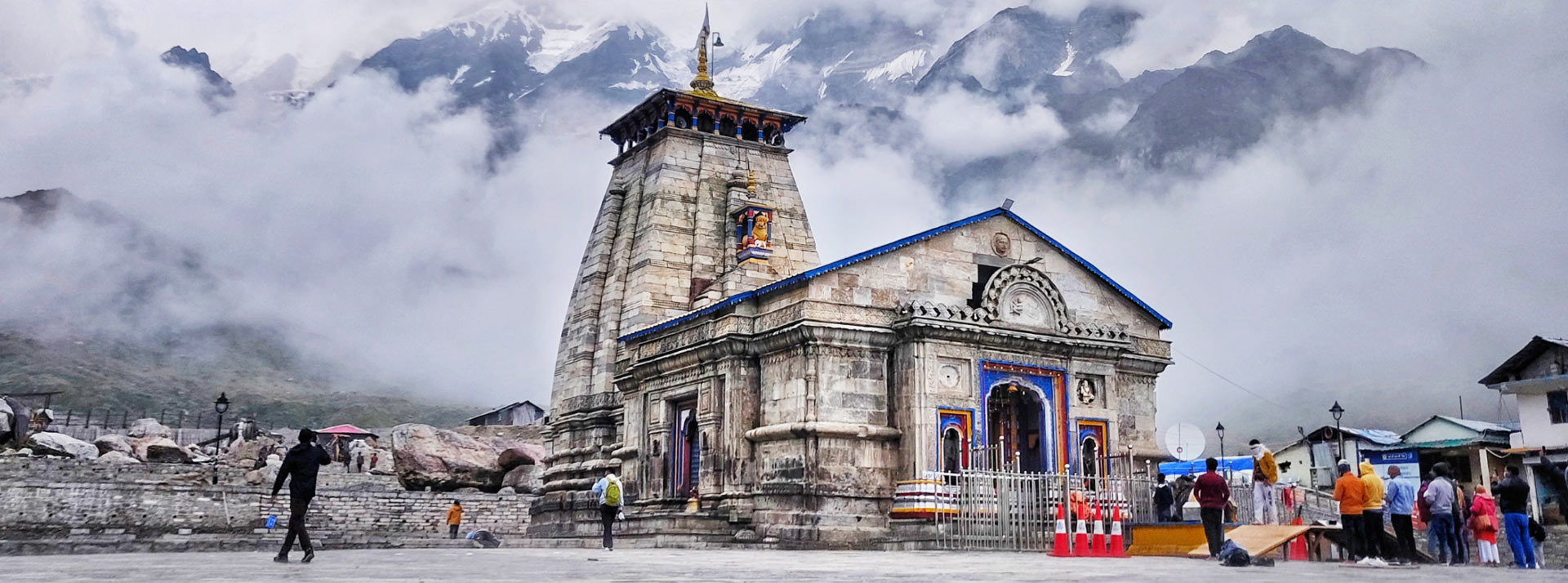
The destination is primarily known for the ancient Kedarnath Temple, which is dedicated to Lord Shiva. The temple is built using massive grey stone slabs and is admired for its traditional Himalayan architecture and remarkable construction.
Kedarnath remains one of the most visited religious destinations in northern India during the annual pilgrimage season. Due to heavy snowfall and extreme winter conditions, the main shrine remains closed during the winter months, and the deity is worshipped at the winter seat in Ukhimath.
Religious Significance of Kedarnath
Kedarnath holds a special place in Hindu religious traditions. It is one of the twelve Jyotirlingas dedicated to Lord Shiva and one of the four important destinations of the Uttarakhand Char Dham Yatra, also known as the Chota Char Dham circuit.
The temple is also one of the five sacred shrines of the Panch Kedar. According to Hindu mythology, after the Mahabharata war, the Pandavas wanted to seek forgiveness from Lord Shiva for the destruction caused during the battle. Lord Shiva did not wish to meet them and took the form of a bull to avoid them.
When Bhima recognised the divine bull, he attempted to catch it. The bull disappeared into the ground, and different parts of Lord Shiva's body are believed to have appeared at five locations in the Garhwal Himalayas. The hump appeared at Kedarnath, the arms at Tungnath, the face at Rudranath, the navel at Madhyamaheshwar and the hair at Kalpeshwar.
These five temples collectively became known as Panch Kedar and continue to attract devotees from across the country.
History of Kedarnath
Kedarnath has a long religious and cultural history associated with ancient Hindu traditions. The region was historically known as Kedar Khand and has been an important centre of Lord Shiva worship for centuries.
According to popular religious tradition, the original temple is associated with the Pandavas of the Mahabharata. The present stone temple is traditionally linked with the efforts of Adi Shankaracharya, who is believed to have revived several important Hindu pilgrimage centres during the early medieval period.
The temple's massive stone construction, traditional design and location in a remote Himalayan valley make it an important example of ancient religious architecture. Despite difficult weather conditions and natural challenges, the shrine has remained a significant destination for pilgrims.
Architecture of Kedarnath Temple
The Kedarnath Temple is admired for its traditional stone architecture and impressive Himalayan setting. The structure is built using large, evenly cut grey stone slabs that have been carefully fitted together without relying on modern construction techniques.
The temple complex consists of a main sanctum and a mandapa where devotees gather for prayers. A Nandi statue faces the entrance of the shrine, reflecting the traditional association of Lord Shiva with his divine vehicle.
The main sanctum houses a naturally shaped, conical Shiva Lingam that is worshipped as Lord Kedarnath. The temple stands against the spectacular backdrop of the Himalayan mountains, creating one of the most recognisable pilgrimage landscapes in India.
Top Places to Visit in Kedarnath
Kedarnath is famous not only for its sacred temple but also for its surrounding spiritual landmarks, mountain scenery, lakes and trekking destinations. Visitors can explore several attractions during their pilgrimage, depending on weather conditions, available time and physical fitness.
1. Kedarnath Temple
Kedarnath Temple is the main attraction and spiritual centre of the destination. Dedicated to Lord Shiva, it is one of the twelve Jyotirlingas and an important shrine of the Char Dham pilgrimage. The temple is famous for its ancient stone architecture, religious traditions and spectacular location in the Garhwal Himalayas.
2. Bhairavnath Temple
Bhairavnath Temple, also known as Bhairon Baba Temple, is situated on a hill above the Kedarnath Temple. It is dedicated to Bhairavnath, who is traditionally regarded as the protector of Kedarnath Dham. The uphill route offers beautiful views of the temple complex and the surrounding Himalayan valley.
3. Adi Shankaracharya Samadhi
Adi Shankaracharya Samadhi is an important spiritual landmark located behind the Kedarnath Temple. It is traditionally believed to be the place associated with the final days of the great philosopher and spiritual teacher Adi Shankaracharya. The site holds special importance for devotees and followers of Advaita Vedanta.
4. Gandhi Sarovar
Gandhi Sarovar, also known as Chorabari Tal, is a beautiful high-altitude lake situated near the Chorabari Glacier. It is associated with the immersion of a portion of Mahatma Gandhi's ashes in 1948. The lake and its surrounding mountain scenery make it a popular trekking destination near Kedarnath. Visitors should check local trail conditions before planning this hike.
5. Vasuki Tal
Vasuki Tal is a scenic high-altitude glacial lake located in the Himalayan mountains above Kedarnath. Surrounded by impressive mountain peaks and rugged terrain, it is known for its crystal-clear water and breathtaking natural surroundings. The trek to Vasuki Tal is challenging and requires proper preparation, fitness and suitable weather conditions.
6. Rudra Cave
Rudra Cave is a meditation cave located near the Kedarnath Temple area. It became widely known after Prime Minister Narendra Modi meditated here in 2019. The cave is associated with meditation, solitude and spiritual reflection, offering visitors a distinctive experience in the Himalayan surroundings. Availability and booking conditions should be checked before planning a stay.
Kedarnath Trek – Route and Experience
The Kedarnath trek is one of the most famous pilgrimage trekking routes in India. The traditional trekking journey begins at Gaurikund, which is the last major road-access point for the shrine.
The uphill route from Gaurikund to Kedarnath is approximately 16–18 km, although the distance can vary with route changes and official trail arrangements. The path passes through mountain landscapes, river valleys, waterfalls, resting points and scenic Himalayan surroundings.
Major Points Along the Kedarnath Trek
- Gaurikund: The traditional starting point of the Kedarnath trek.
- Jungle Chatti: A resting point along the trekking route.
- Bheembali: An important stop where pilgrims can take a break.
- Linchauli: A high-altitude section of the route with beautiful mountain views.
- Kedarnath Base Area: The final approach towards the sacred temple town.
The trek can be physically demanding because of the steep climb, changing weather and high altitude. Pilgrims should walk at a comfortable pace, take regular breaks and follow the instructions of local authorities.
Ponies, palkis and other authorised transport arrangements may be available on the route, subject to official regulations and operating conditions. Helicopter services may also operate during the pilgrimage season, subject to weather, availability and official booking procedures.
Best Time to Visit Kedarnath
The best time to visit Kedarnath is generally from May to June and September to October, depending on the official temple opening schedule and weather conditions.
Summer Season (May to June)
Summer is one of the most popular periods for visiting Kedarnath. The weather is generally more suitable for trekking and pilgrimage activities, although temperatures remain cool, especially in the early morning and evening. This period attracts a large number of devotees.
Monsoon Season (July to August)
The monsoon season brings heavy rainfall to the Garhwal Himalayas. Landslides, road blockages and difficult trekking conditions may affect travel plans. Pilgrims should check weather forecasts and official advisories before travelling during this period.
Autumn Season (September to October)
September and October are generally suitable months for visiting Kedarnath after the main monsoon period. The skies may be clearer, and the surrounding mountain scenery can be particularly beautiful. Visitors should still prepare for cold temperatures and changing weather.
Winter Season (November to April)
Kedarnath experiences heavy snowfall and extremely cold conditions during winter. The main temple remains closed for the season, and the ceremonial worship of the deity takes place at the winter seat in Ukhimath. Regular pilgrimage access to the shrine is not available during the winter closure.
How to Reach Kedarnath
Kedarnath is located in the Rudraprayag district of Uttarakhand. The journey generally involves travelling by road to Gaurikund, followed by an uphill trek to the temple. Rishikesh, Haridwar and Dehradun are commonly used as starting points for the journey.
By Road
Gaurikund is the last major road-access point on the traditional route to Kedarnath. It is connected by road with important towns such as Rudraprayag, Srinagar Garhwal, Rishikesh and Haridwar.
Regular buses, shared vehicles and taxis are available on major routes during the pilgrimage season. From Gaurikund, visitors continue towards Kedarnath on foot or through authorised transport options where available.
By Train
Rishikesh is a commonly used railway access point for travellers visiting Kedarnath. Haridwar is another major railway station with connections to several Indian cities. From either station, visitors can continue by road towards Gaurikund.
By Air
Jolly Grant Airport in Dehradun is the nearest major airport commonly used by pilgrims travelling to Kedarnath. From the airport, visitors can hire a taxi or use road transport towards Rishikesh, Rudraprayag and Gaurikund.
By Helicopter
Helicopter services to Kedarnath may operate from designated helipads during the pilgrimage season, depending on weather conditions and official permissions. Pilgrims should book only through authorised government-approved booking platforms and verify the latest operational details before travelling.
Accommodation in Kedarnath
Accommodation options in and around Kedarnath include government-managed guest houses, camps, dharamshalas and private lodging facilities, subject to seasonal availability. During the pilgrimage season, accommodation can fill quickly due to high visitor demand.
Travellers can also consider staying in nearby places such as Guptkashi, Sonprayag and other towns along the pilgrimage route. Booking accommodation in advance is recommended, especially during peak pilgrimage periods.
Food and Local Facilities in Kedarnath
During the pilgrimage season, visitors can find basic food facilities, small eateries and temporary food stalls along the route and in the Kedarnath area. Common food options include simple vegetarian meals, tea, snacks and basic refreshments.
Facilities may be limited due to the remote high-altitude location. Pilgrims should carry essential medicines, personal items and suitable warm clothing. It is also important to stay hydrated and avoid overexertion during the trek.
Travel Tips for Visiting Kedarnath
- Complete the mandatory Char Dham Yatra registration before beginning your journey, as per current government rules.
- Check the official temple opening and closing dates before planning your visit.
- Check weather forecasts, road conditions and trekking advisories before travelling.
- Carry warm clothes, waterproof outerwear and comfortable trekking shoes.
- Start the trek early and maintain a comfortable walking pace.
- Carry drinking water, basic medicines and necessary personal identification.
- Allow time for acclimatisation and take altitude-related symptoms seriously.
- Do not ignore symptoms such as severe headache, breathlessness, dizziness or vomiting. Seek medical assistance if needed.
- Use only authorised helicopter booking platforms and registered service providers.
- Respect local religious traditions and avoid littering in the Himalayan environment.
Nearby Places to Visit Around Kedarnath
Visitors travelling to Kedarnath can also explore several destinations in the Rudraprayag and Garhwal Himalayan region. These places offer a combination of spiritual experiences, scenic mountain landscapes and cultural heritage.
1. Guptkashi
Guptkashi is an important religious town located on the Kedarnath pilgrimage route. It is known for ancient temples and its spiritual connection with Lord Shiva. Many pilgrims use Guptkashi as a stopover before continuing towards Kedarnath.
2. Sonprayag
Sonprayag is an important stop on the route to Kedarnath, situated near the confluence of the Basuki and Mandakini rivers. It serves as a major transit point for pilgrims travelling towards Gaurikund.
3. Triyuginarayan Temple
Triyuginarayan Temple is a famous religious destination in the Rudraprayag district. According to Hindu tradition, this is the sacred place where Lord Shiva and Goddess Parvati were married. The temple is particularly known for its continuously burning sacred fire, believed to have witnessed their divine wedding.
4. Ukhimath
Ukhimath is an important pilgrimage town in the Rudraprayag district. It is known as the winter seat of Lord Kedarnath, where the deity is worshipped during the months when the main Kedarnath Temple remains closed due to snowfall.
5. Chopta
Chopta is a beautiful Himalayan destination known for its green meadows, forests and mountain views. It is also the starting point of the popular trek to Tungnath Temple and Chandrashila summit.
Frequently Asked Questions About Kedarnath
1. Where is Kedarnath located?
Kedarnath is located in the Rudraprayag district of Uttarakhand, India, in the Garhwal Himalayas near the Mandakini River.
2. Why is Kedarnath famous?
Kedarnath is famous for its ancient Lord Shiva temple, which is one of the twelve Jyotirlingas and an important destination of the Char Dham Yatra.
3. What is the altitude of Kedarnath?
Kedarnath is situated at an altitude of approximately 3,580 metres above sea level.
4. How long is the Kedarnath trek?
The traditional uphill trek from Gaurikund to Kedarnath is approximately 16–18 km, depending on the current route and trail alignment.
5. Which river flows near Kedarnath?
The Mandakini River flows through the Kedarnath valley and is an important part of the region's natural and religious landscape.
6. What is the best time to visit Kedarnath?
May to June and September to October are generally suitable periods for visiting Kedarnath, subject to the official temple schedule and weather conditions.
7. Is Kedarnath part of Char Dham Yatra?
Yes. Kedarnath is one of the four sacred destinations of the Uttarakhand Char Dham Yatra, along with Badrinath, Gangotri and Yamunotri.
8. Is helicopter service available for Kedarnath?
Helicopter services may operate during the pilgrimage season from designated helipads. Availability depends on weather, operational permissions and official booking arrangements.
9. Which railway station is nearest to Kedarnath?
Rishikesh and Haridwar are commonly used railway stations for reaching Kedarnath. From there, travellers continue by road towards Gaurikund.
10. Where does the Kedarnath deity stay during winter?
During the winter closure of the main Kedarnath Temple, the ceremonial worship of Lord Kedarnath takes place at Omkareshwar Temple in Ukhimath.
Kedarnath is one of the most remarkable spiritual destinations in Uttarakhand, offering a memorable combination of religious devotion, Himalayan scenery and adventure. The sacred Kedarnath Temple, its connection with the twelve Jyotirlingas and the ancient legends of Lord Shiva make it an important pilgrimage destination for millions of devotees.
Beyond its religious importance, Kedarnath is also known for its scenic trekking routes, high-altitude lakes, mountain landscapes and peaceful Himalayan surroundings. From the spiritual atmosphere of the temple to the natural beauty of the Mandakini valley, every part of the journey offers a unique experience.
Whether you are planning the Char Dham Yatra, a family pilgrimage or a Himalayan adventure, Kedarnath deserves a place on your Uttarakhand travel itinerary.