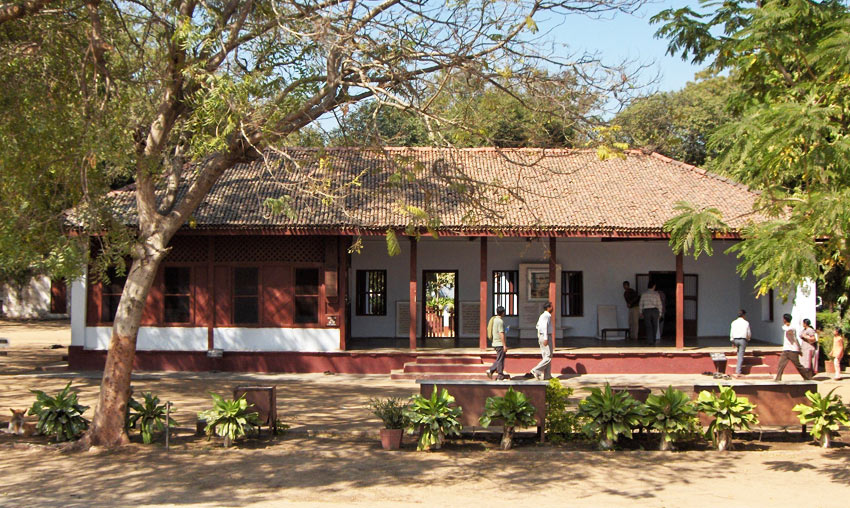
Sabarmati Gandhi Ashram, Ahmedabad – History, Timings, Museum and Travel Guide
Sabarmati Gandhi Ashram is one of the most important historical landmarks in Ahmedabad, Gujarat. Located on the peaceful banks of the Sabarmati River, the ashram is closely associated with Mahatma Gandhi and India’s struggle for independence. It was the place where Gandhi lived, worked and developed many of his ideas about truth, non-violence, self-reliance and peaceful resistance.
Established at its present location in 1917, Sabarmati Ashram became an important centre of India’s freedom movement. It served as Mahatma Gandhi’s residence and a base for several activities connected with the independence struggle. The historic Dandi March, which began in 1930, was also closely associated with the ashram.
Today, Sabarmati Gandhi Ashram is an important destination for history lovers, students, researchers and tourists visiting Ahmedabad. The campus includes the Gandhi Memorial Museum, Hriday Kunj, prayer grounds and other historic buildings that help visitors understand Gandhi’s life and philosophy.
Whether you are interested in India’s freedom movement, Mahatma Gandhi’s teachings or Ahmedabad’s heritage, a visit to Sabarmati Gandhi Ashram offers a meaningful experience. It is one of the must-visit historical places included in our Ahmedabad Travel Guide.
About Sabarmati Gandhi Ashram
Sabarmati Gandhi Ashram, also known as Gandhi Ashram or Satyagraha Ashram, is situated along the Sabarmati River in Ahmedabad. It is one of the most significant places associated with Mahatma Gandhi’s life in India.
The ashram was established at its present location in 1917 after Gandhi moved from Kochrab Ashram. It became a community where Gandhi and his followers practised a simple lifestyle based on truth, non-violence, discipline, self-reliance and service to society.
The ashram was not merely a residence. It was also a centre for social reform, education, constructive work and political activities. Gandhi and other residents worked towards promoting khadi, village industries, communal harmony and the principles of Satyagraha.
The peaceful surroundings of the ashram, its simple buildings and its historical exhibits provide an opportunity to understand the values that shaped Gandhi’s life and India’s freedom movement.
History of Sabarmati Gandhi Ashram
The history of Sabarmati Gandhi Ashram is closely connected with Mahatma Gandhi’s return to India from South Africa in 1915. After spending several years leading campaigns against racial discrimination in South Africa, Gandhi returned to India and began working towards social and political reform.
On 25 May 1915, Gandhi established his first ashram in Ahmedabad at Kochrab. The community was known as Satyagraha Ashram and became a centre for his experiments with truth, non-violence and community living.
As the activities of the ashram expanded, Gandhi decided to move it to a larger location. On 17 June 1917, the ashram was shifted to the banks of the Sabarmati River. The new location provided space for agriculture, community activities and other constructive programmes.
Between 1917 and 1930, Gandhi lived and worked at Sabarmati Ashram with his wife Kasturba Gandhi and several followers. During this period, the ashram became an important centre for the freedom movement and social reform.
Gandhi also encouraged the residents to practise simplicity, self-discipline, manual labour, spinning khadi and service to the community. The ashram became a living example of the principles he wanted to promote throughout India.
On 12 March 1930, Gandhi began the historic Dandi March from Sabarmati Ashram with a group of followers. The march was organised to protest against the British salt tax and became a major event in India’s independence movement.
Gandhi declared that he would not return to the ashram until India achieved independence. Although he never returned to live there, Sabarmati Ashram continued to preserve his memories, belongings and teachings.
Mahatma Gandhi and Sabarmati Ashram
Sabarmati Ashram played a central role in Mahatma Gandhi’s personal life and public activities. It was here that he developed and practised many of the ideas that later influenced India’s freedom struggle and social reform movements around the world.
Gandhi believed that political freedom should be supported by personal discipline, social equality, economic self-reliance and moral responsibility. The ashram provided an environment where these values could be practised in everyday life.
Some of the important principles followed at the ashram included:
- Truth: Gandhi considered truth the foundation of personal and public life.
- Non-Violence: The principle of Ahimsa guided his approach to social and political resistance.
- Self-Reliance: Residents were encouraged to spin khadi and support village industries.
- Simple Living: The ashram promoted a disciplined and uncomplicated lifestyle.
- Community Service: Residents participated in activities that supported society and encouraged social improvement.
- Equality: Gandhi worked towards removing social discrimination and promoting dignity for all.
These principles became an important part of Gandhi’s philosophy and continue to inspire visitors who explore the historic ashram.
Sabarmati Ashram and the Historic Dandi March
One of the most important events associated with Sabarmati Gandhi Ashram is the Dandi March of 1930, also known as the Salt March.
During British rule, the government imposed a tax on salt and restricted its production and sale. Gandhi decided to challenge this policy through a peaceful act of civil disobedience.
On 12 March 1930, Gandhi began the march from Sabarmati Ashram with 78 selected followers. The group travelled on foot towards the coastal village of Dandi in Gujarat.
After walking for approximately 24 days, Gandhi reached Dandi on 6 April 1930 and broke the British salt law by making salt from seawater. This peaceful act became a powerful symbol of resistance against colonial rule.
The Salt March attracted national and international attention and encouraged people across India to participate in the Civil Disobedience Movement.
Today, Sabarmati Ashram remains an important place for understanding the history and significance of the Dandi March and its role in India’s independence struggle.
What to See at Sabarmati Gandhi Ashram
The ashram campus contains several historic buildings, memorial spaces and museum galleries. Each location reflects a different aspect of Gandhi’s life and the community that lived and worked here.
1. Hriday Kunj
Hriday Kunj was the residence of Mahatma Gandhi and Kasturba Gandhi during their stay at Sabarmati Ashram. The name means the home of the heart and reflects the personal importance of this simple cottage.
The building is one of the most significant places within the ashram. It preserves the memory of Gandhi’s everyday life, including his simple lifestyle and dedication to his principles.
Visitors may view Hriday Kunj from outside. However, according to the official ashram website, entry inside is temporarily restricted due to ongoing conservation work. Visitors should check the latest access information before their visit.
2. Gandhi Memorial Museum
The Gandhi Memorial Museum, also known as Gandhi Smarak Sangrahalaya, is one of the main attractions within the ashram campus.
The museum was inaugurated on 10 May 1963 by India’s first Prime Minister, Jawaharlal Nehru. It was designed by the renowned architect Charles Correa, whose design reflects simplicity and the architectural values associated with Gandhi.
The museum contains photographs, historical documents, manuscripts, letters, exhibits and displays related to Gandhi’s life and India’s independence movement.
Its galleries help visitors understand Gandhi’s personal journey, his activities in Ahmedabad and the principles that shaped his public life.
3. My Life Is My Message Gallery
The My Life Is My Message Gallery presents important events from Mahatma Gandhi’s life through photographs and historical displays.
Visitors can explore different stages of his life, his personal experiences, social activities and role in India’s freedom movement. The gallery provides a visual introduction to Gandhi’s philosophy and the events that influenced his work.
4. Gandhi in Ahmedabad Gallery
The Gandhi in Ahmedabad Gallery focuses on the important events that took place during Gandhi’s years in Ahmedabad.
It highlights his association with Kochrab Ashram, Sabarmati Ashram, the textile mill workers’ movement and the beginning of the Dandi March.
The gallery is especially useful for visitors who want to understand how Ahmedabad became an important centre of Gandhi’s social and political activities.
5. Upasana Mandir
Upasana Mandir was the open-air prayer ground of the ashram. Gandhi and other residents gathered here for prayer meetings and discussions.
The prayer ground represents the spiritual and disciplined community life that was an important part of the ashram’s daily routine.
6. Vinoba-Mira Kutir
Vinoba-Mira Kutir is associated with Acharya Vinoba Bhave and Mirabehn, one of Gandhi’s devoted followers. The cottage reflects the simple living arrangements of the ashram community.
Mirabehn, born Madeleine Slade, became a close associate of Gandhi and actively participated in his work and social activities.
7. Magan Niwas
Magan Niwas is associated with Maganlal Gandhi, who played an important role in managing the ashram’s daily activities.
Maganlal Gandhi was closely involved in the development of the ashram and its constructive programmes. The site is part of the historic campus and offers insight into the organisation of community life.
8. Nandini
Nandini served as a guest house at the ashram and was used to accommodate visitors from India and other countries.
The building reflects the community-oriented character of the ashram and its connection with people who came to learn about Gandhi’s work and philosophy.
9. Udyog Mandir
Udyog Mandir was associated with the ashram’s emphasis on self-reliance and productive work. Activities related to spinning, khadi and village industries formed an important part of the constructive programmes promoted by Gandhi.
The site represents the importance Gandhi placed on manual labour and economic independence.
Architecture of Sabarmati Gandhi Ashram
Sabarmati Gandhi Ashram is known for its simple and peaceful architectural character. Unlike grand royal monuments, the ashram buildings reflect Gandhi’s preference for simplicity, functionality and a close connection with nature.
The campus includes modest residential cottages, open spaces, pathways, shaded areas and community buildings. The architecture reflects the lifestyle and values of the people who lived and worked here.
The Gandhi Memorial Museum, designed by Charles Correa, is particularly notable for its thoughtful use of simple materials and modular spaces. Its design creates a calm environment that complements the philosophy of the ashram.
The overall atmosphere of the campus encourages visitors to slow down, explore its history and reflect on Gandhi’s message of peace and non-violence.
Importance of Sabarmati Gandhi Ashram in India’s Freedom Movement
Sabarmati Ashram was much more than a residential community. It became an important centre for organising peaceful resistance, promoting social reform and encouraging people to participate in India’s independence movement.
Several important activities connected with Gandhi’s public life took place during his years at the ashram.
- Non-Cooperation and Satyagraha: The ashram became associated with Gandhi’s methods of peaceful protest and civil resistance.
- Textile Mill Workers’ Movement: Gandhi supported workers in Ahmedabad during their struggle for better working conditions.
- Promotion of Khadi: Spinning and handloom activities encouraged self-reliance and the development of village industries.
- Social Reform: Gandhi worked towards removing discrimination and promoting social equality.
- Dandi March: The historic Salt March began from the ashram in March 1930.
These activities established Sabarmati Ashram as one of the important historical centres of India’s freedom movement.
Best Time to Visit Sabarmati Gandhi Ashram
The best time to visit Sabarmati Gandhi Ashram is generally from October to March, when Ahmedabad experiences comparatively pleasant weather. These months are suitable for exploring the outdoor campus and nearby historical attractions.
Winter Season (October to February)
Winter is an ideal period for visiting the ashram. The comfortable weather makes it easier to explore the campus, museum and nearby Sabarmati Riverfront.
Summer Season (March to June)
Summer temperatures in Ahmedabad can become very high. Visitors should prefer morning or late afternoon visits and carry drinking water while exploring the campus.
Monsoon Season (July to September)
Monsoon brings rainfall and occasional cooler weather. The ashram can be visited during this season, although visitors should check the weather and local conditions before travelling.
Important Occasions
- 12 March: Anniversary of the beginning of the historic Dandi March.
- 2 October: Gandhi Jayanti, celebrating Mahatma Gandhi’s birth anniversary.
- 30 January: Martyrs’ Day, commemorating Gandhi’s death anniversary.
- 15 August: Independence Day celebrations and related observances.
Special events and programmes may be organised at the ashram on important national occasions. Visitors should check the official event calendar before planning their trip.
Sabarmati Gandhi Ashram Timings and Entry Fee
According to the official Sabarmati Ashram visitor information, the campus is open every day throughout the year, including public holidays.
- Opening Time: 10:00 AM
- Closing Time: 6:00 PM
- Entry Fee: Free
- Opening Days: Daily, including public holidays
- Parking: Free parking is available on the property, subject to availability.
School groups and large visitor groups are advised to inform the ashram in advance if they require a guided tour.
Important Visitor Update: Hriday Kunj can currently be viewed from outside, but entry inside is temporarily restricted due to conservation work. Access to individual buildings and galleries may change according to preservation activities. Confirm current arrangements through the official website before visiting.
How to Reach Sabarmati Gandhi Ashram
Sabarmati Gandhi Ashram is located in Ahmedabad, Gujarat, on the banks of the Sabarmati River. It is accessible by air, rail and road.
By Air
The nearest airport is Sardar Vallabhbhai Patel International Airport in Ahmedabad. After arriving at the airport, visitors can hire a taxi, app-based cab or use local transport to reach the ashram.
By Train
Ahmedabad Junction, also known as Kalupur Railway Station, is one of the major railway stations serving the city. Visitors can continue their journey to Sabarmati Ashram by taxi, auto-rickshaw or local transport.
By Road
Ahmedabad has good road connectivity with major cities in Gujarat and neighbouring states. Visitors can reach the ashram by private car, taxi, city bus or other local transport services.
By Metro and Local Transport
Ahmedabad Metro and local bus services connect several parts of the city. Visitors can use available public transport and continue by a short local journey depending on the selected route.
Places to Visit Near Sabarmati Gandhi Ashram
Visitors can explore several popular attractions near Sabarmati Gandhi Ashram while planning their Ahmedabad sightseeing trip.
- Sabarmati Riverfront – A popular riverside promenade with walking paths and recreational spaces.
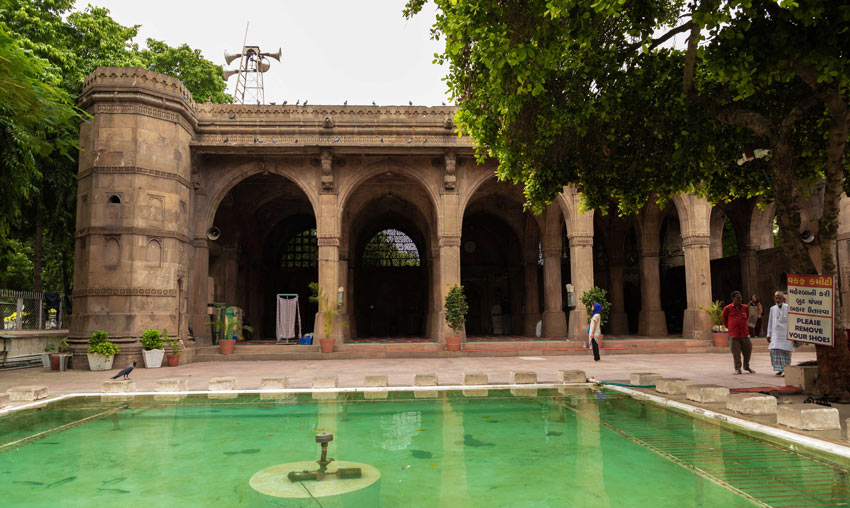
- Sidi Saiyyed Mosque – Famous for its beautifully carved stone lattice windows.
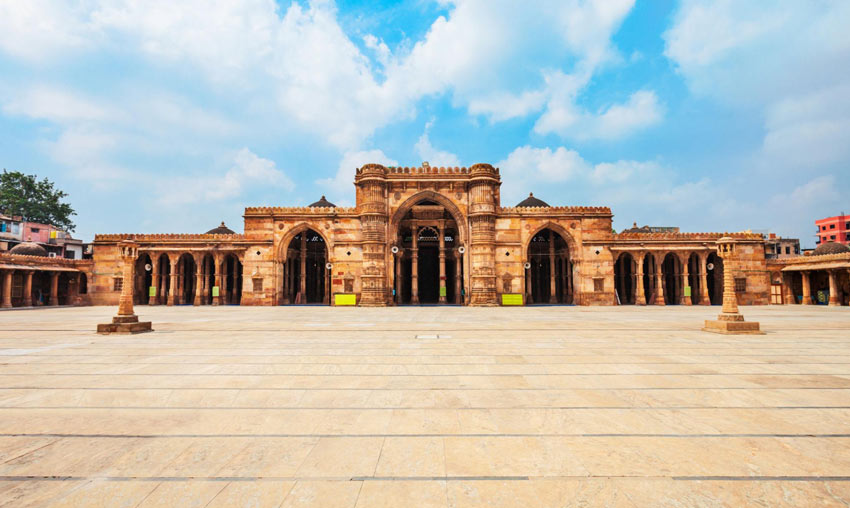
- Jama Masjid – A historic mosque built during the Gujarat Sultanate period.
- Bhadra Fort – A historical fort associated with the foundation of Ahmedabad.
- Teen Darwaza – A famous historic gateway in the old city.
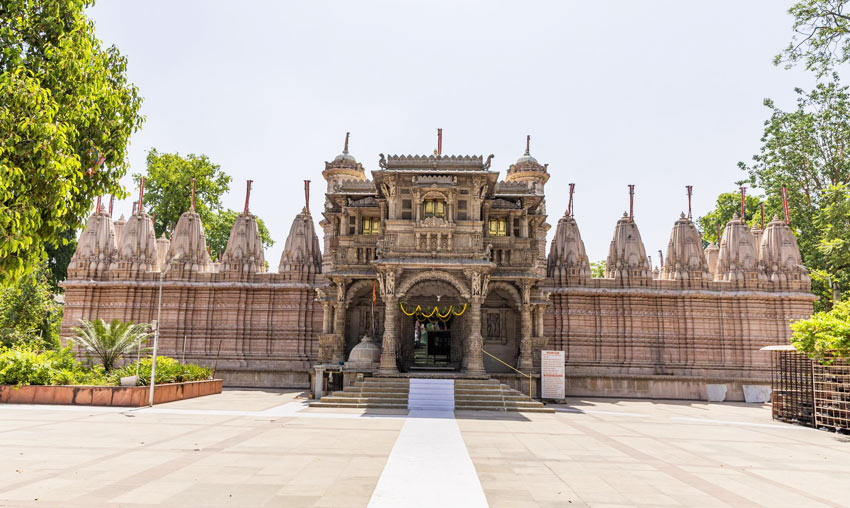
- Hutheesing Jain Temple – A beautiful Jain temple known for its marble architecture.
Explore the complete Ahmedabad Travel Guide for more tourist attractions, historical landmarks and cultural experiences.
Visitor Guidelines and Travel Tips
- Maintain silence and respect the peaceful atmosphere of the ashram.
- Wear comfortable and appropriate clothing while visiting the campus.
- Do not touch or disturb historical objects and museum displays.
- Photography for personal use is permitted in designated public areas, subject to the ashram’s rules.
- Commercial photography, professional shoots and drone photography require prior written permission.
- Do not use flash or artificial lighting while taking photographs.
- Follow instructions provided by the ashram staff and museum authorities.
- Do not litter or damage the historic buildings and surrounding spaces.
- Check the latest visitor information before visiting Hriday Kunj or any restricted area.
- School groups and large groups should contact the ashram in advance for guided tour arrangements.
Frequently Asked Questions About Sabarmati Gandhi Ashram
1. Where is Sabarmati Gandhi Ashram located?
Sabarmati Gandhi Ashram is located on the banks of the Sabarmati River in Ahmedabad, Gujarat, India.
2. Why is Sabarmati Gandhi Ashram famous?
The ashram is famous for its association with Mahatma Gandhi and India’s independence movement. It was Gandhi’s residence from 1917 to 1930 and the starting point of the historic Dandi March.
3. When was Sabarmati Gandhi Ashram established?
The ashram was established at its present location on 17 June 1917. Gandhi had earlier established Kochrab Ashram in Ahmedabad in 1915.
4. What is the connection between Sabarmati Ashram and Dandi March?
The historic Dandi March began from Sabarmati Ashram on 12 March 1930. Gandhi and 78 followers marched towards Dandi to protest against the British salt tax.
5. What is Hriday Kunj?
Hriday Kunj is the cottage where Mahatma Gandhi and Kasturba Gandhi lived at Sabarmati Ashram. It is one of the most historically important buildings on the campus.
6. Is Sabarmati Gandhi Ashram free to visit?
Yes. According to the official visitor information, entry to Sabarmati Ashram is free for visitors.
7. What are the opening hours of Sabarmati Gandhi Ashram?
The official website lists the visiting hours as 10:00 AM to 6:00 PM, every day throughout the year, including public holidays.
8. Can visitors enter Hriday Kunj?
According to the current official website, Hriday Kunj can be viewed from outside, but entry inside is temporarily restricted due to conservation work. Visitors should check the latest updates before their visit.
9. What can visitors see at Sabarmati Gandhi Ashram?
Visitors can explore the Gandhi Memorial Museum, historical galleries, Upasana Mandir, Vinoba-Mira Kutir, Magan Niwas and other historic areas of the campus, subject to current access arrangements.
10. How much time is required to visit Sabarmati Gandhi Ashram?
Visitors may plan approximately two to three hours to explore the museum and the accessible parts of the ashram campus. The actual time depends on individual interest and current access arrangements.
11. Is photography allowed at Sabarmati Gandhi Ashram?
Personal photography is permitted in public outdoor spaces and galleries according to the official rules. Commercial and professional photography requires prior written permission.
12. What is the best time to visit Sabarmati Gandhi Ashram?
October to March is generally a comfortable period to visit because the weather in Ahmedabad is more suitable for outdoor sightseeing.
13. Is Sabarmati Ashram suitable for students?
Yes. The ashram is an important educational destination for students interested in Mahatma Gandhi, India’s independence movement, non-violence and Indian history.
14. Which places can be visited near Sabarmati Ashram?
Visitors can explore Sabarmati Riverfront, Sidi Saiyyed Mosque, Jama Masjid, Bhadra Fort, Teen Darwaza and other historic attractions in Ahmedabad.
Visit the Historic Sabarmati Gandhi Ashram
Sabarmati Gandhi Ashram is one of the most meaningful historical destinations in Ahmedabad. Its association with Mahatma Gandhi, the freedom movement and the historic Dandi March makes it an important place in India’s national heritage.
From the simple surroundings of Hriday Kunj to the informative galleries of the Gandhi Memorial Museum, the ashram offers visitors an opportunity to understand the values of truth, non-violence, self-reliance and community service.
Whether you are a history enthusiast, student, family traveller or international visitor, Sabarmati Gandhi Ashram deserves a place on your Ahmedabad itinerary.
Plan your visit and explore more historical landmarks, cultural attractions and tourist places with our complete Ahmedabad Travel Guide.
Nearby Places to Visit