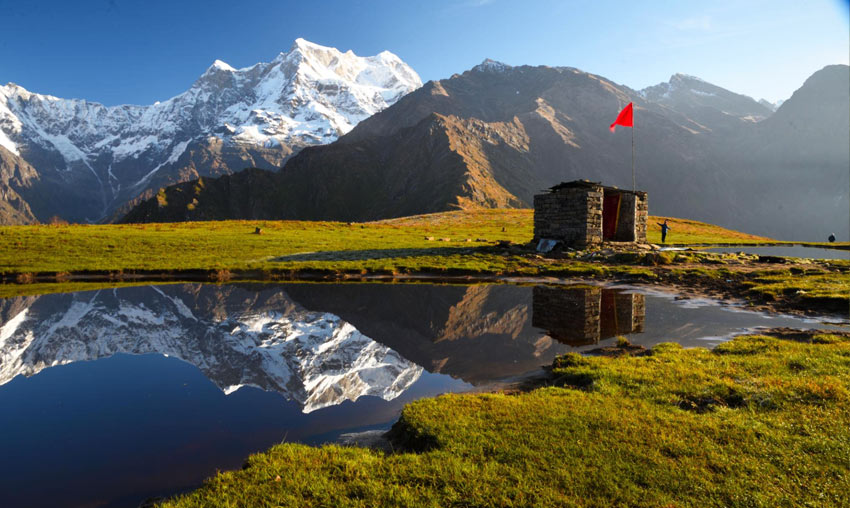
Madhyamaheshwar Temple, Uttarakhand – A Sacred Panch Kedar Shrine
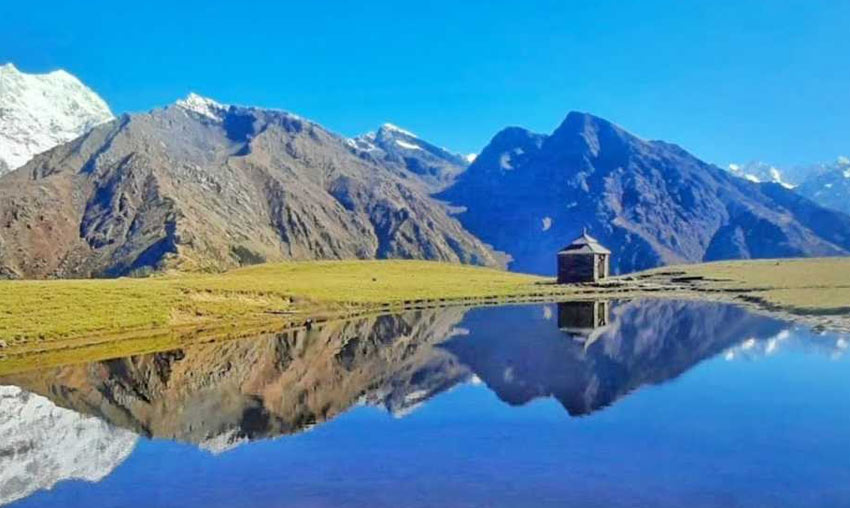
Situated in the magnificent Garhwal Himalayas of Uttarakhand, Madhyamaheshwar Temple is one of the sacred Panch Kedar temples dedicated to Lord Shiva. Surrounded by green alpine meadows, dense mountain landscapes and spectacular Himalayan peaks, this ancient shrine is an important destination for devotees, trekkers and nature lovers.
Also known as Madmaheshwar or Madhmaheshwar, the temple is located in the Rudraprayag district at an altitude of approximately 3,289 metres above sea level. According to Hindu tradition, the navel or middle portion of Lord Shiva appeared at this sacred place. The temple is therefore an important stop for pilgrims completing the Panch Kedar pilgrimage.
Reaching Madhyamaheshwar requires a challenging mountain trek, generally beginning from Ransi village near Ukhimath. The journey passes through traditional Himalayan settlements, forests, river crossings and beautiful mountain scenery. The effort is rewarded with peaceful surroundings and magnificent views of the Chaukhamba mountain range.
Where Is Madhyamaheshwar Temple Located?
Madhyamaheshwar Temple is located in the Garhwal Himalayas of Rudraprayag district, Uttarakhand. It lies in a beautiful high-altitude valley beneath the Chaukhamba mountain range.
Ukhimath is an important nearby town and a convenient regional base for travellers. The road journey continues towards Ransi village, which is commonly used as the starting point for the Madhyamaheshwar trek. There is no motorable road all the way to the temple, so visitors must complete the final section on foot.
Why Is Madhyamaheshwar Temple Famous?
Madhyamaheshwar Temple is famous for being one of the five sacred Panch Kedar shrines of Uttarakhand. It is dedicated to Lord Shiva, who is worshipped here in the form of a navel-shaped Shiva Lingam.
According to the popular Panch Kedar legend, after the Mahabharata war, the Pandavas sought the blessings of Lord Shiva to atone for their actions. Lord Shiva took the form of a bull to avoid them. When Bhima recognised him, Shiva disappeared and manifested at five different places in the Garhwal Himalayas. These places became the five Panch Kedar temples.
At Madhyamaheshwar, the middle or navel portion of Lord Shiva is believed to have appeared. This association makes the temple an important destination for Shiva devotees.
Religious Significance of Madhyamaheshwar Temple
Madhyamaheshwar is traditionally regarded as the second shrine in the Panch Kedar pilgrimage sequence. The five temples are Kedarnath, Madhyamaheshwar, Tungnath, Rudranath and Kalpeshwar.
The main sanctum houses a distinctive black stone Shiva Lingam associated with the navel of Lord Shiva. The temple complex also contains smaller shrines dedicated to other divine forms.
The pilgrimage is not only a religious journey but also an opportunity to experience the traditional culture and natural beauty of the Garhwal Himalayas.
Architecture of Madhyamaheshwar Temple
Madhyamaheshwar Temple features traditional Himalayan stone temple architecture. Its simple yet impressive structure reflects the religious heritage of the Garhwal region.
The temple stands in a scenic mountain valley, with green slopes and snow-covered peaks forming a beautiful natural backdrop. The peaceful surroundings and traditional design make it a memorable place for pilgrims and photographers.
Madhyamaheshwar Trek – Route, Distance and Difficulty
The Madhyamaheshwar trek is one of the most rewarding pilgrimage treks in Uttarakhand. The commonly used trekking approach begins from Ransi village, which is reached by road from Ukhimath.
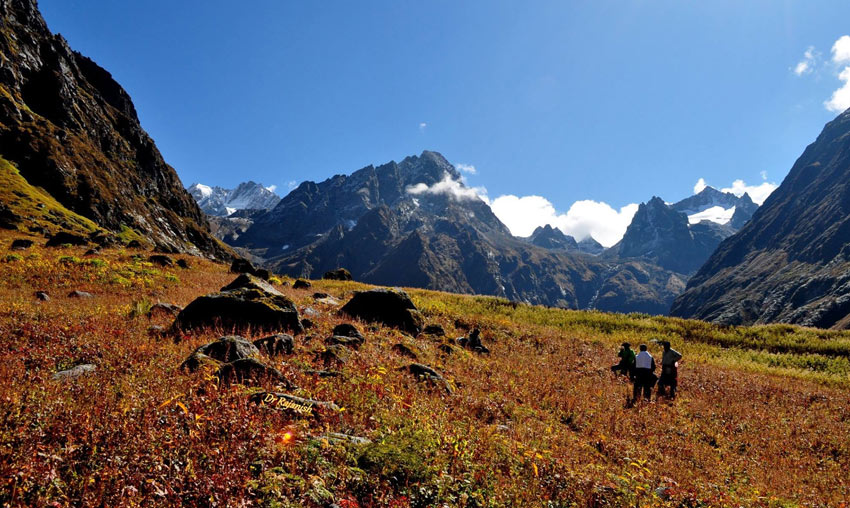
The walking route passes through scenic villages and mountain landscapes, including Gaundar and Bantoli, before climbing towards the temple. The trail includes downhill sections, river crossings and steep uphill stretches.
Trek Distance
The trekking distance varies across published sources and route descriptions. For current travel planning, many trekkers use an approximate distance of 16–18 km one way from Ransi village. Some older or alternate route descriptions quote longer distances, so confirm the current trail distance and condition locally before starting.
Major Stops on the Trek
- Ransi Village: The commonly used road-accessible starting point of the trek.
- Gaundar: A traditional mountain settlement along the trekking route.
- Bantoli: A scenic section near the meeting of mountain streams.
- Khatara and Nanu: Mountain trail sections along the uphill route.
- Madhyamaheshwar Temple: The final destination in the beautiful high-altitude valley.
Trek Difficulty
The Madhyamaheshwar trek is generally considered moderate to challenging because of its length, elevation gain and steep uphill sections. The climb after the lower valley sections can be demanding. Trekkers should have reasonable physical fitness and allow sufficient time for the journey.
Beginners should avoid rushing and consider travelling with an experienced local guide. Weather, trail conditions and available facilities can change during the season.
Budha Madhyamaheshwar
Budha Madhyamaheshwar is a sacred spot located approximately 2 km uphill from the main Madhyamaheshwar Temple. It is associated with a small shrine made from a cluster of rocks and is traditionally believed to be older than the main temple.
The location is particularly famous for its extraordinary Himalayan views. On clear days, visitors can admire mountain peaks such as Chaukhamba, Kedarnath, Neelkanth, Trishul, Kamet and Panchachuli.
The uphill walk can be steep, and visitors should attempt it only when weather and trail conditions are suitable.
Other Attractions Near Madhyamaheshwar
1. Nandikund
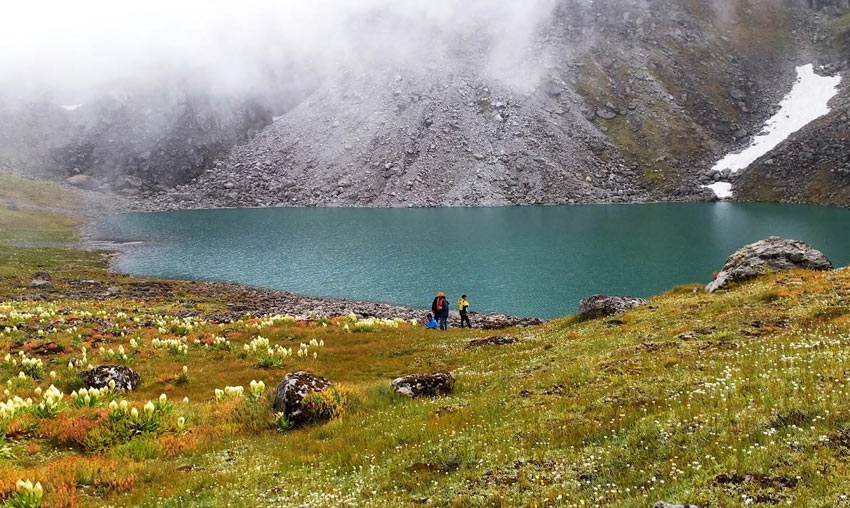
Nandikund is a beautiful high-altitude lake surrounded by meadows and dramatic Himalayan landscapes. The trekking route is difficult in places, with steep climbs and narrow ridges. It is better suited to experienced trekkers with proper preparation and local guidance.
2. Kanchani Tal
Kanchani Tal is a high-altitude lake located in the wider Madhyamaheshwar region. Reaching it involves a strenuous trek, so visitors should plan carefully and check local route conditions before attempting the journey.
3. Ukhimath
Ukhimath is an important religious town in Rudraprayag district and a useful base for exploring the Madhyamaheshwar region. It is also known for Omkareshwar Temple, where the ceremonial worship of Lord Kedarnath takes place during the winter season.
Read more: Ukhimath Travel Guide.
4. Chopta
Chopta is a beautiful Himalayan destination known for its green meadows, forest landscapes and trekking routes. It is the starting point for the popular Tungnath and Chandrashila trek.
Read more: Chopta Travel Guide.
5. Tungnath Temple
Tungnath is another sacred Panch Kedar shrine dedicated to Lord Shiva. Located above Chopta, it is reached through a scenic uphill trekking trail and is a popular destination for pilgrims and mountain lovers.
Read more: Tungnath Temple Travel Guide.
Best Time to Visit Madhyamaheshwar Temple
The best time to visit Madhyamaheshwar depends on temple opening dates, weather and trekking conditions. The shrine is a seasonal high-altitude destination, and access can be affected by snowfall and heavy rainfall.
May to June
Late spring and early summer are popular periods for the pilgrimage. Snow begins to clear from many sections of the route, and the surrounding landscape becomes greener. The weather can still be cold, particularly at night and near the temple.
July to August
The monsoon brings heavy rainfall to the Garhwal region. Landslides, slippery trails and road disruptions can make travel difficult. It is generally better to avoid planning the trek during periods of heavy rain.
September to October
Post-monsoon months can offer clearer mountain views and pleasant daytime conditions. This is another popular period for trekking, although temperatures drop considerably at higher elevations.
November to April
Heavy snowfall and severe winter conditions make the high-altitude route difficult or inaccessible. The temple follows a seasonal worship schedule, and winter worship takes place at its designated winter arrangement. Check the current temple schedule before travelling.
How to Reach Madhyamaheshwar Temple
By Road
Ukhimath is an important road-accessible town for travellers visiting Madhyamaheshwar. From Ukhimath, visitors continue towards Uniana and Ransi village, depending on the current road access and local conditions. Ransi is commonly used as the starting point for the walking trail.
By Train
Rishikesh is a major railway access point for this region. From Rishikesh, visitors can hire a taxi or use available road transport towards Rudraprayag, Ukhimath and Ransi.
By Air
Jolly Grant Airport near Dehradun is the nearest major airport commonly used by travellers. From the airport, visitors must continue by road towards Ukhimath and the trek starting point.
On Foot
The final approach to Madhyamaheshwar Temple is completed by trekking. There is no motorable road directly reaching the shrine. Visitors should plan their walking schedule, overnight stops, food and water arrangements in advance.
Suggested 3-Day Madhyamaheshwar Trek Itinerary
Day 1: Reach Ransi Village
- Travel to Ukhimath by road.
- Continue towards Ransi village after checking local road conditions.
- Arrange accommodation and prepare for the trek.
- Keep essential supplies, warm clothing and trekking equipment ready.
Day 2: Ransi to Madhyamaheshwar
- Start early from Ransi village.
- Follow the trail through Gaundar and Bantoli.
- Continue the uphill climb towards Madhyamaheshwar.
- Reach the temple area and stay overnight, subject to accommodation availability.
Day 3: Budha Madhyamaheshwar and Return
- If weather and fitness permit, visit Budha Madhyamaheshwar early in the morning.
- Enjoy the Himalayan views and return to the main temple area.
- Begin the descent towards Ransi, allowing enough time for the journey.
Important: This is a suggested itinerary, not a fixed schedule. Many visitors split the ascent and descent over additional days. Choose your plan according to fitness, weather, daylight and accommodation availability. Do not rush the trek.
Where to Stay During the Madhyamaheshwar Trek
Basic accommodation options, guesthouses and homestays may be available in villages along the trekking route, including Ransi and Gaundar. Seasonal facilities may also operate at other stops, depending on local arrangements.
Accommodation near the temple is basic and availability can be limited. Travellers should confirm facilities and overnight arrangements before starting the trek, especially during busy pilgrimage periods.
Travel Tips for Madhyamaheshwar Trek
- Check the official temple opening schedule before planning your visit.
- Confirm current road access and trail conditions with local authorities or experienced guides.
- Carry warm layers, rain protection and comfortable trekking shoes.
- Carry drinking water and energy-rich snacks for the trail.
- Start early and allow sufficient time for the uphill and downhill sections.
- Do not trek alone in difficult weather or unfamiliar trail conditions.
- Carry basic first-aid supplies and keep emergency contact details available.
- Respect temple customs and local traditions.
- Avoid littering and protect the fragile Himalayan environment.
- Take altitude seriously. If you experience severe headache, vomiting, confusion or breathing difficulty, stop ascending and seek medical help.
Frequently Asked Questions About Madhyamaheshwar Temple
1. Where is Madhyamaheshwar Temple located?
Madhyamaheshwar Temple is located in the Rudraprayag district of Uttarakhand, in the Garhwal Himalayas.
2. Why is Madhyamaheshwar Temple famous?
It is one of the five sacred Panch Kedar temples dedicated to Lord Shiva. According to tradition, the navel or middle portion of Lord Shiva appeared at this location.
3. What is the altitude of Madhyamaheshwar Temple?
The temple is situated at approximately 3,289 metres above sea level. Published altitude figures can vary slightly by source.
4. How long is the Madhyamaheshwar trek?
The commonly used route from Ransi village is approximately 16–18 km one way according to many current trekking descriptions. Published distances vary depending on the route and starting point.
5. Is Madhyamaheshwar trek difficult?
The trek is generally considered moderate to challenging. Its length, steep uphill sections and high altitude require good preparation and reasonable fitness.
6. What is Budha Madhyamaheshwar?
Budha Madhyamaheshwar is a sacred spot approximately 2 km uphill from the main temple. It is known for its small shrine and panoramic Himalayan views.
7. What is the best time to visit Madhyamaheshwar?
May to June and September to October are generally popular periods, subject to the temple schedule and local weather conditions.
8. Can Madhyamaheshwar be reached by car?
No. Visitors can travel by road to the trek starting area, commonly Ransi village, but the final approach to the temple must be completed on foot.
9. Is Madhyamaheshwar part of Panch Kedar?
Yes. Madhyamaheshwar is one of the five sacred Panch Kedar shrines of Uttarakhand.
Madhyamaheshwar Temple is a remarkable combination of spiritual heritage and Himalayan adventure. As one of the sacred Panch Kedar shrines, it holds great importance for devotees of Lord Shiva. Its remote location, traditional temple architecture, peaceful valley and spectacular mountain views make the journey truly memorable.
Whether you are undertaking the Panch Kedar pilgrimage or exploring the trekking destinations of Uttarakhand, Madhyamaheshwar offers an unforgettable experience. Plan your journey carefully, respect the mountain environment and prepare well for the high-altitude trek.
Nearby Places to Visit