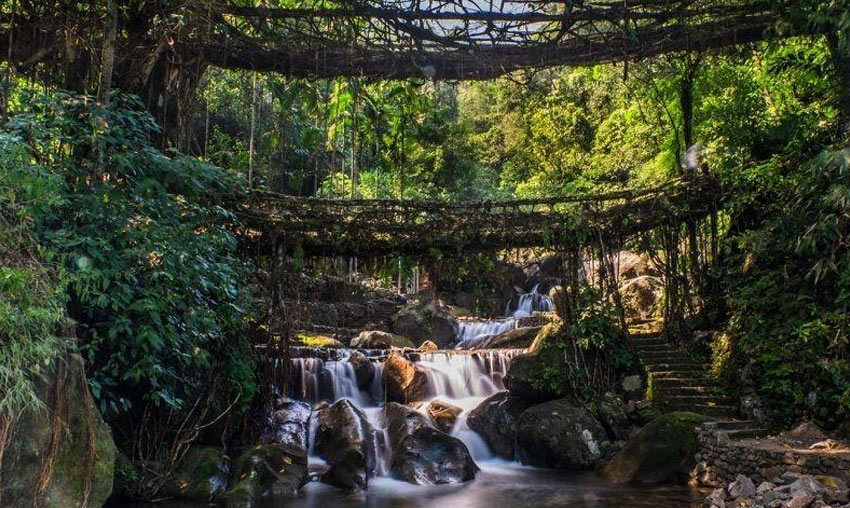
Double Decker Living Root Bridge, Nongriat – Meghalaya’s Living Wonder
The Double Decker Living Root Bridge in Nongriat Village is one of the most extraordinary natural attractions in Meghalaya. Hidden inside a lush green valley in the East Khasi Hills, this remarkable two-level bridge has been grown from the living roots of rubber fig trees by generations of the local Khasi community.
Unlike ordinary bridges made from concrete, steel or wood, this unique structure is created by guiding and weaving the aerial roots of trees across a stream. Over time, the roots grow stronger and form a natural bridge that can continue developing for generations. The Double Decker Living Root Bridge is a beautiful example of the traditional knowledge and close relationship between the Khasi people and their natural environment.
Reaching the bridge is an adventure in itself. Visitors travel by road to Tyrna Village and then descend through a long series of stone steps into the forested valley of Nongriat. The trek is physically demanding, but the sight of this living natural structure makes it a memorable experience for many travellers.
Where Is the Double Decker Living Root Bridge Located?
The Double Decker Living Root Bridge is located in Nongriat Village in the East Khasi Hills district of Meghalaya, India. Nongriat lies below the popular hill destination of Sohra, also known as Cherrapunji.
The usual road approach is from Cherrapunji to Tyrna Village, which serves as the starting point of the trek. From Tyrna, visitors descend into the valley on foot to reach Nongriat and the famous root bridge.
Meghalaya Tourism lists Nongriat at approximately 15 km from Cherrapunji. The drive from Sohra to Tyrna takes around 30–45 minutes according to its visitor information, although actual travel time depends on road and traffic conditions.
Why Is the Double Decker Living Root Bridge Famous?
The bridge is famous for its unusual two-level design and the traditional living-root construction technique practised by the Khasi community. It is not simply a bridge made from tree roots; it is a structure that grows and develops over time.
The aerial roots of the rubber fig tree, scientifically known as Ficus elastica, are carefully guided across streams and supported until they become strong enough to form a usable crossing. The roots are encouraged to intertwine and strengthen naturally.
The Double Decker Bridge is particularly special because it has two levels of interwoven roots, one above the other. It demonstrates how local communities have developed practical solutions using the natural resources available in their environment.
History and Traditional Construction of Living Root Bridges
Living root bridges are part of the traditional knowledge of the Khasi and Jaintia communities of Meghalaya. These bridges were developed to provide crossings over streams and rivers in a region that receives heavy rainfall and has steep, forested terrain.
To create a living root bridge, people guide the flexible aerial roots of rubber fig trees across a watercourse. In some traditional methods, hollowed-out areca nut trunks or temporary supports help direct the roots towards the opposite bank. As the roots grow, they are guided and woven together until they form a strong natural structure.
Unlike a conventional bridge, a living root bridge takes years to become functional and can continue growing stronger with time and maintenance. Incredible India describes the tradition as an example of harmony between nature and human innovation.
What Makes the Double Decker Bridge Unique?
1. Two Levels of Living Roots
The most striking feature is its two-tier structure. Two root crossings are arranged one above the other, creating a rare natural bridge design in the middle of a forested valley.
2. Made from Rubber Fig Tree Roots
The bridge is formed from the aerial roots of Ficus elastica, commonly known as the rubber fig tree. These roots are guided and woven by local people over many years.
3. A Living Structure
The bridge is not a fixed construction. Its roots remain alive and can continue growing. This makes it an evolving structure that reflects generations of care and traditional knowledge.
4. Traditional Khasi Knowledge
The bridge represents the deep understanding of the local Khasi community about trees, watercourses and the surrounding landscape. It is both a practical crossing and an important example of traditional ecological knowledge.
5. Beautiful Forest Surroundings
Nongriat is surrounded by dense greenery, streams, hills and natural pools. The peaceful setting makes the visit about much more than simply seeing the bridge.
Double Decker Living Root Bridge Trek
The trek to the Double Decker Living Root Bridge begins at Tyrna Village. Visitors descend into the valley using a long stone staircase that passes through forested slopes and small settlements.
Meghalaya Tourism describes the route as involving approximately 3,000 to 3,500 steps. The descent is steep in several sections, and the return journey requires climbing back up the same route. This makes the trek physically demanding, particularly for visitors who are not accustomed to long walks or stair climbing.
Trek Route
- Cherrapunji to Tyrna Village: Travel by taxi or private vehicle from Sohra to Tyrna, the starting point of the trek.
- Tyrna to Nongriat: Begin the descent along the stone steps through the forest and hillside settlements.
- Cross the valley route: Continue along the trail and across the local footbridges towards Nongriat.
- Reach the Double Decker Bridge: Explore the two-level living root bridge and the surrounding natural landscape.
- Return to Tyrna: Allow enough time and energy for the steep uphill climb back to the starting point.
The trek can take a substantial part of the day. Start early, carry drinking water and snacks, and plan your return before daylight fades. Visitors who want to explore the valley at a slower pace may consider an overnight stay in Nongriat, subject to local accommodation availability.
Rainbow Falls – An Additional Trek from Nongriat
Travellers who have enough time and energy can consider extending their journey beyond the Double Decker Living Root Bridge towards Rainbow Falls. This additional forest trek leads to a beautiful waterfall and a natural pool surrounded by large rocks and greenery.
The extension adds more walking and climbing to an already demanding day. It is not suitable for everyone, so assess your fitness, weather conditions and available daylight before continuing. Ask local guides or residents about the current trail conditions.
Best Time to Visit Double Decker Living Root Bridge
The period from October to March is generally recommended by Meghalaya Tourism for visiting Nongriat. These months fall within the drier season and can offer more comfortable trekking conditions than the peak monsoon period.
During the monsoon months, Meghalaya receives heavy rainfall. The stone steps, forest trails and suspension bridges may become slippery, and water levels in streams can change. Trekking during heavy rain can be risky.
Even during the drier months, weather in the hills can change quickly. Check the local forecast and seek advice about the trail before starting your trek.
Double Decker Living Root Bridge Timings
The Double Decker Living Root Bridge is a natural attraction and does not have fixed viewing hours like a conventional monument. However, the trek should be undertaken during daylight so visitors have sufficient time to reach the bridge and return safely.
Start early in the morning and confirm any local access instructions or restrictions before beginning the trek. Do not begin the descent late in the day.
Double Decker Living Root Bridge Entry Fee
Entry arrangements and local charges may be managed at the village or trail access point. The current official fee could not be reliably confirmed while preparing this guide. Visitors should check the latest charges locally and carry sufficient cash for any applicable village, parking or other local payments.
How to Reach Double Decker Living Root Bridge
By Road
First reach Sohra (Cherrapunji), which is connected by road to Shillong. From Cherrapunji, hire a local taxi or use a private vehicle to reach Tyrna Village. The trek to Nongriat begins from Tyrna.
By Air
The nearest major airport commonly used by visitors is Lokpriya Gopinath Bordoloi International Airport in Guwahati, Assam. From Guwahati, continue by road towards Shillong and then Sohra and Tyrna.
By Train
Guwahati Railway Station is the main railway station commonly used for reaching Meghalaya. From Guwahati, travel by road to Shillong and continue towards Cherrapunji and Tyrna Village.
Fitness and Safety Tips for the Nongriat Trek
- Be prepared for a long and physically demanding trek involving thousands of steps.
- Wear comfortable trekking shoes with a good grip.
- Carry enough drinking water and light snacks.
- Start early so you have sufficient daylight for the return climb.
- Take breaks whenever required and avoid rushing on steep sections.
- Use extra care on wet steps, suspension bridges and slippery paths.
- Consider a local guide or an experienced trekking companion who knows the route.
- Avoid the trek during heavy rain or when local authorities advise against travel.
- Carry basic personal medicines and a small first-aid kit.
- Do not litter, damage roots or carve names into the living bridge.
- Respect village customs, private property and local instructions.
- Visitors with knee, heart, mobility or other physical limitations should carefully assess the trek before attempting it.
Places to Visit Near Double Decker Living Root Bridge
While exploring the Nongriat and Sohra region, visitors can include some of Meghalaya’s other well-known attractions in their travel itinerary.
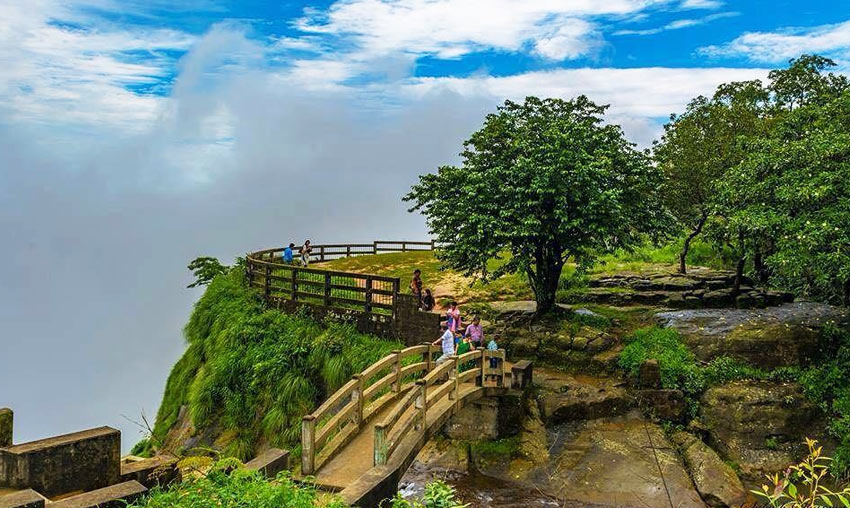
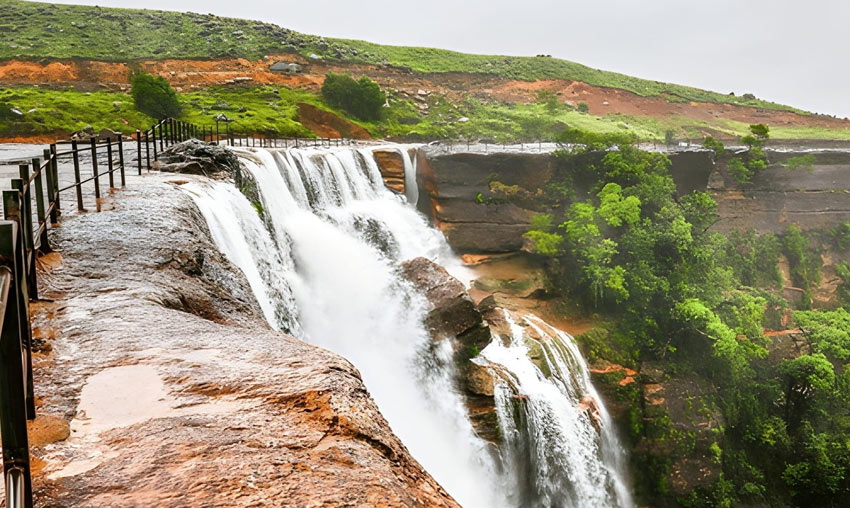
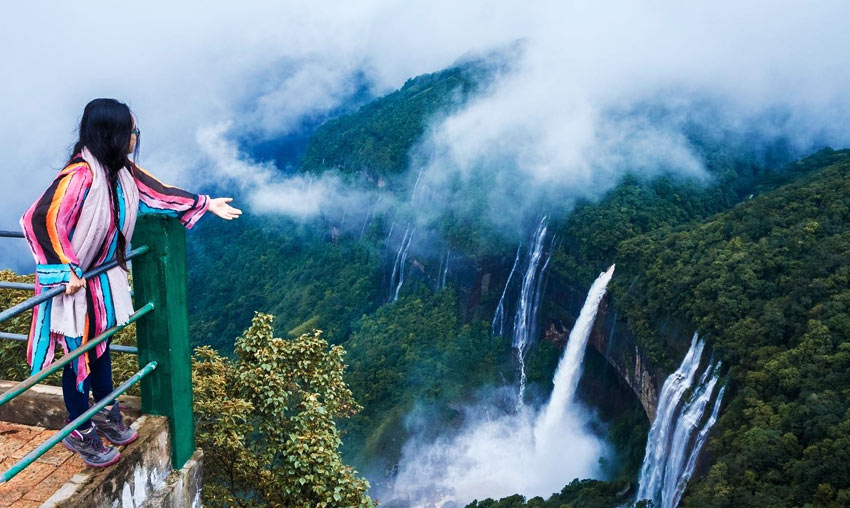
- Nohkalikai Falls – A spectacular waterfall near Cherrapunji, famous for its dramatic plunge and scenic viewpoint.
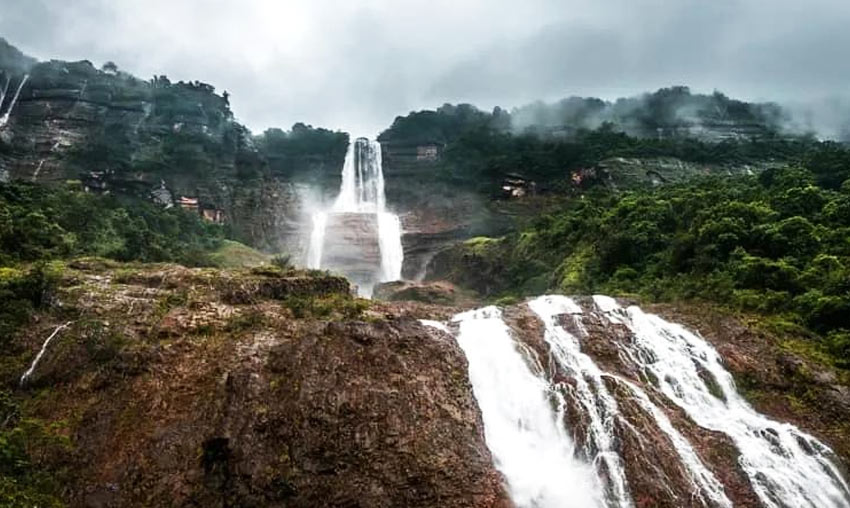
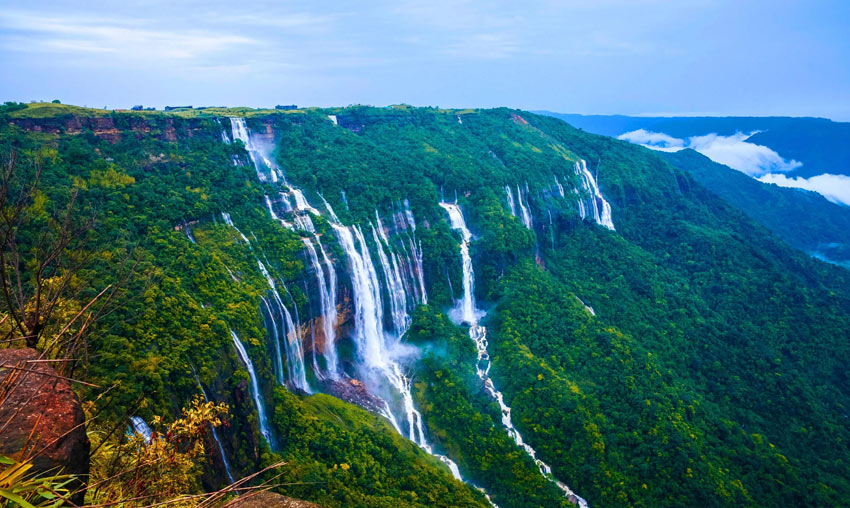
- Seven Sisters Falls – Also known as Nohsngithiang Falls, this waterfall is recognised for its multiple streams flowing down a steep cliff.
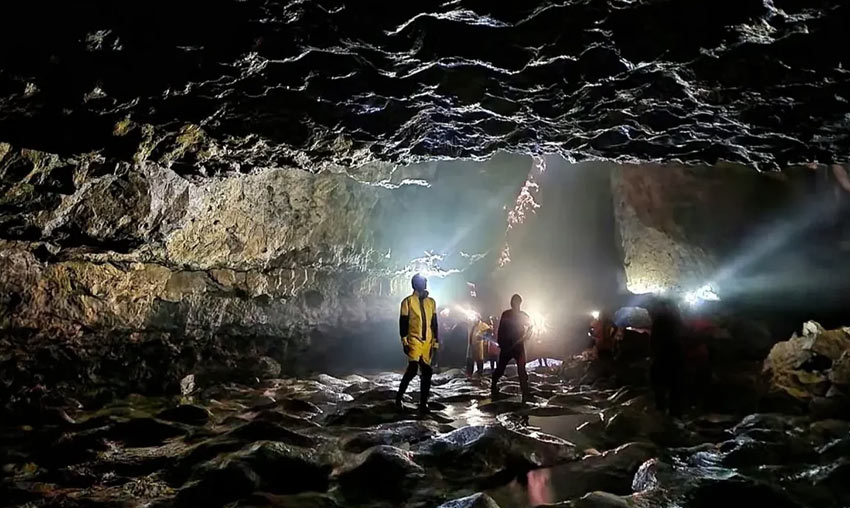
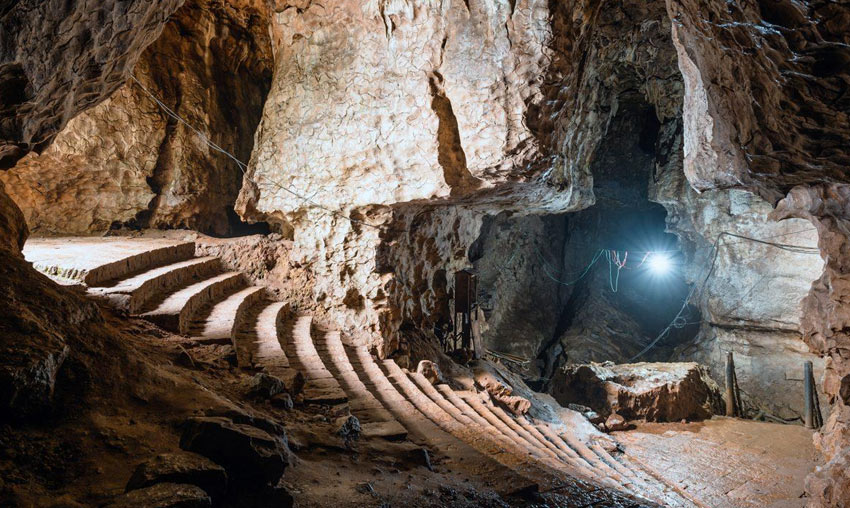
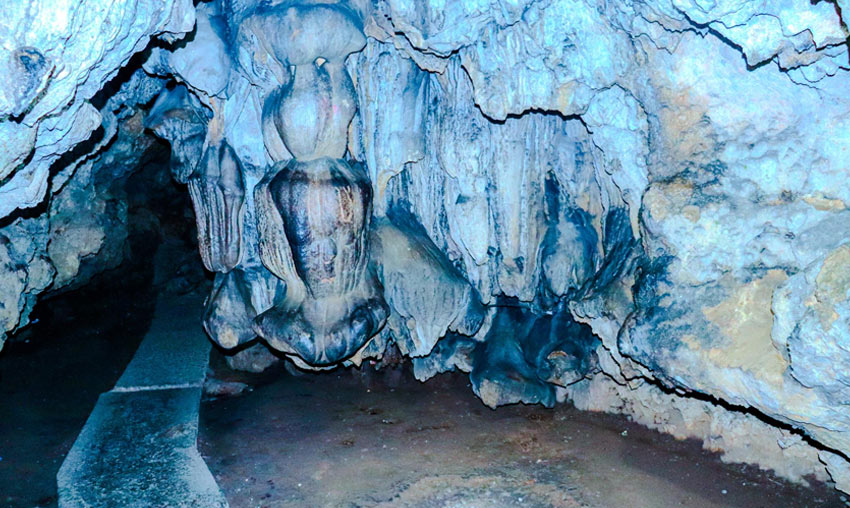
- Mawsmai Cave – A popular limestone cave near Sohra with natural rock formations and underground passages.
- Arwah Cave – A limestone cave known for fossil-bearing rock walls and a scenic forest approach.
- Rainbow Falls – A beautiful waterfall reached by an additional trek from the Nongriat area.
For more attractions, travel ideas and visitor information, explore our complete Cherrapunji Travel Guide.
Suggested Cherrapunji and Nongriat Travel Plan
The Nongriat trek requires a significant amount of time and energy. It is better to plan it as a dedicated day rather than combining it with too many other sightseeing stops.
Option 1: Nongriat Trek Day
- Leave your accommodation early in the morning.
- Drive from Sohra to Tyrna Village.
- Begin the descent towards Nongriat.
- Explore the Double Decker Living Root Bridge.
- Continue towards Rainbow Falls only if you have sufficient time, fitness and suitable trail conditions.
- Return to Tyrna with enough daylight remaining.
Option 2: Two-Day Cherrapunji Plan
Day 1: Explore Nohkalikai Falls, Seven Sisters Falls, Mawsmai Cave and Arwah Cave, depending on available time and local conditions.
Day 2: Keep the full day for the Nongriat trek and Double Decker Living Root Bridge. Consider an overnight stay in Nongriat if you want a slower visit and suitable accommodation is available.
Frequently Asked Questions About Double Decker Living Root Bridge
1. Where is the Double Decker Living Root Bridge located?
It is located in Nongriat Village in the East Khasi Hills district of Meghalaya, near Sohra (Cherrapunji).
2. How do I reach the Double Decker Living Root Bridge?
Travel by road from Cherrapunji to Tyrna Village. From Tyrna, visitors must complete a demanding trek down stone steps to reach Nongriat and the bridge.
3. How many steps are there to the Double Decker Living Root Bridge?
Meghalaya Tourism describes the trek as involving approximately 3,000 to 3,500 steps. The exact count can vary depending on the route description and starting point.
4. How difficult is the Nongriat trek?
The trek is physically demanding because it includes a long, steep descent followed by an uphill return. A reasonable level of fitness and suitable footwear are recommended.
5. What is the Double Decker Living Root Bridge made of?
It is made from the aerial roots of the rubber fig tree, scientifically known as Ficus elastica. The roots are guided and woven together over many years.
6. Why is it called a Double Decker Living Root Bridge?
It is called a double-decker bridge because it has two levels of living root crossings arranged one above the other.
7. What is the best time to visit Nongriat?
October to March is generally recommended for trekking conditions. Always check the weather and trail status before travelling.
8. Can I visit Rainbow Falls during the same trip?
Yes, Rainbow Falls can be visited through an additional trek from the Nongriat area. It adds to the walking distance and physical effort, so allow sufficient time and check local conditions.
9. Can I visit the Double Decker Living Root Bridge with children or elderly family members?
The trek involves thousands of steps and a steep uphill return. It may be unsuitable for young children, elderly visitors or anyone with mobility or health limitations. Assess individual fitness carefully before planning the trek.
10. Are there accommodation options in Nongriat?
Basic homestays and guesthouse-style accommodation may be available in the village. Availability and facilities can vary, so arrange your stay locally in advance if you plan to spend the night.
Experience the Living Heritage of Meghalaya
The Double Decker Living Root Bridge is much more than a beautiful sightseeing attraction. It represents the traditional knowledge, patience and environmental understanding of the Khasi community. Created through a close relationship between people and nature, this remarkable bridge continues to inspire visitors from around the world.
The journey to Nongriat is challenging, but it offers an opportunity to experience Meghalaya’s forests, village life and unique natural heritage. If you are planning a trip to Sohra, consider keeping a full day for this unforgettable trek and explore more destinations with our Cherrapunji Travel Guide.
Nearby Places to Visit
Nearby Places to Visit