Jhansi Fort – Timings, History, Architecture, Best Time to Visit
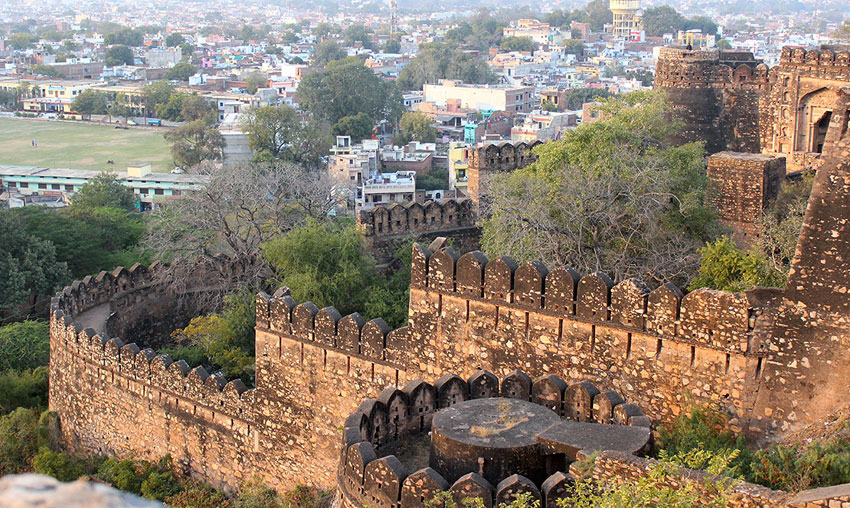
Jhansi Fort is a masterpiece of architecture, perched atop Bangira Hill. This historic fort in Jhansi dates back to 1613, when Bundela Rajput Chief and Orchha Kingdom monarch Raja Bir Singh Ju Deu constructed it. This well-liked tourist destination in Jhansi, the fort named for the Queen of Jhansi, Rani Lakshmibai, has withstood the test of time and multiple invasions.
The temples of Lord Shiva and Lord Ganesha are currently located within the fort complex. In addition, the fort has a museum that displays antiquated objects and relics that illustrate the history of the fort and its environs. The evening sound and light display, which reflects the fort’s rich history and sheds insight on the heroic struggle between Rani Lakshmibai and the British East India Army, is another highlight of this must-see tourist destination in Jhansi. Rani Jhansi Garden, Karak Bijli Toup (Tank), a “Mazar” of Ghulam Gaus Khan, a Shiv shrine, Moti Bai, and Khuda Baksh are some of the tourist attractions inside the fort.
History of Jhansi Fort
This well-known tourist destination in Jhansi was founded in the seventeenth century. The Bundela clan’s rule has been significantly influenced by the fort. The Great Revolt of 1857 was also witnessed at Jhansi Fort. The Jhansi armies were led by the brave warrior Rani Lakshmibai against the British East India Company.
Architecture of Jhansi Fort
The expansive 15-acre Jhansi Fort is perched comfortably atop a hill. The fort is 312 meters long and 225 meters wide, with a striking North Indian architectural style. The fort has ten entrance gates in all. Popular entrances to Jhansi Fort include Sagar Gate, Datia Darwaza, Orchha Gate, Bada Gaon Gate, Khanderao Gate, Sainyar Gate, Unnao Gate, Laxmi Gate, and Chand Gate. The 19th-century Rani Mahal is located close to Jhansi Fort.
The fort’s complex has a number of monuments, temples, museums, gardens, and cannons that highlight Jhansi culture and history. Among the noteworthy attractions are:
Rani Mahal: Rani Laxmibai resided and hosted her court at this palace. Encircled by chambers with paintings and sculptures on the walls and ceilings, the castle boasts a lovely courtyard. The palace also features a museum with a variety of items and memorabilia pertaining to Rani Laxmibai and the first battle of independence, including documents, guns, armour, jewellery, and photos.
Panch Mahal: This five-story structure served as both a granary and a watchtower. The structure is circular in shape and has a dome on top. The structure provides a broad perspective of the city and its surroundings.
Ganesh Mandir: This temple honours Lord Ganesh, the wise and prosperous elephant-headed deity. It is thought that Rani Laxmibai married Raja Gangadhar Rao in the temple, which is close to the Khanderao Gate. Devotees venerate a statue of Lord Ganesh at the temple.
Shiva Mandir: This temple honours Lord Shiva, the transformer and destroyer. It is thought that Rani Laxmibai carried out her final ceremonies for her husband at the temple, which is close to the Sagar Gate. The temple features a Nandi, Lord Shiva’s vehicle, and a lingam, his emblem.
Baradari: The rulers and nobility of Jhansi used this pavilion as a gathering spot and a place to rest. The pavilion is square in design and features twelve arches and supports. There is a garden surrounding the pavilion and a fountain in the middle. Rang Mahal, which translates to “the palace of colours,” is another name for the pavilion.
Opening / Closing Timings of Jhansi Fort
Jhansi Fort is open every day of the week and is one of the most popular tourist destinations in Jhansi. The location is open to tourists from six in the morning until six in the evening on any given day.
Best Time to Visit of Jhansi Fort
During the summer, Jhansi has an extremely harsh environment. However, the winter months of October through February are a great time to arrange a trip because the city is cool and pleasant. The seasonal breakdown of Jhansi is mentioned here, which will help you plan your vacation appropriately.
Entry Fee of jhansi fort
The entry fee of Jhansi Fort differs for both local travellers and international tourists.
- For Indian: 25 INR per head (as per ASI)
- For Foreigners: 300 INR per head (as per ASI)
Jhansi Fort Location Address
Near Lakshmi Bai Park, Jhansi, Uttar Pradesh 284001, India
Nearby Places to Visit
Nearby Places to Visit